
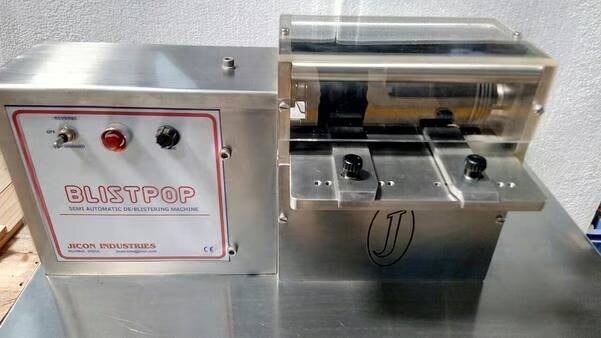
A suitable recovery machine is chosen by blister construction, dosage-form fragility, rejected packs per hour and the controls required after recovery—not by tablet or capsule name alone. You will be able to compare manual, semi-automatic and automatic options, test BLISTPOP against real production samples, and calculate the smallest machine that can meet your plant’s rework demand.
Key takeaways
- Match piercing, pressing, slitting or peeling to the blister construction.
- Set guides and pressure without crushing tablets or deforming capsules.
- Choose capacity from hourly Lagos demand, not the machine’s maximum rating.
- Move recovered products into labelled, protected containers for quality control.
Match the recovery mechanism to the blister and dosage form
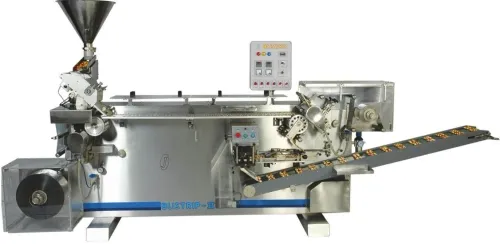
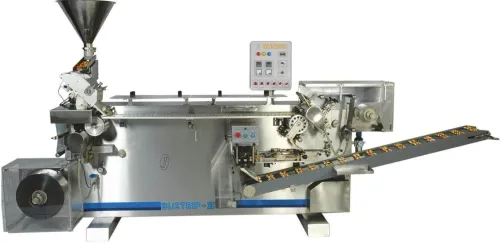
A deblistering machine for pharmaceutical plants must match the blister construction and dosage form, not just the product name. After insertion, controlled piercing, pressing, slitting or peeling opens each pocket.
The tablet or capsule drops into a clean product collection stream, while empty PVC, PVdC-aluminium, aluminium-aluminium, paper-backed foil or cold-form foil travels to a separate scrap stream.
Pack width sets the guides and tooling span; pocket depth determines penetration and pressing travel. Seal strength and blister material decide whether clean peeling works or whether cutting and controlled punching are safer. For tablets, specify diameter, shape and coating hardness: a sharp edge or excessive pressure can chip film coating.
For capsules, specify length, shell integrity and pocket depth; compression can dent gelatin, split the shell and release powder.
| Pack or product characteristic | Recovery implication |
|---|---|
| PVC/PVdC-aluminium, shallow pocket | Pressing or piercing may separate the dose with limited tooling travel |
| Aluminium-aluminium, strong seal | Cutting or controlled punching may be needed to avoid foil tearing |
| Long capsule, fragile shell | Use supported, low-impact opening and verify shell integrity |
| Irregular tablet, coated surface | Use guided tooling and inspect for chips or coating debris |
Do not load packs containing:
- Cracked or chipped tablets
- Leaking or split capsules
- Packs exposed to excessive heat or humidity
- Contaminated packs
- Packs with uncertain identity or batch history
Specify these conditions when comparing tablet blister recovery equipment, then challenge the machine with real formats rather than assuming one mechanism fits every pack.
Set guides, tooling and pressure for each format
Set BLISTPOP tablet capsule recovery by changing one variable at a time: pack guidance, product/tool alignment, then penetration or separation force. Do not transfer a setting from one blister format to another.
1. Identify the pack-guiding or width-setting control at the entry rails or feed channel. Record its scale or lock position, then use an empty pack to centre each pocket path without bending the card. Set separate positions for PVC-Alu, aluminium-aluminium, different pack widths and pocket pitches.
2. Identify the product/tool alignment or working-height control around the punch, pressing head, cutter or peeling point. Adjust height with an empty blister until the tool meets the pocket centre rather than the tablet edge or capsule shell. Record separate settings for pocket depth, tablet diameter, tablet shape and capsule length.
3. Identify the penetration, pressing or separation-force control at the working head, drive or pressure regulator. Increase force only enough to open the pocket and release the dosage form; excessive force creates foil, PVC, aluminium or coating fragments and breaks capsules.
4. Run a representative sample containing every intended format, including poorly sealed or intentionally damaged packs. Check intact tablets and capsules, empty-pocket separation, and fragments in the product collection stream.
5. Record the approved scale or lock positions, tooling identity and format on the batch or setup sheet. Lock each control before production, and repeat the trial after any tooling change, cleaning intervention or change in blister material.
Compare manual, semi-automatic and automatic recovery capacity
A plant handling investigation samples or occasional quarantine lots can use one operator at a manual bench-top tool. Recurring recovery across several tablet and capsule formats usually suits a semi-automatic unit; sustained reject recovery justifies automatic feeding only when the workload is stable.
| Option | Operators | Packs/min | Blisters/min and recovered units/min | Trade-off |
|---|---|---|---|---|
| Manual | 1 | Supplier or timed-study result | Supplier or timed-study result | Lowest capital cost; highest fatigue, breakage and mix-up exposure |
| Semi-automatic | 1 operator per line | State feed condition and format | State unit count, yield and stoppages | Reduces labour while retaining format flexibility |
| Automatic | Operator for loading and oversight | State continuous-feed basis | State format, yield, rejects and downtime | Highest output, capital, tooling and format rigidity |
Treat every headline rating as incomplete unless it identifies pack size, blister format, feed method, changeovers, interruptions, inspection rejects and cleaning time. A rating in packs per minute cannot be compared with one in recovered tablets per minute.
For example, 1,200 rejected blisters at 92% recovery produce 1,104 usable units. With four rework hours and two 20-minute changeovers, available time is 200 minutes, so the line must sustain 5.52 recovered units per minute. Compare that requirement with a timed trial, not a brochure.
For tablet blister recovery equipment and other de blistering machine options in lagos, choose semi-automatic equipment when several formats recur; choose automatic equipment only when its higher output offsets tooling cost and rigid changeovers. Manual work remains appropriate for occasional, controlled recovery.
Protect quality after the product leaves the blister
An intact-looking tablet or capsule is not cleared for reuse. Keep recovered units in a segregated, labelled quarantine container until the quality unit confirms identity, batch traceability, contamination control, potency impact and mix-up risk.
1. Assign each container the product name, strength, batch number, recovery date, quantity, operator, source pack and status: “Recovered—Quarantine”. Keep every batch and blister format physically separate, and reconcile loaded packs, recovered units, rejects and blister scrap.
2. Inspect a documented sample, or every unit when the procedure requires it. Reject capsules with dents, split gelatin, powder leakage or failed shell-seam integrity. Reject tablets with cracks, chipped film coating or attached foil, PVC, aluminium, gelatin or coating debris.
3. Test identity, potency, contamination and foreign-particle risk when the recovery procedure, deviation assessment or quality unit requires testing. A clean appearance does not prove chemical strength or freedom from fine blister material.
4. Record damaged units, unexplained losses and count discrepancies as deviations. Do not relabel, repackage, rework or reintroduce product until the quality unit documents disposition and approves the exact operation.
5. Specify separate, covered collection for recovered product and blister scrap. On a de blistering machine for pharmaceutical plants, make product-contact parts accessible for inspection, removable tooling easy to clean, and all surfaces compatible with approved cleaning agents without hidden ledges or residue traps.
Challenge acceptance with poorly sealed and damaged packs before release. The machine must protect capsule shells as well as tablet appearance; uncontrolled compression can expose fill material even when output initially looks clean.
Choose the smallest supported machine that meets Lagos demand
Choose which deblistering machine fits tablet and capsule recovery in Lagos by calculating rejected blisters per hour, batch size, recovery frequency, available operators and quarantine-release deadlines. Add changeover time across every blister format.
A manual unit becomes unsuitable when fatigue, inconsistent recovery or backlog delays release; a flexible semi-automatic machine can outperform a faster automatic model when batches change frequently.
| Option | Best fit | Main limitation |
|---|---|---|
| Manual | Occasional samples, small quarantine lots, one or two formats | Labour, fatigue and inconsistent output |
| Semi-automatic | Recurring batches, several formats, limited floor space | Requires operator feeding and validated changeovers |
| Automatic | Sustained high-volume recovery with stable formats | Higher cost, tooling demand and format rigidity |
Before comparing the deblistering machine options in Lagos, verify electrical voltage and frequency, clean compressed-air availability and pressure, dust extraction, guarding, spare tooling, technician response time, operator training, import and customs lead time, and floor space.
Ask Jicon Technologies Pvt Ltd for a real-sample trial and a documented FAT/SAT protocol for Blistpop tablet capsule recovery covering approved formats, recovery yield, breakage rate, foreign-material limits, changeover time, safety checks, documentation and remedies for failed criteria. Select the smallest validated machine with dependable local support, not the highest headline speed.
Related products
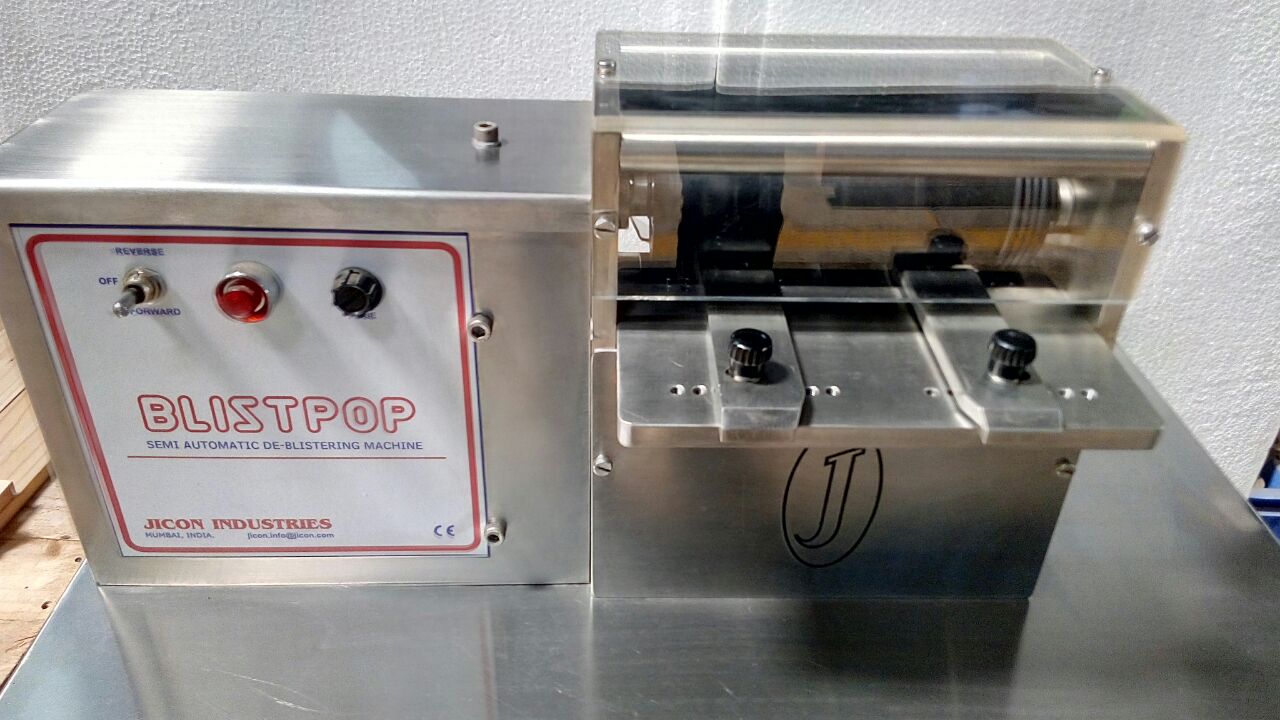 | Accessories & Ancillary Equipments Deblistering Machine for Tablets and Capsules BLISTPOP BLISTPOP is a simple de-blistering machine which is used to recover tablets / capsules / dragees from damaged or incomplete blister packs. |
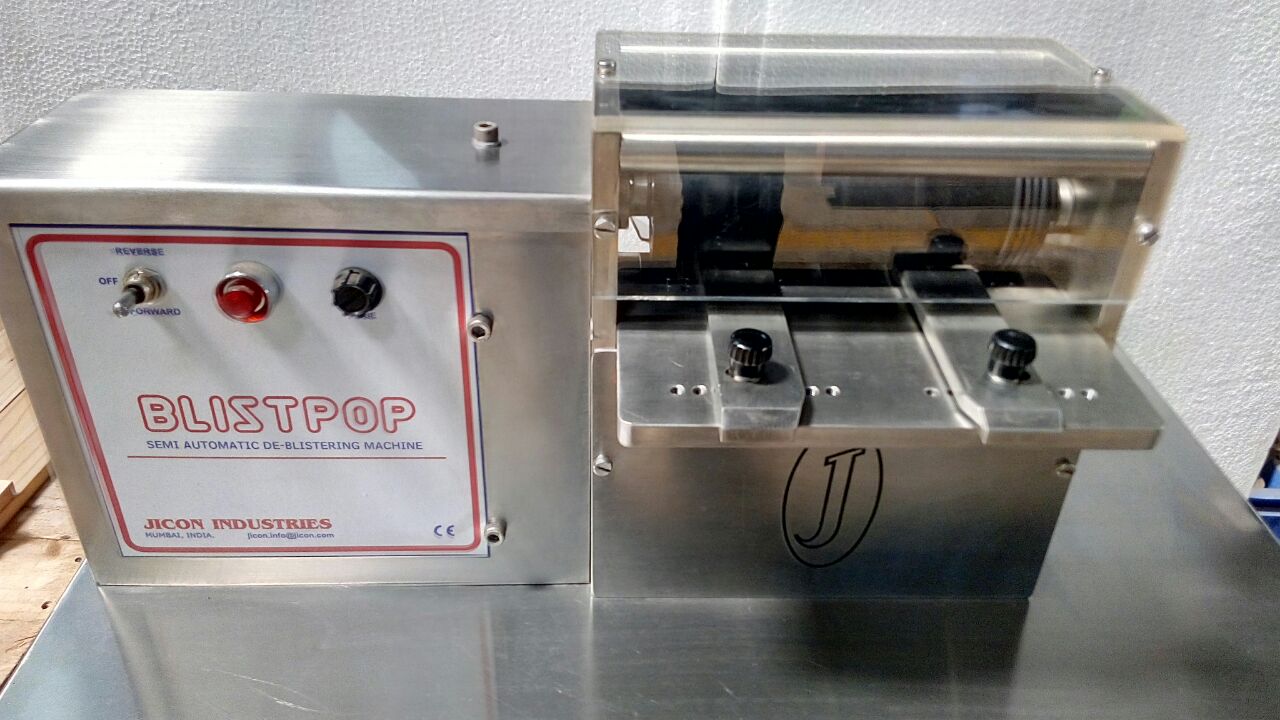 | Accessories and Ancillary Equipments BLISTPOP (De-Blistering Machine) ₹1 BLISTPOP is a simple de-blistering machine which is used to recover tablets / capsules / dragees from damaged or incomplete blister packs. View product → |
Frequently asked questions
How do you match a deblistering machine to a tablet or capsule blister?
Inspect the blister material, pocket shape, seal strength and dosage form. Use piercing, pressing, slitting or peeling only when it releases the product without damaging it.
What guides and pressure settings matter during deblistering?
Set the guides to the blister width and pocket position, then adjust tooling height and pressure until the product exits cleanly without tablet chipping, capsule deformation or foil fragments.
How do manual, semi-automatic and automatic deblistering machines compare?
Manual machines suit small, variable recovery jobs; semi-automatic machines add controlled feeding and higher repeatability; automatic machines fit sustained volumes with standardised blister formats.
How should recovered tablets and capsules be protected after deblistering?
Collect them in clean, labelled containers, separate different batches and strengths, limit exposure to heat and humidity, and document reconciliation before inspection or rework.
How do you choose the smallest suitable deblistering machine for Lagos demand?
Calculate the required packs per hour, account for changeovers and operator handling, then select the smallest supported machine that meets the peak workload without relying on its maximum nameplate speed.