
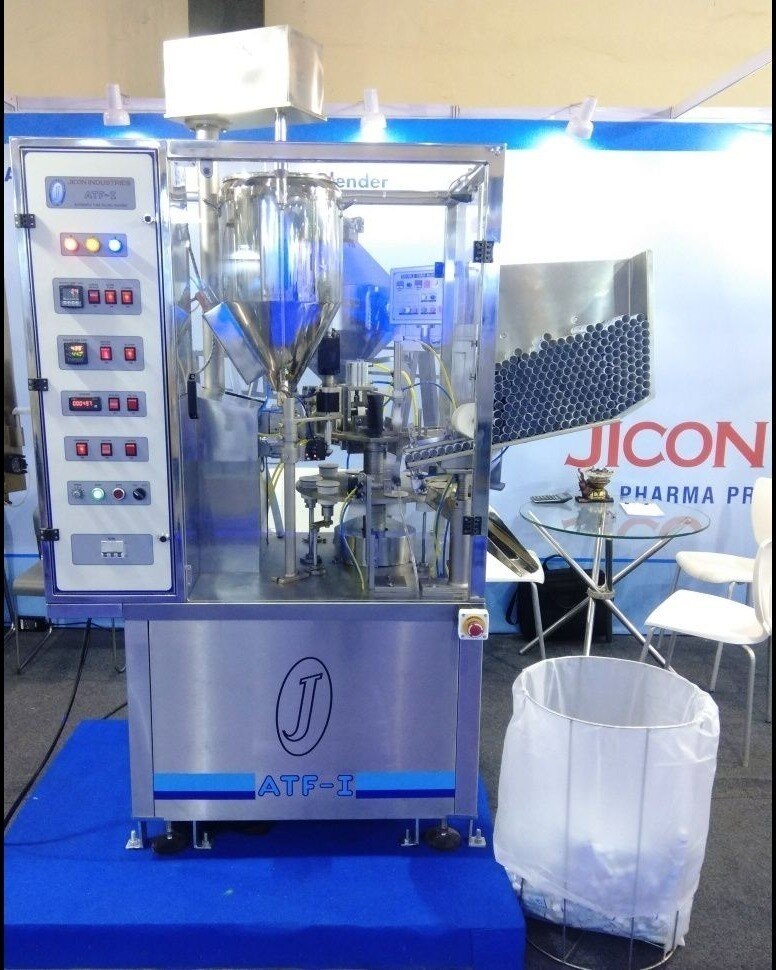
The right choice depends less on the machine label than on who performs each step, how often you change products, and how consistently the line produces accepted tubes. By comparing output, labour, dosing, sealing, validation and service requirements, you can select equipment for pilot work, clinical batches, contract production or routine commercial manufacture.
Key takeaways
- Calculate cost per accepted tube after rejects, labour and stoppage time.
- Match nozzle design, fill volume and contact parts to the formulation.
- Choose semi-automatic filling when batch size cannot justify automation.
- Request trials, FAT records, calibration data and validation documents before approval.
Which machine gives you the lower cost per accepted tube?
Cost per accepted tube comes from verified output after rejects and stoppages, not brochure speed. A semi automatic tube filling machine comparison must measure manual placement depth, fill-start timing, nozzle insertion, seal quality and rejected tubes per batch.
Both formats must be assessed through tube loading, orientation, indexing, nozzle insertion and withdrawal, dosing, sealing, coding, trimming, inspection and discharge.
| Option | Comparable evidence | Normal work split |
|---|---|---|
| SATF | Publish a verified accepted-tubes-per-minute range; do not infer output from the model name | One operator loads tubes, starts each cycle, removes filled tubes and inspects them |
| FT-120, FT-60 and ATF-1 | Publish verified tubes-per-minute ranges with tube diameter, tube length, fill volume, viscosity, filling-head count, sealing method, reject rate and stoppage assumptions | Automatic tube feeding, sensors, indexing and discharge systems replace routine manual handling |
| Any “high-speed” claim | Reject it as a comparison unless it includes those conditions and accepted output | Record jams, missed tubes, restart time and product lost during stoppage |
An automatic tube filling machine comparison must therefore count accepted tubes per minute, not uninterrupted cycles. Automatic equipment transfers loading, orientation, indexing, inspection and discharge to feeders and controls, but adds feeder jams, orientation faults and sensor failures. Compare seal-temperature drift and cap-feed faults too.
A semi-automatic line may win when labour is available and batch sizes are small; an automatic line may win when repetitive volume absorbs its capital, utilities and maintenance cost. Calculate rejected tubes per batch, not just labour hours.
How do formulation and tube design change the machine specification?
Viscosity, yield stress, air, temperature and dose tolerance—not brochure speed—set the dosing specification. Piston dosing suits creams and ointments requiring repeatable volumes; servo-piston dosing adds electronic adjustment and recipe control; auger dosing suits free-flowing products containing suitable particulates or powders.
| Dosing system | Strength | Becomes unsuitable when |
|---|---|---|
| Piston | Repeatable cream and ointment volumes | High shear damages the product, entrained air causes variation, or stringing prevents clean cut-off |
| Servo-piston | Electronic volume adjustment and recipe control | Air, poor flow or sticky product still defeats the pump; servo control cannot correct bad rheology |
| Auger | Measured powder-containing or particulate products | Product bridges, clogs, segregates, or auger shear changes the formulation |
No universal accuracy claim replaces a product trial: test the actual dose volume and fill-weight tolerance across the intended temperature range. Nozzle diameter, insertion depth and cut-off—shut-off valve, suck-back or wire cut—control dripping, stringing and air pockets.
Aluminium tubes need folding or crimping; plastic and laminate tubes need hot-air, heat, impulse or ultrasonic sealing. Tube diameter and length, wall construction, shoulder shape, cap design and seal geometry determine holders, change parts and sealing controls. A nominal diameter alone under-specifies the machine.
For both a semi automatic tube filling machine comparison and an automatic tube filling machine comparison, require samples showing:
- Seal or crimp integrity and appearance
- Coding legibility
- Clean product cut-off
- Fill-weight results, rejected tubes and product retained in the nozzle
Test actual tubes and formulation, or a justified surrogate, before approval.
When is semi-automatic filling the better production decision?
Choose semi-automatic filling when batches are pilot, clinical or low-to-medium volume; you run many SKUs; formulation or tube changes are frequent; and trained operators are available. Fewer feeders and change parts simplify setup for contract manufacturers handling varied orders.
| Decision factor | Semi-automatic filling | Automatic filling |
|---|---|---|
| Best fit | Variable batches and many SKUs | Stable, repetitive commercial production |
| Setup | Fewer assemblies and simpler cleaning | More change parts and line-clearance points |
| Cost and footprint | Lower capital cost, smaller footprint, lower utility demand | Higher capital cost, larger footprint, more compressed air and electrical demand |
| Labour | Cost depends on actual operators per shift | Reduces routine handling but still needs loading, inspection, replenishment and supervision |
| Risk | Operator placement, nozzle timing and seal variation | Feeder jams, orientation faults, cap-feed failures, sensor fouling, temperature drift and recipe errors |
A semi automatic tube filling machine comparison must measure operator skill and variation: tube placement depth, fill-start timing, nozzle insertion, seal quality and rejected tubes per batch. An automatic tube filling machine comparison must assess tube unscrambling, orientation, indexing, filling, sealing, coding and discharge, not just pump speed.
Choose automatic equipment when demand keeps the line running repetitively and savings justify its extra footprint, utilities, cleaning effort and fault recovery. Ask the supplier to measure changeover from the last accepted tube to the first accepted tube, jam recovery time, restart behaviour, and rejected or wasted product during startup and stoppage.
Do not price labour as “zero operators”; use the actual operators required per shift.
What must a pharmaceutical buyer prove before approving the filler?
Approve the filler only after a documented trial shows that it produces acceptable tubes with your product, packaging and operating range. An automatic tube filling machine comparison based only on uninterrupted running speed hides rejects, setup losses and cleaning effort.
- Write the user requirements specification (URS) before supplier testing. Define fill quantity, dosage variation, seal or crimp integrity, appearance, coding, accepted tubes per batch, changeover time and cleaning or recovery time.
- Run an FAT or SAT with the actual formulation, actual tubes and intended fill range. Use a justified surrogate only when the formulation is unavailable, and record fill weights, dosage variation, seal or crimp samples, coding checks, reject causes, consumables, retained product and wasted product.
- Link each in-process specification to its control: fill quantity to the load cell or dosing drive, seal quality to temperature and dwell controls, appearance to inspection criteria, and coding to legibility and position. Do not apply one universal fill-tolerance percentage.
- Complete a design review, IQ, OQ and PQ with acceptance criteria and deviation handling approved before testing. Verify calibration of load cells, temperature controllers, sensors and dosing drives, plus alarms, recipes, audit trails and electronic records.
- Inspect product-contact welds, drainability, gasket and hose materials, nozzle dead spaces and access for validated cleaning. Time dismantling and reassembly with the proposed tools and record every inaccessible surface.
- Compare accepted tubes per batch, changeover time, cleaning time and jam recovery—not only speed. Reject approval if the supplier cannot explain failures or demonstrate repeatable results across the intended fill range.
How should you assess a pharma machinery manufacturer and local supplier?
A local address is not proof of low supplier risk. Treat a tube filling machine supplier in Thane as a service partner and demand evidence for response time, site support and spare-part availability.
Ask for tested tubes-per-minute ranges for SATF, FT-120, FT-60 and ATF-1 under named product viscosity, tube diameter and length, fill volume, filling-head count, sealing method, reject rate and stoppage assumptions. Require a trial with your formulation or justified surrogate, actual tubes and intended fill range before accepting the figures.
Record fill weights, seal or crimp samples, changeover time, cleaning access and retained product.
Verify these points in writing:
- Operators required for loading, coding, inspection and unloading
- Included change parts and locally stocked dosing, sealing, sensor and feeder spares
- Installation response time, warranty-work responsibility and calibration support
- GMP qualification documents, operator training and remote or on-site troubleshooting
Jicon Technologies Pvt Ltd belongs in this comparison only through the same documented trial, acceptance test and service criteria, not through model names alone.
Score the proposed configuration as follows:
| Criterion | Evidence to record |
|---|---|
| Output | Accepted tubes per minute |
| Labour | Operators per shift and task split |
| Changeover | Last accepted tube to first accepted tube |
| Capacity | Footprint, electrical load and compressed air |
| Compatibility | Formulation, nozzle and tube performance |
| Validation | URS, FAT or SAT, IQ, OQ, PQ and deviations |
| Maintainability | Access, cleaning and calibration time |
| Cost | Total cost per accepted tube |
Use the scorecard to expose a cheap machine that creates rejects, downtime or difficult cleaning.
Related products
 | Tube Filling Machines Automatic Tube Filling Machine (FT-120, FT-60, ATF-1) ₹1 FILLTUBE Machines are designed to fill and seal plastic, laminated and aluminium tubes at high speeds. View product → |
 | Tube Filling Machines Semi Automatic Tube Filling Machine SATF is designed to fill and seal aluminium / plastic / lami tubes. The machine is suitable mainly for pharmaceutical, cosmetic and food industry. View product → |
Frequently asked questions
Which machine gives the lower cost per accepted tube?
Compare verified accepted output after rejects, labour, changeover time, cleaning and stoppages rather than comparing brochure speed alone.
How do formulation and tube design change the machine specification?
Viscosity, shear sensitivity, fill volume, tube diameter, shoulder shape, nozzle size and sealing method determine the filler configuration.
When is semi-automatic filling the better production decision?
Semi-automatic filling suits smaller or changing batches when lower capital cost, operator flexibility and quick changeovers outweigh labour savings from automation.
What must a pharmaceutical buyer prove before approving the filler?
Require documented trials, fill-weight results, seal inspection, calibration records, cleaning procedures, batch traceability and factory acceptance test evidence.
How should you assess a pharma machinery manufacturer and local supplier?
Check application experience, service response, spare-parts access, installation support, operator training and the supplier’s ability to document qualification work.
Related products
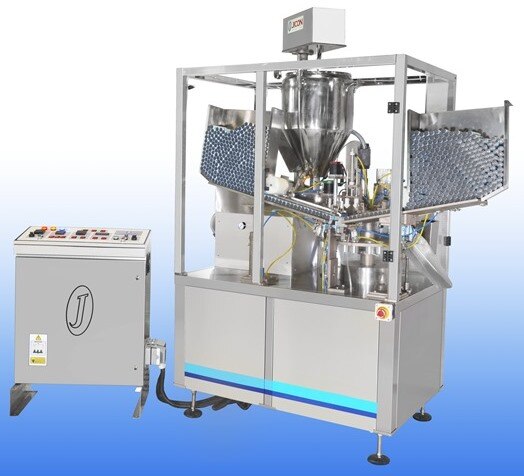 | Tube Filling Machines Automatic Tube Filling Machine ₹1 FILLTUBE Machines are designed to fill and seal plastic, laminated and aluminium tubes at high speeds. View product → |
 | Tube Filling Machines Automatic Tube Filling Machine For Lami PVC and Aluminium Tubes FILLTUBE Machines are designed to fill and seal plastic, laminated and aluminium tubes at high speeds. |