
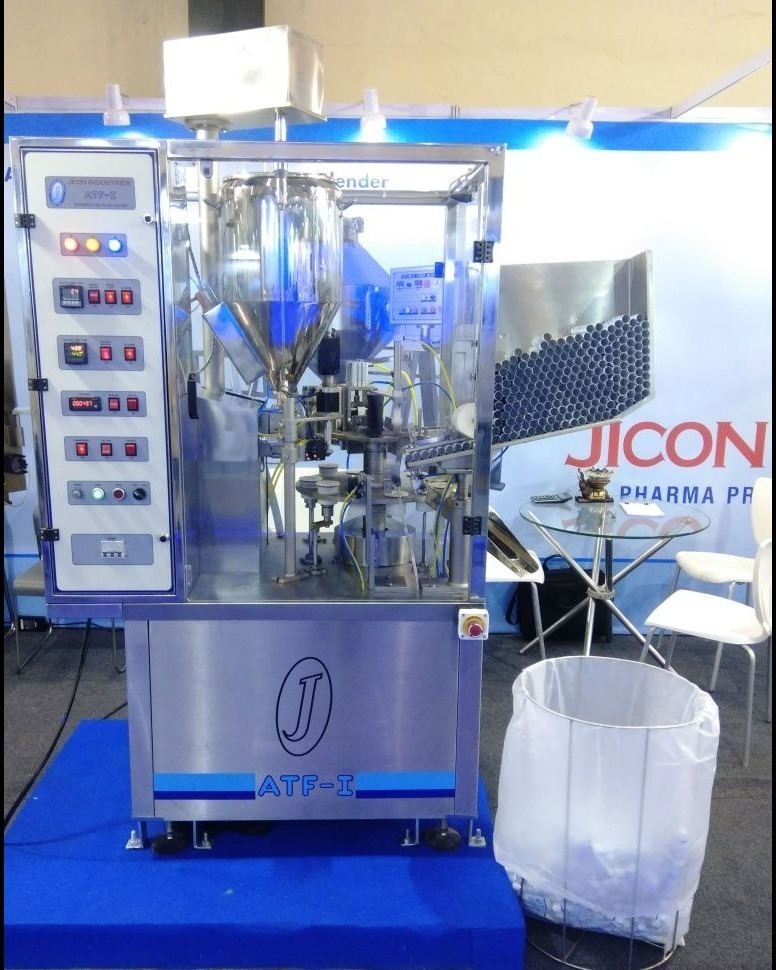
Tube filling equipment should be matched to both the formulation and the container because viscosity, tube material, dimensions and fill volume influence the filling process.
Creams, ointments, gels, pastes and balms can behave differently during dosing. The filling system therefore needs to accommodate the product's characteristics rather than relying on a generic configuration.
When selecting a Tube Filling Machine Manufacturer, procurement teams should document tube material, diameter, length and required fill range alongside the formulation details. Jicon's tube-filling range is designed for plastic, laminated and aluminium tubes and uses volumetric dosing for viscous products.
The practical workflow also matters. Tube loading, orientation, filling, sealing and ejection need to work together. If several tube formats are produced, change parts and setup requirements should be considered before purchase.
For higher-volume applications, buyers may also examine how automated feeding and tube orientation affect continuity. Jicon's automatic tube-filling equipment incorporates automatic tube loading and electronically controlled orientation, demonstrating why the surrounding handling process is part of equipment selection.
Rather than comparing machines only on advertised output, procurement teams should evaluate the complete operating sequence and determine whether it matches the actual product and packaging requirements.
For a tube-filling application requiring product and container compatibility, discuss your specifications with Jicon Technologies Pvt Ltd in United Arab Emirates.