
Wet granules do not become a consistent finished product simply because heated air passes through them. You need to prepare the feed, establish stable fluidisation, control air and product conditions, verify a measurable endpoint, and complete discharge and cleaning without damaging the batch.
Key takeaways
- Check particle size, density, moisture, and cohesion before loading.
- Use controlled airflow to suspend particles without causing channeling or slugging.
- Confirm endpoint with moisture results, not temperature alone.
- Cool, discharge, clean, and record the batch before release review.
Prepare the Wet Feed and Load the Product Bowl
Before wet material enters the dryer, confirm that its particle size distribution, density, shape, moisture content, and cohesion will support fluidisation. Suitable feeds include wet granules from a rapid mixer granulator, free-flowing powders, crystals, and controlled agglomerates; cohesive powder, excessive moisture, or irregular oversized pieces can cause channeling, slugging, or stagnant zones.
Use these fluid bed drying steps:
1. Inspect and clean the product bowl, perforated plate, filter bags or cartridges, seals, and filter housings. Remove residue and verify that filters are correctly fitted and undamaged.
2. Break oversized wet lumps without generating excessive fines. Confirm the batch mass against the manufacturing record and check the permitted minimum and maximum fill level for the bowl.
3. Spread the charge evenly across the bowl. Do not leave a deep heap against one wall, because uneven loading creates regions that receive too little air.
4. Start airflow and preheating, then establish stable fluidisation before treating a sticky or over-wet mass. Charging too soon allows material to adhere to the wall, form wet balls, and build larger agglomerates before air can separate the particles.
5. Record the load and inspect the bed response before drying. A dryer-only unit receives prepared wet feed; a single-pot granulator/dryer requires controlled binder spray, atomisation pressure, and spray rate before drying begins. Excess spray or poor atomisation can turn a fluidised bed into a stagnant mass.
How Air Suspends Particles and Removes Moisture
Conditioned air becomes a drying force when the fluid bed dryer working process drives it upward through the perforated product bowl or distribution plate at a velocity above the material-specific minimum fluidisation point.
Filtered, heated air lifts the particles into a mobile bed. Movement exposes wet surfaces to the air, while the exhaust stream carries away evaporated water or solvent. The required velocity depends on particle size distribution, density, shape, moisture content, and cohesion.
| Air condition | Bed behaviour | Consequence |
|---|---|---|
| Too little air | Channeling, slugging, partial fluidisation, stagnant regions | Uneven drying and wet pockets |
| Excessive air | Elutriation, attrition, fines generation | Filter loading and possible uneven drying |
| Correct range | Stable, mobile bed | Consistent heat and mass transfer |
Filter resistance reduces airflow as collected fines block the filter surface. A rising differential pressure signals restricted gas passage; ignoring the alarm can produce partial fluidisation, longer drying, or unsafe pressure conditions. Record these operating values during the stage:
- Airflow; inlet-air temperature and humidity
- Outlet-air temperature and product temperature
- Pressure or differential pressure
- Batch mass and drying time
- Filter-cleaning events, including pulse or shake cycles
Compare pressure trends with airflow rather than treating a single temperature reading as proof of stable drying. Airflow failure, filter blockage, or aggressive cleaning can change particle movement and the moisture-removal rate within the same batch.
Set Temperature and Confirm the Drying Endpoint
Set the inlet-air temperature below the lowest validated limit for API or excipient degradation, residual-solvent safety, or formulation sensitivity. Inlet air is not product temperature: evaporation keeps wet particles cooler during the constant-rate period, then product temperature rises as free moisture disappears.
- Establish the recipe from development data. Define airflow, inlet-air temperature and humidity, load mass, filter-cleaning cycle, and product-temperature limits. A larger load, higher inlet humidity, or increased filter resistance changes drying capacity, so do not copy a temperature from a smaller batch.
- Monitor outlet-air and product-temperature trends throughout drying. A falling gap between inlet and outlet temperature, together with a rising product temperature, indicates that free moisture is declining; the inlet setpoint alone cannot show that transition.
- Confirm the endpoint against an approved product attribute, not a fixed clock time. Use loss on drying, water activity, residual solvent, or another justified moisture limit. Changes in wet-mass moisture, airflow, load size, or ambient humidity can leave different moisture levels after the same drying time.
- Use near-infrared or another process analytical technology only as a validated aid. Correlate its signal with oven loss-on-drying or Karl Fischer water testing, define sampling and calibration ranges, maintain the model, and quarantine or test material outside the model’s range.
A fluid bed dryer for pharmaceutical production needs these limits tied to critical quality attributes such as moisture, particle-size distribution, bulk density, assay uniformity, and dissolution where relevant. In humid conditions such as Ho Chi Minh City, specify dehumidification or a validated low-humidity operating envelope.
Cool, Discharge, Clean, and Document the Batch
After the approved moisture endpoint is reached, stop adding heat and keep airflow controlled until the granules are cool enough for discharge and packaging.
1. Reduce or stop heating while maintaining airflow that cools the bed without lifting excessive fines. Poorly controlled cooling allows moisture reabsorption; excessive air can increase attrition and alter particle-size distribution.
2. Confirm product temperature against the approved discharge limit, not merely the inlet-air reading. Discharging hot granules into closed packaging can cause condensation, caking, or renewed moisture uptake.
3. Discharge through a controlled, low-drop path into a clean, labelled container. Avoid dumping from excessive height or running an aggressive transfer system, because segregation separates coarse granules from fines and changes blend uniformity.
4. Contain the equipment or start the approved cleaning procedure. Clean the bowl, distribution plate, filter housings, gaskets, spray assemblies, and hard-to-drain corners; potent, sensitising, coloured, and microbiologically sensitive products require defined changeover controls.
5. Record cleaning-agent details, operators, times, and equipment status. A visibly clean surface does not prove acceptable carryover control: documented cleaning verification, analytical limits, and swab or rinse results establish the evidence.
Close the batch record with moisture or loss-on-drying, particle-size distribution, bulk density, assay uniformity, and dissolution results where relevant. Include load mass, cooling and discharge times, filter differential pressure, filter-cleaning events, alarms, deviations, and instrument calibration status. Release the batch only after quality review confirms the approved critical process parameters and acceptance criteria.
Specify a Dryer for Climate, Risk, and GMP Requirements
Select on demonstrated process performance, not a nominal bowl volume or heater power. For a fluid bed dryer process in Vietnam, request representative formulation trials covering fluidisation, drying uniformity, granule attrition, fines generation, agglomeration, filter performance, and endpoint repeatability.
For a fluid bed dryer process for pharmaceutical production in Ho Chi Minh City, define an inlet-air humidity range or require dehumidification; ambient moisture changes drying capacity and endpoint consistency.
| Comparison | What to specify | Why it matters |
|---|---|---|
| Capacity | Usable load range, not bowl volume alone | Prevents underloading, stagnant zones, and overloaded beds |
| Heating | Airflow, humidity, heat-up rate, and product-temperature limit | Heater power alone does not prove drying performance |
| Filters | Area, media compatibility, differential-pressure range, pulse or shake cleaning | Rising resistance reduces airflow; cleaning can disturb fluidisation |
| Controls | Airflow-failure alarms, heating-loss interlocks, over-temperature protection | Stops unsafe or nonconforming batches |
| Blockage response | Alarm, controlled shutdown, pressure relief, and contained recovery procedure | Prevents filter rupture, product loss, or exposure |
For organic powders or solvent-wet feed, require a documented hazard assessment covering dust explosion, oxygen control, solvent-vapour management, conductive construction, grounding and bonding, and classified electrical equipment.
- Ask Jicon Technologies Pvt Ltd for a URS, formulation-trial report, risk assessment, FAT and SAT plan, IQ/OQ support, material certificates, calibration records, software and data-integrity controls, and change-control documentation.
- Reject proposals that omit filter differential-pressure trends, blockage response, or evidence supporting validated critical process parameters and quality attributes.
Related products
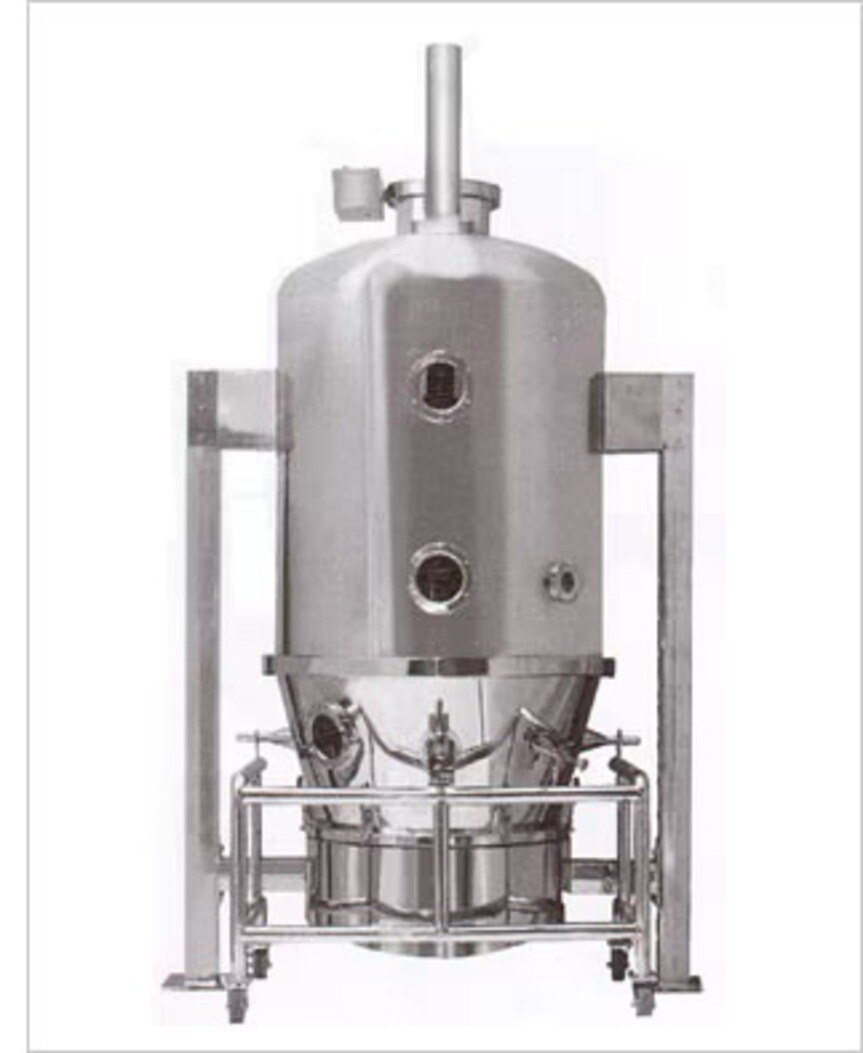
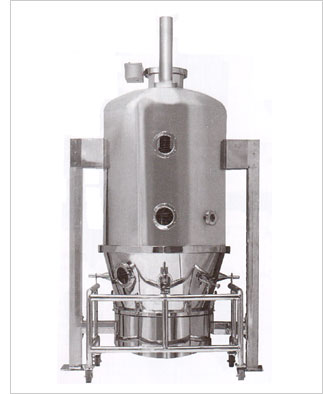 | Process Equipments FBD (FLUID BED DRYER) Salient Features: # Better productivity and lesser drying time. # Less handing, more hygienic. View product → |
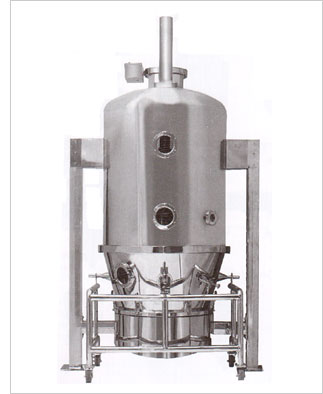 | Process Equipments FBD (FLUID BED DRYER) FBD (FLUID BED DRYER) Salient Features: # Better productivity and lesser drying time. # Less handing, more hygienic. |
Frequently asked questions
What feed properties must you check before loading a fluid bed dryer?
Check particle size distribution, bulk density, particle shape, moisture content, and cohesion. Oversized, excessively wet, or cohesive material can cause channeling, slugging, or stagnant zones.
How does a fluid bed dryer remove moisture?
Heated, filtered air passes upward through the product bowl and suspends the particles. The moving air transfers heat to the wet material and carries evaporated moisture away through the exhaust system.
How do you confirm the drying endpoint?
Use a defined product moisture limit and verify it with an approved sampling and testing method. Do not rely on outlet temperature alone, because temperature can stabilise before the batch reaches its required moisture content.
What happens after drying is complete?
Cool the product under controlled airflow, discharge it into identified containers, clean the product-contact parts, and document temperatures, airflow, time, moisture results, cleaning, and yield.
What should you consider when specifying a fluid bed dryer for pharmaceutical production?
Specify the climate, product properties, batch size, airflow range, temperature control, filtration, containment, cleanability, data records, and GMP requirements for the site and process.