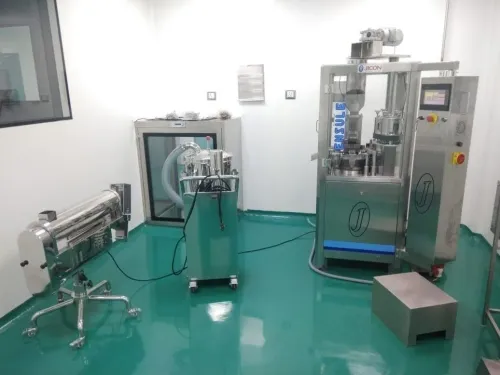

Manual inspection means handling filled capsules, viewing them under controlled light, removing visible rejects and recording the result. A polisher and sorter can make that process faster and more consistent, but only when its defect detection, handling limits, cleaning method and validation evidence match your product and line. By the end, you can compare both approaches and define a site trial for a Thane facility.
Key takeaways
- Separate polishing from defect detection when comparing capsule equipment.
- Measure reject accuracy, product loss, output rate and changeover time.
- Request cleaning records, batch traceability and GMP validation evidence.
- Run a site trial using your capsules, defects, operators and production settings.
What manual capsule inspection actually requires
Manual inspection starts with handling filled capsules in a controlled, well-lit area and looking for visible defects one unit at a time. It requires people to feed, turn and examine capsules, separate rejects and record the result without losing traceability.
- Take a defined sample or present the batch in shallow trays so capsules do not hide beneath one another.
- Inspect the cap, body, joint and shell under consistent lighting. Look for powder on the exterior, cracks, dents, splits, telescoping, unlocked cap-body joints and colour or printing differences.
- Place suspect capsules in a labelled reject container and keep accepted capsules separate. Do not return an unchecked capsule to the accepted lot.
- Count inspected and rejected units, record the defect types, identify the batch and sign the inspection record.
The work consumes operator time because every capsule needs viewing, handling and a judgement. A second person may be needed for reconciliation, and supervisors must check that the sample, lighting and records match the procedure.
Manual inspection can miss defects when viewing time varies, lighting changes or fatigue sets in. It provides little objective evidence of which capsules were seen, rejected or overlooked.
For anyone assessing capsule inspection equipment in Thane, manual checking remains useful for setup, investigations, reject verification and challenge checks, but it is a weak sole control for high-volume production.
What polishing removes—and what sorting can detect
A capsule polisher cleans the outside; a sorter machine decides which capsules meet visible-defect criteria. They are separate controls, even when combined in a capsule polisher and sorter machine.
Rotating brushes, soft contact surfaces and vacuum extraction remove loose powder, dust and residue from filled capsule shells. This improves presentation and reduces powder carryover, but polishing cannot repair a split body, dented cap or poorly locked joint.
The sorting function uses visual or other sensors to reject selected defects. Confirm the proposed equipment can detect:
- Empty capsules
- Body-cap separation or an unlocked joint
- Cracked, split, dented or deformed shells
- Telescoped capsules, where one capsule has entered another
- Unacceptable colour variation
- Foreign particles on or around the capsule
Do not assume every sorter detects every defect. Ask for representative good and defective samples, then measure detection rate, false rejects, reject confirmation and performance at the intended line speed. A brochure’s nominal speed proves none of these.
Neither polishing nor visual sorting proves what is inside the capsule. They do not establish:
- Fill weight or dose accuracy
- Assay or potency
- Content uniformity
- Dissolution performance
- Chemical or microbiological quality
Manual inspection remains useful for line clearance, unusual-defect investigation, rejected-material checks and periodic challenge samples. Automation reduces continuous visual judgement and improves repeatability, but trained personnel still need to review results and investigate failures.
How to compare machine performance, handling and changeover
A quoted capsule-per-minute figure is only a starting point. Compare acceptable capsules per shift after stoppages, recirculation, powder loss and false rejects. For capsule polishing machine India quotations, request trial results at your intended line speed using production capsules and known defects, not the brochure maximum.
| Measure | Manual inspection | Machine comparison |
|---|---|---|
| Speed and dependence | Slower; continuous visual judgement and staffing | Record rated and observed speed, operator interventions and stoppage time |
| Handling and yield | Repeated touching can transfer powder or damage shells | Check gentle conveying, powder containment, recirculation and acceptable-capsule yield |
| Reject consistency | Decisions vary between operators and shifts | Measure detection rate, false-reject rate and confirmed reject counts |
| Feed and discharge | Tables need manual loading, separation and collection | Confirm hopper capacity, orientation control, discharge height and reject-bin access |
| Compatibility | Flexible, but labour-intensive for every format | Test capsule size, shell material, colour, formulation dust and fill condition |
| Settings and changeover | Few machine settings, but full manual reset | Time recipe selection, tool-free cleaning, format-part changes and line clearance |
An automatic capsule sorting machine must prove detection of the defects you care about: empty capsules, body-cap separation, cracks, dents, deformation, colour variation and foreign particles. Check sensor status, alarm history and recipe protection; electronic counts mean little if operators can bypass the reject mechanism.
Ask for usable yield, not speed alone. Retain manual checks for line clearance, rejected-material verification, unusual defects and periodic challenge samples.
What documentation and GMP validation must demonstrate
A GMP decision needs evidence that the machine performs consistently, not simply a polished-looking capsule. Manual inspection records usually show the batch, date, inspectors and accepted or rejected quantity; they rarely identify which capsules were seen or why each was rejected.
Automated records can add counts, reject alarms, recipe selection, sensor status and operator interventions, but only when access and review controls prevent unrecorded changes.
| Record type | Useful evidence | Main limitation |
|---|---|---|
| Manual inspection | Inspector, batch, lighting check, quantities and reject reason | Fatigue, variable viewing time and subjective decisions |
| Automated inspection | Counts, alarms, settings, rejects and interventions | Weak evidence if sensors, reject timing or recipes are uncontrolled |
For a capsule inspection equipment in Thane purchase, require a qualification package aligned with EU GMP Annex 15:
- IQ verifies construction materials, product-contact parts, utilities, guards, instruments and approved drawings.
- OQ challenges speed, feed, sensor response, reject timing, alarms, recipe control and restart conditions across operating limits.
- PQ runs production-representative capsules and repeats performance with known defects, including split bodies, dented caps, telescoping and unlocked joints.
Cleaning validation must define methods, tools, residues, swab or rinse locations, acceptance limits and inspection of brushes, conveyors, vacuum lines and reject chutes. Line-clearance records must confirm removal of previous capsules, labels, settings and waste before release.
Defect-challenge evidence must reconcile known defective capsules loaded, detected, rejected and recovered, including false rejects and alarm responses. Trained personnel still review rejects, unusual defects and periodic challenge results.
How to run a Thane site trial before choosing a supplier
Run the trial in the production room, not only in a supplier showroom. To judge a capsule polishing machine for benefits in Thane, trend temperature and relative humidity through a monsoon shift, inspect dust-extraction performance, and record compressed-air pressure, filtration and oil or water carryover. Excess moisture softens gelatin; excessive drying makes shells brittle.
Use this acceptance checklist:
- Trial the actual capsule size, gelatin or HPMC shell, formulation, fill level and intended line speed.
- Add representative good capsules and known defects, including powder-coated shells, unlocked joints, dents, splits and telescoping.
- Calculate detection rate, false-reject rate, reject confirmation and usable yield from counted samples.
- Record powder loss, recirculation, stoppages, shell abrasion, static and vacuum settings.
- Verify electrical load, compressed-air demand, dust-extraction connection and noise against your site utilities.
- Time disassembly, cleaning and line clearance; inspect brushes, contact surfaces, filters and product-contact parts.
- Request IQ, OQ, PQ, cleaning instructions, calibration records, defect-challenge results and batch-record examples.
| Trial check | Acceptance evidence | Failure consequence |
|---|---|---|
| Actual product | Stable handling at target speed | A showroom result does not predict your yield |
| Defect sample | Every seeded defect rejected and confirmed | Missed defects reach packing |
| Good sample | False rejects counted and within your written limit | Saleable capsules are lost |
Compare each capsule polishing machine India quotation on usable capsules per shift, not headline speed. Jicon Technologies Pvt Ltd can be asked to demonstrate recipe control, reject alarms and operator-intervention records using your own batch materials. Reject the supplier if evidence stops at nominal throughput or visual claims.
Related product
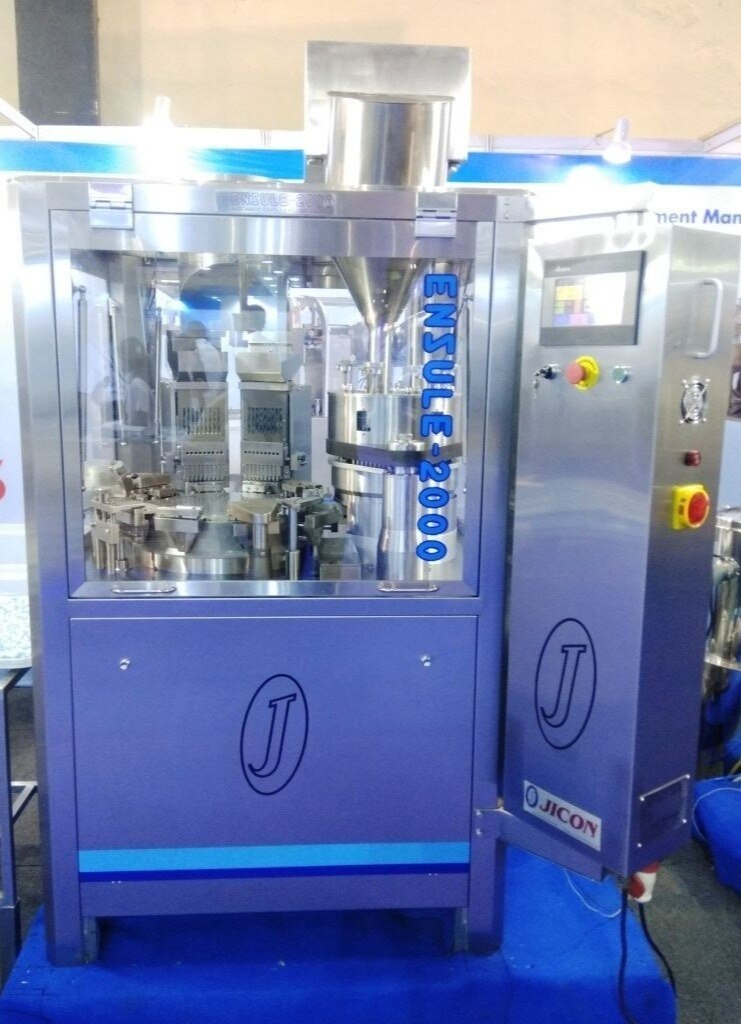
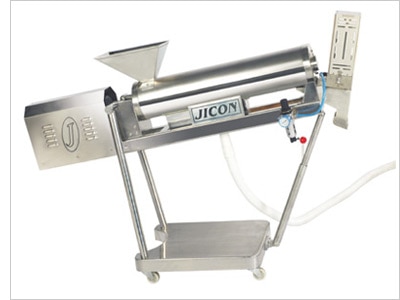 | Accessories and Ancillary Equipments Capsule Polishing And Sorting Machines Capsule polishing cum Sorting Machine is used in connection with the ENSULE or SACF series of Capsule Filling machines. View product → |
Frequently asked questions
What does manual capsule inspection require?
Manual inspection requires a controlled, well-lit area, trained operators, capsule handling and turning, reject separation, and traceable result recording.
What does a capsule polisher remove?
A capsule polisher removes loose powder and dust from capsule surfaces; it does not replace sorting for every visible defect.
What should you compare when choosing capsule inspection equipment?
Compare polishing performance, defect detection, product handling, reject accuracy, capsule loss, cleaning, output and changeover time.
What should GMP validation documentation demonstrate?
Documentation should connect settings and operating steps with cleaning, batch traceability, reject handling, inspection results and validated performance.
How should you run a Thane site trial?
Use your capsules and known defects, record output and rejects, test changeovers and cleaning, and have operators verify the results before selection.