
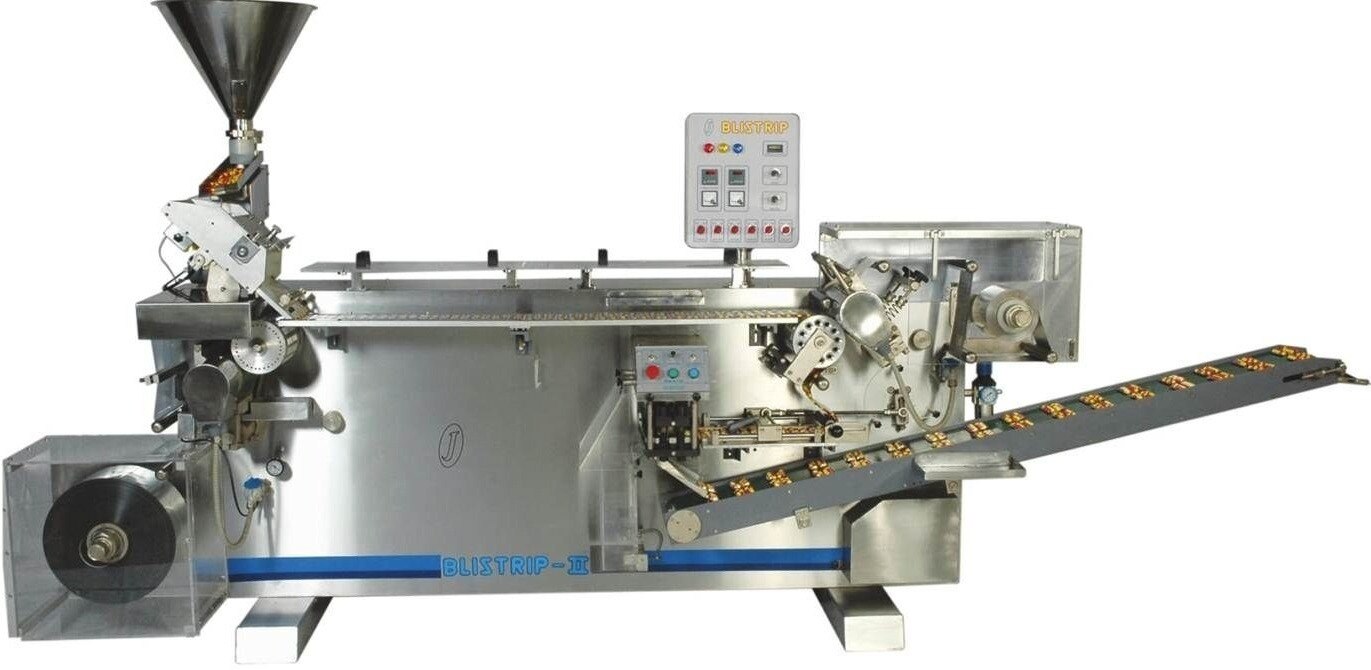
A tablet blister line must coordinate foil movement, cavity formation, tablet placement, sealing, inspection and cutting without losing registration or allowing defective packs into the good-product flow. By following each indexed cycle and its control points, you can understand the equipment sequence, prepare a run correctly and judge whether flat-plate technology fits your production needs.
Key takeaways
- The web indexes one blister pitch before each flat-plate operation.
- Cold-forming creates aluminium cavities without heating the forming web.
- Inspect foil seals, tablet presence and cut registration before release.
- Choose flat-plate equipment for controlled, lower-volume blister production.
What happens during one flat-plate blister cycle?
One flat-plate blister cycle moves the web one blister pitch at a time, stopping it under each working plate before advancing it. That is how flat plate blister for packing machine works from web entry to finished blister, rather than through continuous rotating motion.
1. The base web unwinds from its reel through tension rollers and guide rails. A registration-mark sensor, or a measured index length, tells the indexing mechanism where to stop; a servo or indexing clutch corrects drift.
2. The web stops, and the forming plate closes. Its tool creates the tablet cavities, then opens before the web moves again.
3. The product-feeding plate places tablets into the formed pockets. Sensors check tablet presence and detect missing or extra product before sealing.
4. The lidding foil unwinds with its heat-seal side facing the base web. The sealing plate closes for the set temperature, pressure and dwell time, joining foil to web without crushing the pockets.
5. Position sensors confirm web alignment and plate closure. After sealing, printing, vision inspection or perforation can occur, depending on the layout.
6. The indexing mechanism advances the sealed web to the next station. Punching or die cutting then produces individual blisters, strips or cards, while a reject sensor confirms movement into the reject path.
7. The machine repeats the stop-and-advance cycle. Guards, interlocked doors and emergency stops protect operators from hot sealing surfaces, crushing plates and cutting tools during running, jam clearing and tool changes.
Exact station order changes with integrated printing, inspection or perforation, but the controlled intermittent cycle remains.
How cold-forming makes cavities and places tablets
Cold-form aluminium stock becomes a cavity through mechanical pressure, not by heating the laminate into a plastic state. The forming plate drives punches into dies, and forming-tool depth, punch and die geometry, foil draw, and tablet length, width and thickness determine the required clearance.
A cavity that is too shallow can crush or bridge a tablet; excess clearance enlarges the pack and consumes more material.
Forming pressure and dwell must draw the foil fully without overstressing it. Back support keeps the web stable while smooth radii guide the foil around corners, limiting laminate cracking and pinholing.
The forming plate therefore creates usable volume, not merely an impression: tablet clearance must accommodate manufacturing variation and reliable release during the flat plate blister packing process.
The product-feeding plate synchronises tablet delivery with the indexed cavity pitch. Tablets leave the hopper through a controlled track or chute, then pass through a vibratory channel, brush, belt or slat arrangement selected for their shape, friability, embossing and tendency to nest.
Check the feed before approving the automatic blister packing steps:
- Confirm each cavity receives one tablet at the correct index position.
- Use pocket-detection sensors and missing- or double-fill detection to stop or reject incomplete pockets.
- Reject chipped, oversized, inverted or jammed tablets before they reach the sealing station.
- Treat a pack as defective when a tablet is absent or trapped in the seal area, even if the sealing plate has produced a mechanically complete seal.
How lidding foil, sealing, inspection and cutting finish the pack
After tablets enter the pockets, the machine lays lidding foil over the formed web with its heat-seal coating facing the compatible blister material. The sealing plate then closes and holds the layers together.
A reliable seal sits inside a window defined by temperature, pressure and dwell time. Too little heat, pressure or dwell creates channels and weak seals; too much heat or dwell can distort plastic, damage printed artwork or squeeze sealant out of the joint.
In the pharmaceutical blister packaging process, registration control keeps print, perforations, cavities and cut lines aligned. A mark sensor reads the foil registration mark, while a servo or indexing clutch corrects web position. Drift can move a batch code off-centre or place a cut through artwork.
- Inspect cavity formation, tablet presence, foil position and printed-code legibility with vision equipment or sensors before or after sealing, according to the station layout.
- Record seal temperature and pressure, but do not treat the HMI temperature as proof of acceptance. Validated parameters, package-integrity tests and seal-strength tests establish whether the joint passes.
- Send failed packs to a confirmed reject route, then verify that the reject device operated and that no rejected blister remains in the accepted output.
After sealing, a punch or die cuts individual blisters, strips or cards. The same tooling can add perforations, tear notches and rounded corners. Correct die clearance, sharpness, web support and alignment prevent burrs, delamination, incomplete cuts and tablet damage; a clean cut alone does not prove seal integrity.
How to set up, validate and run a production batch
Before pressing Start, complete line clearance. Remove previous tablets, foil, labels and printed components; reconcile issued, used, rejected and returned packaging materials. Verify the approved base web, lidding foil, tooling, batch number and coding artwork.
1. Install and secure the forming plate, product-feeding plate, sealing plate and punch. Check guide rails, tablet-presence and registration sensors, guards, interlocked doors and emergency stops. A loose plate can damage tooling or shift the seal boundary.
2. Thread and tension the forming and lidding webs. Set the index length or registration mark, load tablets into the hopper and enter the approved recipe, including validated forming, feeding, sealing and cutting parameters.
3. Run a guarded dry cycle before adding product. Confirm plate closure, web travel, feed timing, seal alignment and cutter position. This is the core of alblis blister machine operation: a controlled sequence of indexing, forming, feeding, sealing, inspection and cutting, not one sealing action.
4. Produce and approve the first-off pack. Check cavity dimensions, tablet presence, seal appearance, code position and legibility, cut quality and pack integrity against the batch record. Do not release the batch from an HMI temperature reading alone; use the approved seal and integrity criteria.
5. Challenge the reject system with a known defect, confirm physical segregation, then reconcile rejected packs and materials. If a jam occurs, stop the machine, isolate energy and use the approved access method; never reach through a guard. Apply the same isolation and approved tool-change procedure to hot plates, punches and format changes.
These automatic blister packing steps keep product, artwork and packaging identity controlled throughout the batch.
When flat-plate equipment is the better production choice
Choose flat-plate equipment when format access and changeover control matter more than maximum sustained output. A how flat plate blister for packing machine works decision starts with motion: the web stops, forms, fills and seals in indexed steps, while rotary equipment forms and seals around a continuously rotating drum or wheel.
| Decision factor | Intermittent flat plate | Rotary forming and sealing |
|---|---|---|
| Tooling and formats | Accessible tooling; useful for varied tablet shapes and frequent changes | Higher tooling commitment; efficient after formats stabilise |
| Output and losses | Indexing pauses reduce sustained output; forming and sealing dwell are controllable | Continuous rotation supports higher output with fewer stop losses |
| Changeover and setup | Lower planned tooling cost, but more operator involvement and setup scrap | Longer or costlier tooling changes, with setup waste spread across higher volumes |
| Space and validation | Compact access can simplify inspection, but each recipe and format needs documented validation | Larger integrated line; fewer high-volume formats can reduce validation repetition |
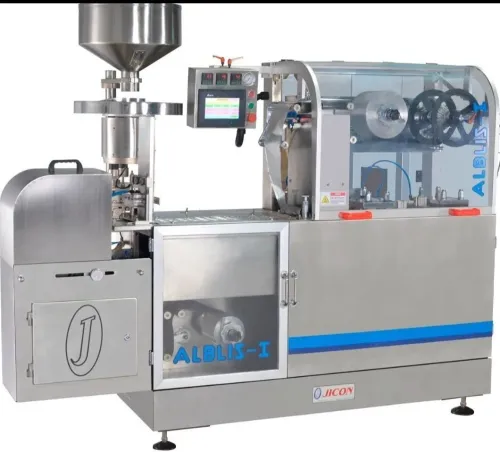
For alblis blister machine operation, compare batch size, target output, changeover frequency, tooling range, floor space, staffing and the number of recipes needing validation. ALBLIS-I suits the profile of smaller batches, frequent access and varied formats; select ALBLIS-II only after confirming that its configuration matches your required output, tooling and available operators.
Flat plate is a poor fit when continuous high-volume production outweighs flexibility. It suits lower planned output when quick access, reduced changeover disruption and tablet-format variety prevent a rotary line from earning back its additional complexity.
Jicon Technologies Pvt Ltd can help assess that choice against the complete feed, inspection, sealing and reject workflow—not machine capacity alone.
Related products
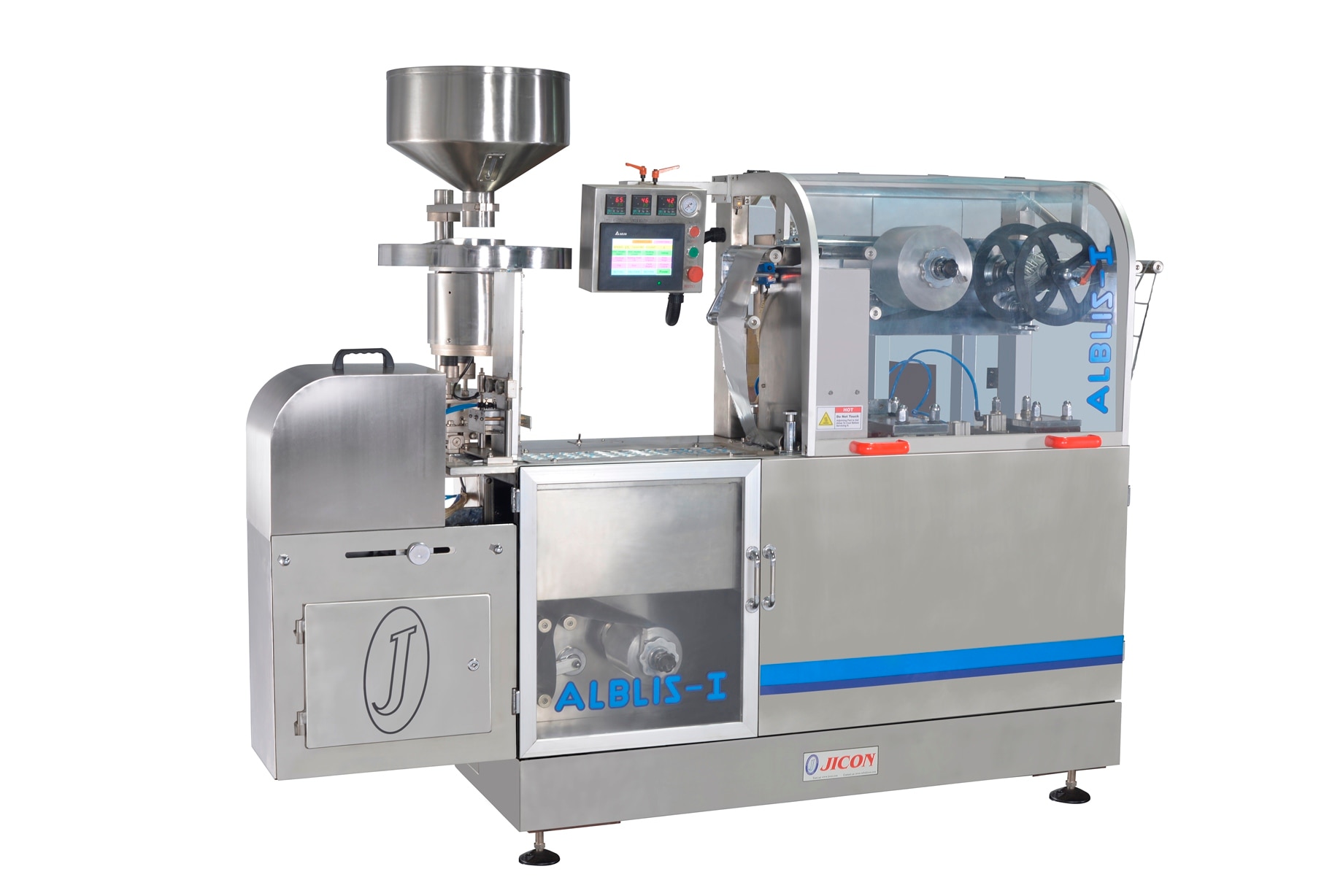 | Blister Packing Machines ALBLIS-I: Automatic Flat Plate Blister Packing Machine Flat Plate Blister Packing Machine Ideal for R&D, pilot plants and small batch production: ALBLIS is a versatile ‘Flat Plate’ intermittent motion... View product → |
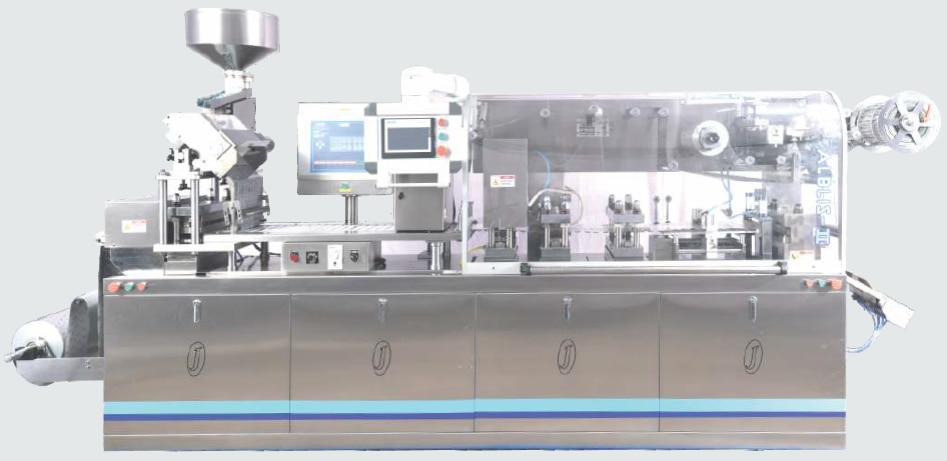 | Blister Packing Machines Automatic Flat Plate Blister Packing Machine ALBLIS-II Automatic Flat Plate Blister Packing Machine (Ideal for Commercial High Output batches): ALBLIS is a versatile ‘Flat Plate’ intermittent motion... View product → |
Frequently asked questions
What happens during one flat-plate blister cycle?
The machine feeds the web by one blister pitch, stops it under each working plate, performs the operation, then advances it to the next station.
How does cold-forming make tablet cavities?
A forming tool presses aluminium laminate into shaped pockets without heating the forming web, after which tablets are placed into the cavities.
How are tablets sealed and cut into blister packs?
Lidding foil is positioned over the filled web, heat and pressure seal the layers, inspection checks the pack, and a cutting tool separates finished blisters.
What should you check before running a production batch?
Set the forming depth, tablet feed, foil alignment, sealing temperature and pressure, indexing distance, inspection settings and cutting registration, then validate the resulting packs.
When is flat-plate blister equipment the better choice?
Flat-plate equipment suits controlled, lower-volume or frequently changing production where straightforward tooling and indexed operation matter more than continuous high-speed output.
Related products
 | Blister Packing Machines Automatic Flat Plate Blister Packing Machine ALBLIS-I ₹1 Flat Plate Blister Packing Machine Ideal for R&D, pilot plants and small batch production: ALBLIS is a versatile ‘Flat Plate’ intermittent motion... View product → |
 | Blister Packing Machines ALBLIS-II: Automatic Flat Plate Blister Packing Machine ₹1 Automatic Flat Plate Blister Packing Machine (Ideal for Commercial High Output batches): ALBLIS is a versatile ‘Flat Plate’ intermittent motion... View product → |