
“Recovery parts” is not a precise engineering category: it could mean a worn dosing component, a capsule-size changeover set, a refurbished assembly or a repair kit. You will be able to translate the request into identifiable parts, verify SACF I or SACF-II compatibility, diagnose faults and assess Riyadh suppliers before ordering.
Key takeaways
- Define recovery parts by supply condition, drawing, and machine compatibility.
- Match capsule faults to a documented inspection sequence before replacing parts.
- Clean, inspect, and release product-contact parts using written records.
- Request part numbers, materials, lead times, and warranty terms in every quotation.
What “recovery parts” means for SACF equipment
“Recovery parts” is a procurement term, not a standard capsule-filler category. It must be translated into a defined supply condition and part type before you request a price.
| Part type | Meaning | Typical procurement question |
|---|---|---|
| Routine wear parts | Items consumed by friction, cleaning or repeated cycles, such as seals, springs, bushings and filters | What quantity and replacement interval apply? |
| Format-specific change parts | Tooling that matches capsule size and dosing arrangement | Which capsule format and machine version does it fit? |
| Replacement parts | New components supplied against a part number or drawing | Is the part interchangeable with the installed item? |
| Refurbished or recovered components | Used parts repaired, re-machined or restored | What dimensions, surface finish and acceptance limits were recorded? |
| Complete spare assemblies | Ready-to-install units such as a dosing or closing assembly | Does the assembly include every adjustment part? |
| Repair kits | Grouped items intended to correct a defined fault | Which failure mode and machine station does the kit address? |
Before requesting a quotation, record the machine nameplate, serial number, SACF I or SACF-II designation, capsule-size range, dosing principle and station count. A supplier should then convert the request into a numbered parts list with each item marked new, repaired, refurbished or recovered.
The phrase semi automatic capsule for filling machine manufacturer recovery parts in riyadh is a search phrase, not an adequate specification. It does not identify a drawing, revision, capsule format or condition, so it cannot establish compatibility or price.
Which SACF replacement parts need identification and compatibility checks
Identify the complete inventory before ordering SACF replacement parts; ask the supplier to review whether these items are required and available for your exact machine:
- Capsule-loading plates, body and cap segments, separation plates, dosing discs or rings, dosators or tamping pins
- Powder funnels, scrapers, hopper agitator components, closing plates, guide rails and locking pins
- Cams, springs, bushings, bearings, vacuum filters, seals and pneumatic tubing
- Drive components and electrical controls
SACF I and SACF-II, older and newer builds, and capsule sizes 000 through 5 can use different tooling, clearances and closing adjustments. Do not assume a part fits because its description matches.
| Machine version | Compatibility risk | Evidence to confirm |
|---|---|---|
| SACF I | Original interface, dimensions and adjustments may differ | Machine-version reference and drawing |
| SACF-II | Revised tooling or station geometry may differ | Revision and part-number cross-reference |
| Sizes 000–5 | Segments, dosing tools, guides and closing settings change | Capsule format and change-part drawing |
Require each quotation line to include the part number, revision, dimensional drawing, photograph, material declaration, certificate of conformity and machine-version reference. A semi automatic capsule filling machine manufacturer or service supplier should identify the exact interface, not offer an unverified generic kit.
On receipt, check:
- Dimensions, flatness and runout where applicable
- Shaft and hole fit, burrs and thread condition
- Surface defects, material documents and quantity
Record discrepancies before installation; a small thickness, clearance or alignment error can stop capsule transport, dosing or closing.
Match each capsule-filling fault to the part and inspection sequence
Start with the symptom, then inspect the related SACF replacement parts in a fixed order rather than changing several components at once.
1. Poor capsule separation or intermittent stoppage: inspect the vacuum pump, filter, regulator, hose, seals, separation plate, then body or cap segments. A blocked filter, leaking hose, worn seal or damaged segment can interrupt separation.
2. Incomplete filling: inspect hopper feed, powder funnel, scraper, dosing disc or dosator, and tamping pins. Then check powder flow, because bridging or poor filling can come from the formulation rather than a failed part.
3. Inconsistent weight: check bulk density, compressibility, flowability, moisture, particle-size distribution and electrostatic charging before replacing parts. Also verify tooling wear, dosing depth, tamping settings and machine speed.
4. Powder leakage: inspect dosing clearances, scrapers, seals and closing alignment. Excess clearance or a distorted scraper can spill powder throughout the station.
5. Capsule damage or failure to lock: check segments, guide rails, closing plate, locking pins, springs, cams and alignment. Do not increase closing force until the capsule path is aligned.
Clean powder residue first; adjust settings or clearances when measurements remain within the drawing limit. Repair a recoverable part with documented work, replace one outside limits, and reject any part with cracks, deformation, corrosion, damaged threads, excessive play or lost spring tension. Re-machined parts require dimensional and surface-finish records.
Replace, clean and release product-contact parts safely
Stop the SACF machine before touching a product-contact part. A controlled sequence prevents trapped energy, cross-contamination and misassembly; it also gives capsule filler recovery parts in Riyadh a defensible release record.
1. Stop production, isolate electrical, vacuum and pneumatic energy, and apply lockout controls. Verify zero energy at the machine before opening guards or disconnecting tubing.
2. Remove residual powder, segregate the previous product and document line clearance. Photograph each part’s orientation and connection before disassembly, then remove components in station order.
3. Protect clean product-contact surfaces from dust, impact and unapproved lubricants. Inspect every component under adequate light for cracks, deformation, corrosion, burrs, damaged threads, excessive play and residue.
4. Install parts only after verifying the part number, dimensions, revision, material and lot or heat traceability. For elastomers, record polymer type, hardness where relevant, dimensions, temperature and chemical exposure, product or cleaning-agent contact, and cleaning compatibility; “food grade” alone is not a seal specification.
5. Apply lubricant only where the machine procedure permits it, keeping lubricant away from product-contact surfaces. After reassembly, check fastener torque, alignment, free movement and vacuum integrity, then verify capsule separation, dosing, closing, empty-capsule damage, average fill weight, individual-weight variation, leakage and repeatability after cleaning and changeover.
Record inspection results, settings, part numbers, traceability and line-clearance approval. Do not release the machine until failed checks are investigated and the acceptance decision is signed.
How to compare Riyadh suppliers and request a defensible quotation
Request a numbered quotation, not a generic “recovery-parts kit.” Tell the semi automatic capsule filling machine manufacturer to separate SACF I and SACF-II compatibility, capsule-size change parts, routine wear parts, critical spares, vacuum or pneumatic items, electrical controls and complete assemblies.
| Category | Require in the quotation | Reject or clarify |
|---|---|---|
| Compatibility | Model, serial range, part number, revision, capsule size | “SACF” alone |
| Condition | New, repaired, refurbished or recovered | Unstated condition |
| Evidence | Drawing, photograph, material declaration, certificate of conformity | Verbal equivalence |
| Supply | Quantity, lead time, warranty and installation support | “Available” without a date |
| Release | Inspection interval and acceptance-test criteria | No test method |
Ask for each item’s dimensional drawing, machine-version reference and inspection records. Include fit checks for flatness, runout, shaft and hole fit, burrs, threads, surface defects and quantity before acceptance.
Compare suppliers using your actual formulation, capsule size, dosing principle, station count, target fill weight and weight-variation limit. Machine operation alone does not prove dosing performance; request a trial or acceptance test using your powder, with results recorded before approving capsule filler recovery parts in Riyadh.
Jicon Technologies Pvt Ltd can review a Riyadh requirement when you provide nameplate photographs, serial number, drawings, failed-part images and the intended capsule format. Confirm availability and compatibility in writing before treating any listed component as an offered SACF replacement part.
Related products
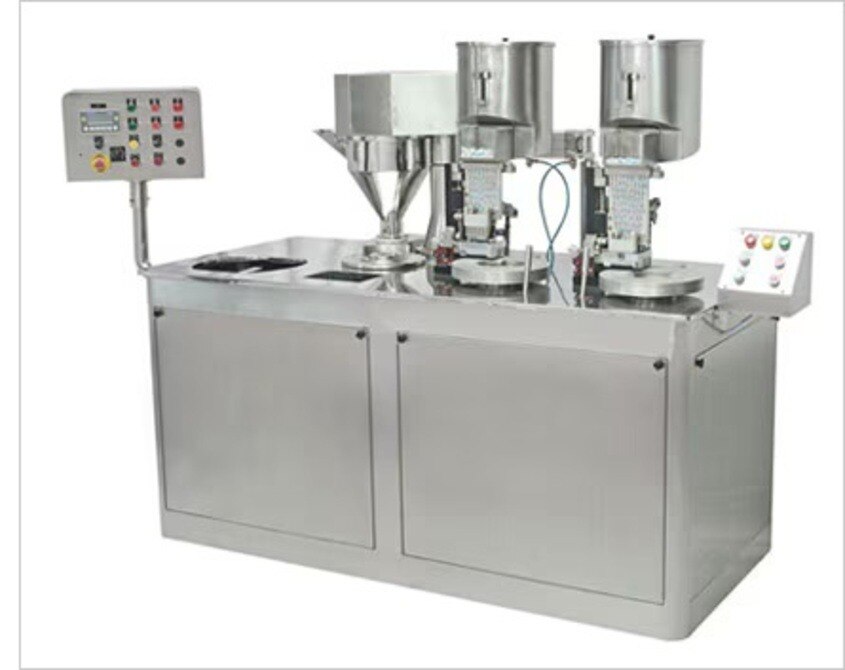
 | Capsule Filling Machines Semi Automatic Capsule Filling Machine SACF SACF I & SACF -II (Semi Automatic Capsule Filling Machines) are designed to fill hard gelatin capsules of all sizes with powders, pellets or granular... View product → |
 | Capsule Filling Machines SACF: Semi Automatic Capsule Filling Machine SACF I & SACF -II (Semi Automatic Capsule Filling Machines) are designed to fill hard gelatin capsules of all sizes with powders, pellets or granular... View product → |
Frequently asked questions
What does “recovery parts” mean for SACF equipment?
It is a procurement term that must be defined by the required part, condition, compatibility, and inspection status before pricing.
Which SACF replacement parts need compatibility checks?
Check capsule holders, dosing components, guide plates, tamping parts, tooling, seals, sensors, and other parts against the exact machine model and drawing.
How do you match a capsule-filling fault to the correct part?
Record the fault, inspect the capsule path in sequence, verify settings and cleanliness, then replace the confirmed defective component.
What should a Riyadh supplier quotation include?
Request the exact part number, machine compatibility, material, condition, quantity, lead time, delivery terms, warranty, and inspection or certification documents.
Related products
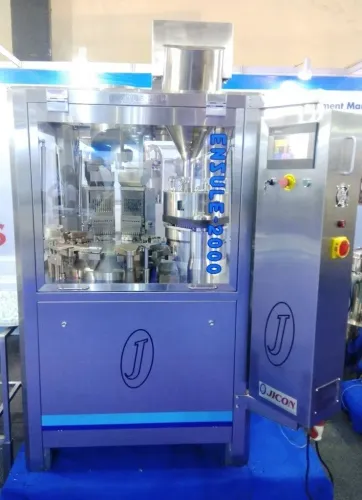
 | Capsule Filling Machines Automatic Capsule Filling Machines ENSULE Our ENSULE series of machines are Fully Automatic Capsule Filling machines used to fill powders (in the form of slugs, pellets or mini tablets) in... View product → |
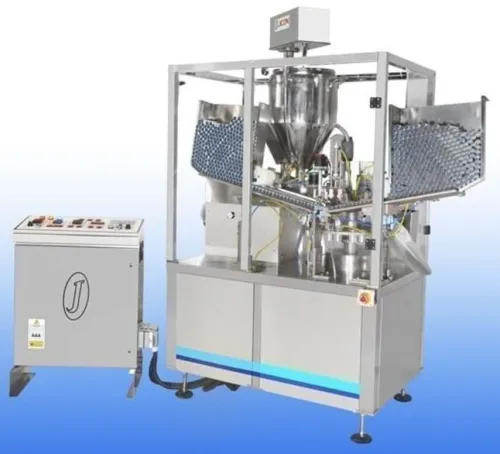
 | Container Filling Machines Automatic Container Filling Machine High speed automatic multi head container filling machine for filling cream, paste, ointment, wax polish, grease, jam, sauce etc. View product → |
 | Container Filling Machines Semi Automatic Container Filling Machine A simple and sturdy semi-automatic container filling machine for filling cream, paste, ointment, wax polish, grease, jam, sauce etc. View product → |