
A deblistering machine stays reliable when operators control three things together: clean product-contact tooling, repeatable format settings and documented product disposition. You will be able to build a maintenance routine, diagnose common faults, manage Ahmedabad’s humidity and decide what evidence to request from a supplier before installation.
Key takeaways
- Inspect pins, rollers, grippers and guides before every shift.
- Clean product-contact parts using documented procedures and verified dry storage.
- Set tooling for each blister pack before raising machine speed.
- Use batch records to separate tooling faults from feed and alignment problems.
Build a maintenance routine around every shift, not every breakdown
Inspect the product-contact tooling before every shift and before increasing speed. Burrs, rounded edges, scoring or embedded tablet dust on deblistering pins, rollers, grippers, perforators, guides or discharge chutes can chip tablets, puncture capsules and contaminate recovered product.
- Check pins, rollers, grippers, guides and chutes for wear, loose fasteners, misalignment and trapped foil.
- Confirm the correct tooling identification for the blister format, tablet or capsule, then rotate the machine manually through one cycle.
- Verify vacuum, compressed-air pressure and condensate drains against the approved operating limits. Wet or oily air can foul sensors and leave residue on exposed product.
- Run a small quantity at low speed. Stop if tablets crack, powder increases, blisters jam or recovery is incomplete.
- Record the batch, blister material, speed, tooling identification, air or vacuum readings, rejected quantity, symptom and corrective action.
Clean exposed surfaces at the end of the shift and remove foil scraps, loose tablets and dust from collection trays. Escalate recurring faults instead of compensating with higher speed, air pressure or vacuum; that can conceal worn tooling and increase damage.
Require the pharmaceutical machines manufacturer to provide part numbers, exploded drawings, maintenance intervals, utility limits and fault-code instructions. Use those documents to schedule daily cleaning, weekly wear checks and monthly inspection of bearings, drives, seals and alignment.
Clean product-contact parts without creating contamination risk
Tablet dust trapped on a deblistering machine can contaminate the next batch and make good tablets chip. Stop the machine, isolate power and remove all foil, loose tablets and format parts before cleaning; line clearance prevents mix-ups between strengths, products and blister sizes.
Follow the approved procedure for each product-contact part:
- Remove only the pins, rollers, grippers, perforators, guides and discharge chutes identified for disassembly.
- Apply the named cleaning agent, concentration and contact time; do not substitute a solvent because it is convenient.
- Rinse when the procedure requires it, then dry completely before reassembly. Moisture left in a chute or bearing area promotes corrosion and residue.
- Collect recovered product separately until the area and equipment pass inspection.
Inspect every contact surface for burrs, rounded edges, scoring, embedded powder and cracks. A damaged guide or pin can turn intact tablets into chipped, powder-contaminated recovery.
Lubricate only at the specified points, using the machine maker’s quantity, interval and food- or pharmaceutical-grade lubricant where incidental contact is possible. Do not silence a noisy bearing or gearbox with extra grease: excess lubricant attracts dust, raises temperature and can migrate into product areas.
Keep compressed air away from exposed tablets unless filtration, oil carryover and condensate controls meet the specified point-of-use standard.
Set tooling for the pack and product before increasing speed
Start at the slowest validated speed, with the correct format parts installed. A pharma machinery manufacturer de blistering machine must match the tablet or capsule, blister pocket depth, pitch and lidding material; a change from PVC/PVDC to aluminium requires a new setup trial.
1. Set the guide width and height. Centre each pocket so the blister travels without twisting, and leave enough clearance for the largest tablet or capsule. Too little clearance crushes edges; too much lets pockets drift into the pins or rollers.
2. Set deblistering force and air or vacuum. Increase pressure or vacuum only until the foil separates cleanly and every pocket empties. Excess force punctures capsules, chips tablets and creates powder. Inspect pins, rollers, grippers and guides for burrs, scoring, rounding or embedded dust before testing.
3. Set speed last. Run a small batch at low speed, then increase in controlled steps while checking tablet integrity, empty-pocket rate, foil separation, reject segregation and recovery yield. Stop at the first failed acceptance check rather than compensating with more pressure.
Record tooling identification, speed, air or vacuum readings, blister material and batch number. Confirm the approved upper limits in the supplier’s operating manual, then document a challenge run across the intended range; “adjusted machine” is not a usable maintenance record.
Find the cause of crushed tablets, jams and incomplete recovery
Stop the de blistering machine before increasing speed. Separate crushed tablets, intact recovered tablets and rejected blisters, then identify whether the failure is crushing, jamming or incomplete pocket opening.
1. Inspect deblistering pins, rollers, grippers, perforators, guides and discharge chutes. Look for burrs, rounded edges, scoring, misalignment and embedded tablet dust. Worn or dirty tooling can chip tablets, puncture capsules and create powder.
2. Check the blister material and format against the approved setup. Record the pocket depth, blister pitch, tablet or capsule shape, lidding material and seal strength. A change from PVC/PVDC to aluminium, or a new supplier, can require a setup trial rather than a speed adjustment.
3. Test vacuum at the machine, not only at the plant header. Check the pump or venturi, filter element, hose joints, flexible tubing and seals. A blocked local filter or cracked hose can leave tablets inside pockets even when the central vacuum reading looks correct.
4. Clear the jam without forcing trapped material through the tooling. Remove loose foil and tablets, verify guides and discharge paths, then restart at the lowest validated speed. Record the batch, speed, tooling identification, vacuum or air readings, rejected quantity and corrective action.
Keep recovered tablets physically segregated and identified until quality review decides their disposition. If the fault returns after these checks, stop adjustment and call service with the recorded evidence.
Control changeovers, recovered product and Ahmedabad conditions
Before loading the next strength, product or blister format, complete line clearance under 21 CFR 211.130. Record the check, then have a second person verify the machine and surrounding area.
- Remove previous foil, labels, cartons, loose tablets and format parts.
- Check the hopper, guides, discharge chute and collection container for residue.
- Match the job number, product name, strength and format to the batch record.
- Release the machine only after both signatures are complete.
Keep recovered tablets in a sealed, labelled container separate from approved stock. Record the batch, quantity and recovery time; a deblistering machine cannot prove identity, stability, remaining shelf life or suitability for use. Quality must decide disposition.
Ahmedabad’s heat, dust and monsoon humidity demand dry storage for electrical cabinets and spare tooling. Check cabinet cooling or dehumidification, drain receiver tanks and air-line filters, and inspect for corrosion after shutdowns. Condensation forms when humid air meets a cold air-conditioned machine.
Treat compressed air near exposed tablets as a product-contact utility. Ask the pharmaceutical machines manufacturer to specify filtration, condensate drainage, pressure and point-of-use testing under ISO 8573-1. Wet air and oil carryover foul sensors, mark tablets and accelerate corrosion.
Use only the specified lubricant, quantity and interval; excess grease attracts dust and migrates toward product areas.
Choose service support using evidence, not the word manufacturer
Before you approve a deblistering machine, demand a witnessed trial with your blister materials, product shapes and target recovery rate, then record every setting and result. A pharma machinery manufacturer earns confidence through repeatable evidence, not the label “manufacturer.”
| Evidence | What to test or obtain | What failure it exposes |
|---|---|---|
| Tooling trial | Run representative packs at low, target and maximum proposed speeds; inspect pins, rollers, grippers, guides and chutes for burrs, scoring, dust and tablet damage | Chipping, powder generation, jams or a speed limit hidden by a demonstration |
| Utility qualification | Record air pressure, vacuum, condensate and filtration; specify point-of-use testing against ISO 8573-1 particle, water and oil classes | Wet air, oil carryover, sensor faults and residue on recovered tablets |
| Service documentation | Obtain exploded drawings, part numbers, change-part identification, fault codes, cleaning instructions, lubricant specifications and preventive-maintenance intervals | Delayed repairs and unsafe improvisation by local technicians |
A pharmaceutical machines manufacturer should also provide a commissioning record covering batch, blister material, tooling identity, speed, air and vacuum readings, rejects and corrective action. Jicon Technologies Pvt Ltd can be assessed by requesting those records and a named escalation route, rather than accepting “service available” as proof.
Keep recovered tablets segregated and identified until quality review decides their disposition; deblistering proves removal from packaging, not product identity or release suitability.
Related products
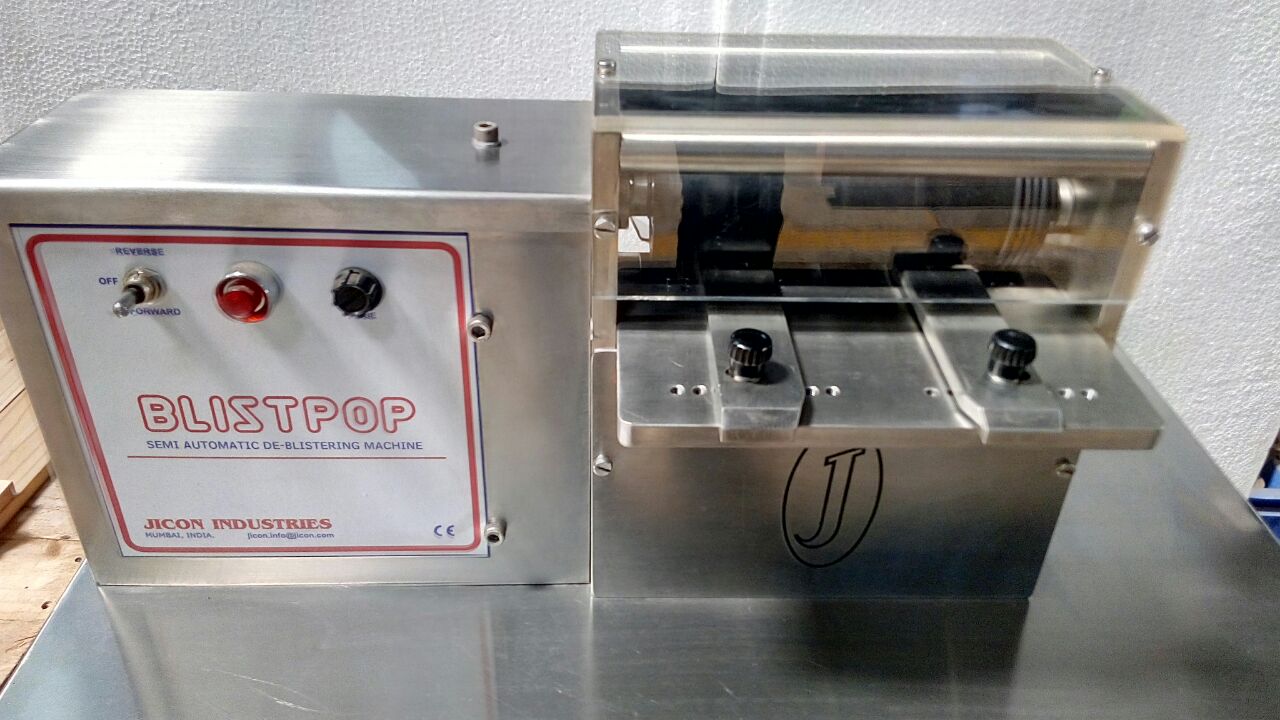 | Accessories and Ancillary Equipments BLISTPOP (De-Blistering Machine) ₹1 BLISTPOP is a simple de-blistering machine which is used to recover tablets / capsules / dragees from damaged or incomplete blister packs. View product → |
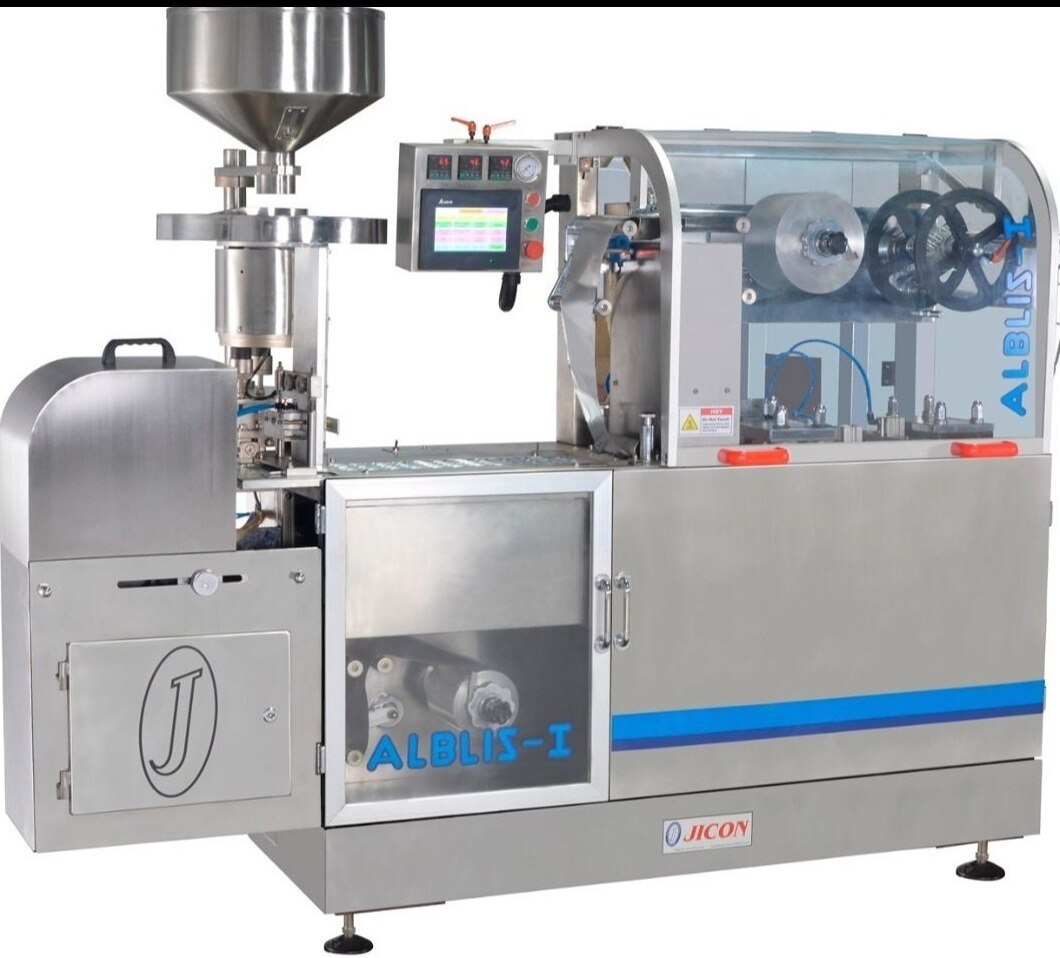
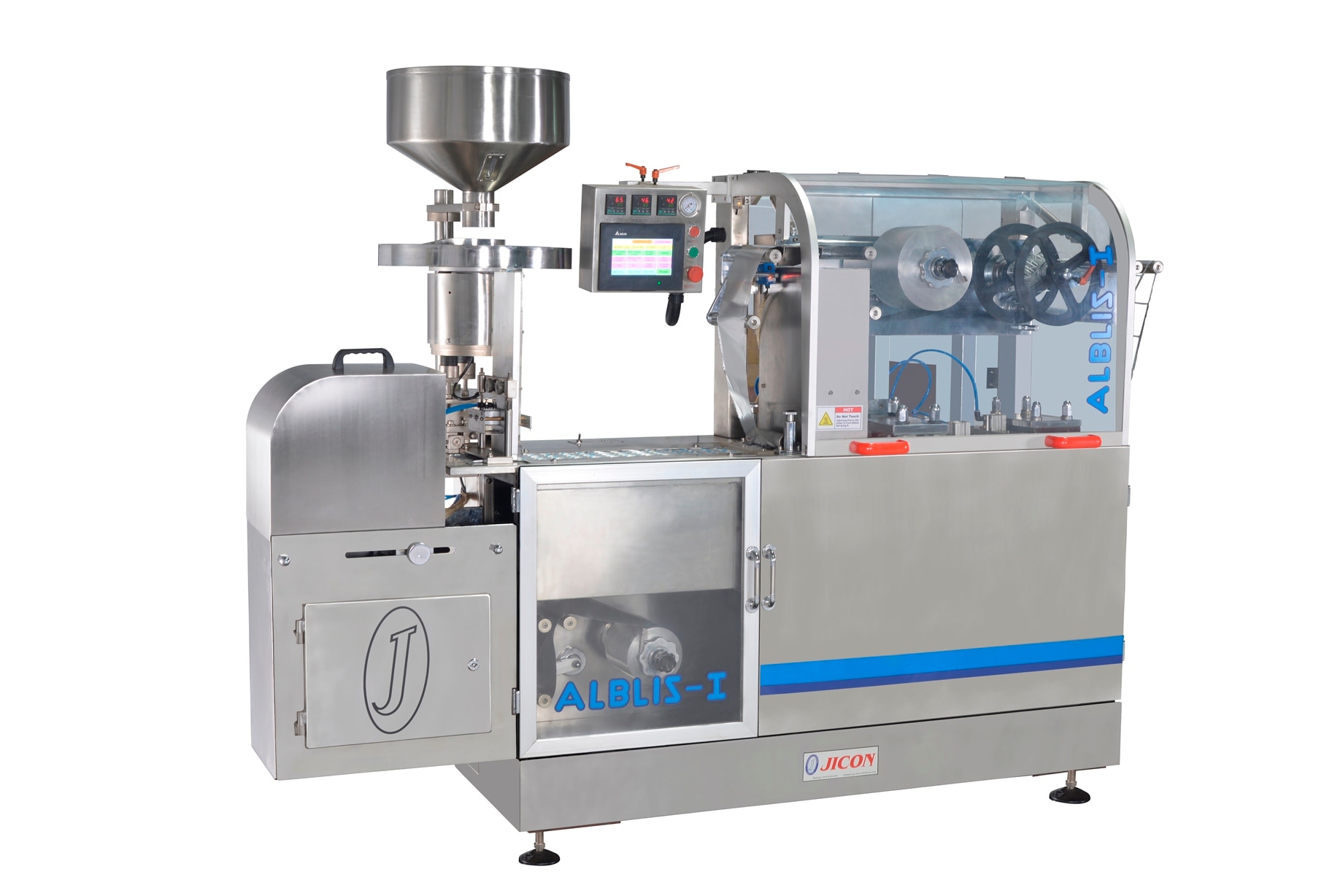 | Blister Packing Machines Automatic Flat Plate Blister Packing Machine ALBLIS-I Flat Plate Blister Packing Machine Ideal for R&D, pilot plants and small batch production: ALBLIS is a versatile ‘Flat Plate’ intermittent motion... View product → |
Frequently asked questions
How often should you inspect a deblistering machine?
Inspect product-contact tooling before every shift and before increasing speed. Look for burrs, rounded edges, scoring, embedded tablet dust and damaged guides.
How do you clean a deblistering machine without contamination risk?
Remove and clean product-contact parts under a documented procedure. Prevent dust from entering clean components, verify that parts are dry, and record the cleaning before reuse.
Why does a deblistering machine crush tablets or jam?
Check tooling selection, pack alignment, feed pressure, worn guides and product buildup. Compare the fault with the machine settings and batch record before changing speed.
What should you check during a deblistering machine changeover?
Confirm the new blister format, tooling, machine settings, line clearance, recovered-product identification and cleaning record before restarting production.
How should you choose service support for a deblistering machine?
Ask for evidence such as response times, spare-parts availability, service records, commissioning documents and technicians familiar with your pack formats.