
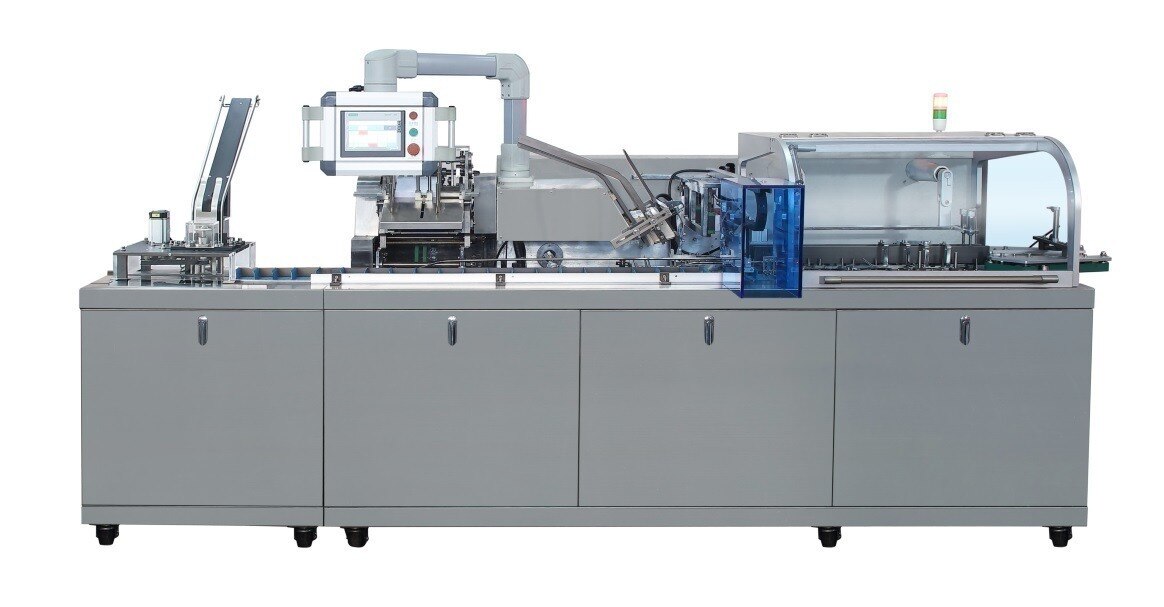
Failed emulsions, separated oil and water, air pockets, wall build-up and blocked lines usually point to a mismatch between formulation, equipment and operating conditions. You will be able to trace each defect to a process stage, choose the right mixing and transfer equipment, and specify measurable controls for a reliable ointment plant.
Key takeaways
- Match separation defects to phase temperature, addition order and mixing energy.
- Set the process sequence from formulation properties, not equipment habit.
- Size vessels and pumps for actual batch volume, viscosity and heat load.
- Demand cleanable construction, documented cleaning cycles and sterility controls.
Trace Each Ointment Defect to Its Process Cause
Failed emulsions and oil-water separation usually begin with phase temperatures, addition order or mixing energy—not the filling machine. Map each visible defect to its process cause before changing speed or batch size.
| Defect | Likely process cause | Equipment clue |
|---|---|---|
| Failed emulsion or separated oil and water | Phases entered at incompatible temperatures, the wrong phase was added first, or mixing time was too short | Homogeniser cannot correct poor bulk circulation |
| Lumps | Incomplete wax melting, poor powder wetting, or a dead zone near the vessel bottom | Anchor, scraper or bottom geometry leaves unmixed pockets |
| Entrained air | Vortexing, a suction-side leak, or excessive agitation | Pump seals, fittings and agitator speed need inspection |
| Overheated product | Excessive jacket temperature, shear or residence time | Actives, preservatives and fragrances can degrade or evaporate |
| Wall build-up or uneven viscosity | Poor scraping, slow cooling, or weak circulation | Scraper clearance, anchor geometry and cooling duty are suspect |
| Blocked transfer line | Unsuitable pipework or product cooled below its transfer range | Check diameter, elbows, vertical lift and bulk temperature |
Use the pattern diagnostically. A repeatable defect across different vessels points toward formulation, phase compatibility or powder wetting. A defect that follows one vessel, outlet or transfer route points toward equipment or operating control.
A pharma machinery manufacturer should match the vessel, anchor agitator, scraper, homogeniser and outlet as one system. Confirm mixing time, temperature profile, torque and bulk viscosity before increasing shear; speed can add heat without removing a dead zone.
Build the Process Sequence Around the Ointment Formulation
Melt the oil phase completely before combining it with a separately prepared water phase. A matched vessel, anchor, scraper and homogeniser matters: high shear cannot remove a bottom dead zone.
- Heat and melt waxes, oils and petrolatum with anchor agitation and wall sweeping.
- Prepare the water phase in a separate vessel at a compatible temperature.
- Add the phases in the validated order while maintaining bulk movement.
- Emulsify, then homogenise until droplet size and appearance stabilise.
- Apply vacuum for deaeration without foaming or boil-over.
- Cool at the validated pull-down rate.
- Add heat-sensitive actives, preservatives or fragrances at their approved temperature.
- Transfer while viscosity remains within the filling range.
| Component | Addresses | Unnecessary or unsuitable when |
|---|---|---|
| Anchor agitator with scraper | Bulk movement, wall build-up and bottom dead zones | A low-viscosity batch has no settling or wall-coating risk |
| High-shear homogeniser | Reduces emulsion droplet size and corrects coarse dispersion | It cannot cure a dead zone or replace effective wall sweeping |
| Colloid mill | Intensive dispersion of stubborn agglomerates | Shear-sensitive products need less heat and shear |
| Inline mixer | Controlled recirculation and repeatable blending | A short, uniform batch needs no recirculation loop |
Do not select speeds or temperatures independently. Develop phase temperatures, anchor and homogeniser speeds, homogenisation time, vacuum level, pull-down rate and final viscosity as one trial matrix; changing one variable alters heat load, droplet size, air removal and transfer behaviour.
A pharmaceutical machinery manufacturer should document those links as process parameters and quality results, not just quote motor ratings.
Protect Sensitive Ingredients and Size the Line for Real Batch Conditions
Add sensitive materials only after the highest-temperature step when stability data requires it:
- Heat-sensitive actives
- Preservatives
- Fragrances
- Volatile components
This protects potency and prevents fragrance loss or evaporation during heating. Record the addition temperature and mixing time for each material.
Control vacuum level, pull-down rate, temperature and agitation as one process. Pulling vacuum too quickly can create foam, strip volatile components or cause boil-over; excessive agitation can reintroduce air. Vacuum deaeration removes entrained air, but it does not sterilise an ointment.
Size the vessel from actual batch conditions:
- Working volume for the target batch
- Total volume for the vessel geometry
- Minimum batch size for effective agitation and scraper contact
- Usable headspace for expansion, foaming and vacuum operation
Ask a pharmaceutical machines manufacturer to calculate heating and cooling duty from the formulation, batch mass, starting temperature, phase-change load, emulsification heat and required cycle time. Slow cooling can change wax or oil droplet size; excessive cooling can leave the bulk too viscous to transfer.
Check the transfer path for the selected viscosity and distance, including pump type, pipe diameter, tubing length, elbows and vertical lift. A positive-displacement pump protects throughput for viscous ointments, but excessive pressure, narrow passages or poor clearances can generate heat, entrain air, separate phases or damage suspended particles.
Set the bulk temperature and viscosity range against filling results. Stringing, tailing, air pockets and variable fill weight can originate upstream rather than in the filler.
Specify Hygienic Construction, Cleaning and Sterility Controls
Specify 316L stainless steel for product-contact surfaces, with continuous welds, polished crevices and a documented finish such as Ra ≤0.8 µm. Use 304 stainless steel only where the formulation never contacts it.
| Feature | Prefer | Prevents |
|---|---|---|
| Stainless steel | 316L contact surfaces; 304 for utilities | Corrosion and extractables |
| Elastomers and lubricant | Compatibility-tested EPDM, FKM or PTFE; segregated pharmaceutical lubricant | Swelling, leaching and chemical carryover |
| Agitator seal | Flush, cleanable mechanical seal with no exposed product pocket | Leakage and residue retention |
| Jacket | Fully welded, drainable dimpled or half-pipe jacket | Condensate traps and inaccessible voids |
| Inspection port | Flush, gasketed port with visible internal coverage | Shadowed surfaces and failed inspection |
| Valves | Sanitary, self-draining diaphragm valves over cavity-prone designs | Active residue in valve cavities |
Design the vessel and transfer lines to drain completely. Eliminate product traps at outlets, instrument tees, valve cavities and horizontal runs; even a short stagnant section can contaminate the next batch.
For CIP, verify achieved flow, spray coverage, temperature, detergent concentration and exposure time. A spray ball proves only that one is installed.
- Set the maximum hold time before cleaning; cooled wax and ointment films become harder to remove after idle time.
- Validate detergent strength, temperature and mechanical action for the actual residue.
- Define rinse acceptance using conductivity, pH or TOC, then sample residues with targeted swab or rinse methods such as HPLC.
- Do not treat visual cleanliness as proof that every active ingredient is removed.
For ophthalmic or other sterile ointments, separate sterile product-contact design, sterilisation, cleanroom classification, contamination-control strategy and aseptic processing under EU GMP Annex 1. A sealed vessel alone does not make the line sterile.
Turn the Equipment Choice Into a Verifiable Production System
Treat the equipment choice as a process-validation package, not a vessel purchase. Demand evidence that each critical process parameter produces a controlled critical quality attribute, then continue checking that relationship during routine production.
1. Define the operating ranges for mixing time, agitator and homogeniser speed, vacuum, batch temperature, cooling rate, torque, pressure and mass flow. Link them to bulk viscosity, droplet or particle-size distribution, fill weight, tube-leak results and appearance. A stable trend matters more than a single successful batch.
2. Require design qualification, factory-acceptance testing and site-acceptance testing against approved protocols. Request calibration records, recipe and software access, audit trails, alarm-history capability, spare-parts support and cleaning-validation assistance. Treat process qualification as the start of continued process verification, not the end.
3. Test every inline signal against a quality decision. For example, use torque and viscosity trends to control the endpoint, or use temperature and mass flow to prevent a filling excursion; unsupported sensor data has no release value. Confirm data integrity, user access, backup, review and change-control arrangements.
4. Verify utilities, environmental controls, cleaning procedures and qualification protocols at the site. Ask the pharma machinery manufacturer and ointment manufacturing plant manufacturer in a regulated market to show interface drawings and commissioning records, not marketing claims.
Jicon Technologies Pvt Ltd belongs on the comparison list only when its proposed system meets these measurable requirements and supplies the evidence needed to operate, maintain and qualify it.
Related products
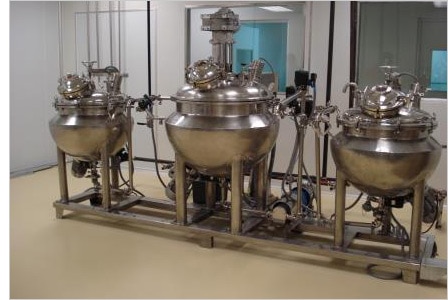 | Process Equipments Ointment Cream and Toothpaste Manufacturing Plant Automatic Ointment / Cream Manufacturing Plant is used to prepare medicated homogenised emulsion of Wax and Water to a particular formulation. View product → |
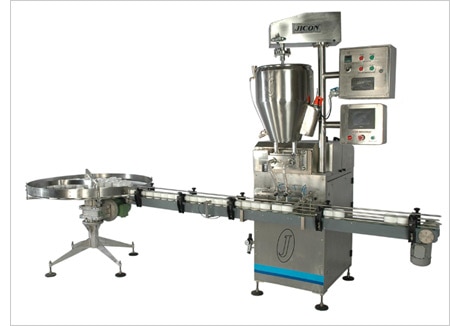 | Container Filling Machines Automatic Container Jar Filling Machine for Ointment and Others High speed automatic multi head container filling machine for filling cream, paste, ointment, wax polish, grease, jam, sauce etc. |
Frequently asked questions
What causes failed emulsions and oil-water separation in ointment production?
Check phase temperatures, addition order, mixing energy, shear, hold time and cooling rate before changing the filling machine.
How should you design the process sequence for an ointment formulation?
Define the oil and water phases, heating temperatures, emulsification point, ingredient addition order, homogenisation step and cooling endpoint.
How do you size ointment plant equipment for real production batches?
Use actual batch weight, working volume, viscosity, heat-up time, transfer distance, pump capacity and filling speed rather than vessel nameplate volume.
What hygienic controls should pharmaceutical ointment machinery include?
Specify product-contact stainless steel, drainable pipework, cleanable seals, validated cleaning instructions and sterility controls suited to the formulation.
Related products
 | Container Filling Machines Semi Automatic Container Filling Machine A simple and sturdy semi-automatic container filling machine for filling cream, paste, ointment, wax polish, grease, jam, sauce etc. View product → |
 | Container Filling Machines Automatic Container Filling Machine ₹1 High speed automatic multi head container filling machine for filling cream, paste, ointment, wax polish, grease, jam, sauce etc. View product → |
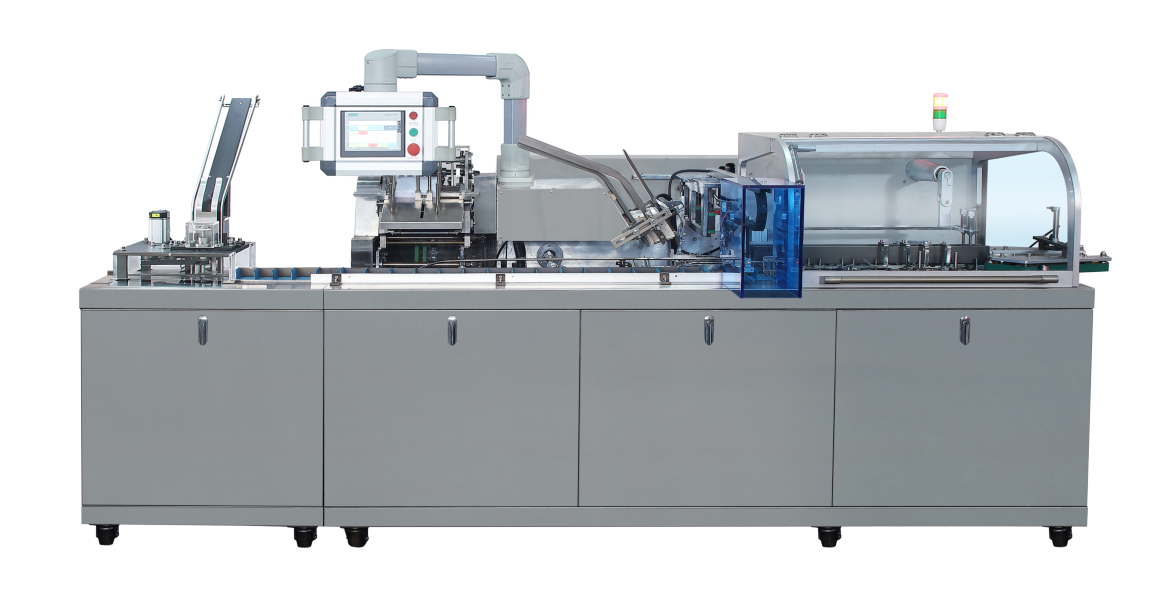 | Accessories & Ancillary Equipments Auto Cartonator for Blistered Strips and Tubes ₹1 JCT-100 and JCTBL -100 are truly powerful horizontal cartoning machines of intermittent motion. View product → |