
Choosing an ointment manufacturing plant requires more than comparing vessel capacity or motor power. By the end, you will be able to match the process design, hygiene features, filling format, validation documents and procurement route to your formulation and Chandigarh site.
Key takeaways
- Specify product viscosity, batch size and heating range before requesting quotations.
- Choose vacuum homogenisation when air removal and smooth emulsion quality matter.
- Require 316L stainless steel product-contact parts and documented cleaning controls.
- Compare a complete process train with separate machines, installation and validation costs.
What process does an ointment manufacturing plant perform?
An ointment manufacturing plant is a process train, not simply a mixing vessel. It dispenses and charges raw materials, melts the oil or wax phase, prepares the aqueous phase, combines phases, emulsifies, homogenises, removes air under vacuum, cools, transfers, holds and fills the finished product.
For an emulsion-based cream or ointment, phase temperature and addition order control droplet size and stability. A water-free ointment may need melting, planetary mixing and vacuum deaeration, but no oil-water emulsification system.
The practical sequence is:
- Dispense and verify powders, oils, waxes and liquids.
- Melt the oil or wax phase and prepare the aqueous phase separately.
- Add phases, emulsify and homogenise at defined speed and time.
- Apply vacuum to remove entrained air, then cool under controlled agitation.
- Transfer to a holding vessel and fill tubes or jars.
| Equipment option | What it does | When it applies |
|---|---|---|
| Vacuum emulsifying homogenizer | Combines heating, vacuum, agitation and high-shear emulsification | Creams, emulsions and products needing integrated deaeration |
| Anchor-scraper vessel plus separate high-shear homogenizer | Provides wall scraping and bulk mixing, with shear added separately | Viscous products, flexible formulations or larger process trains |
| Planetary vacuum mixer | Mixes thick material under vacuum with strong turnover | Water-free, wax-rich or highly viscous ointments |
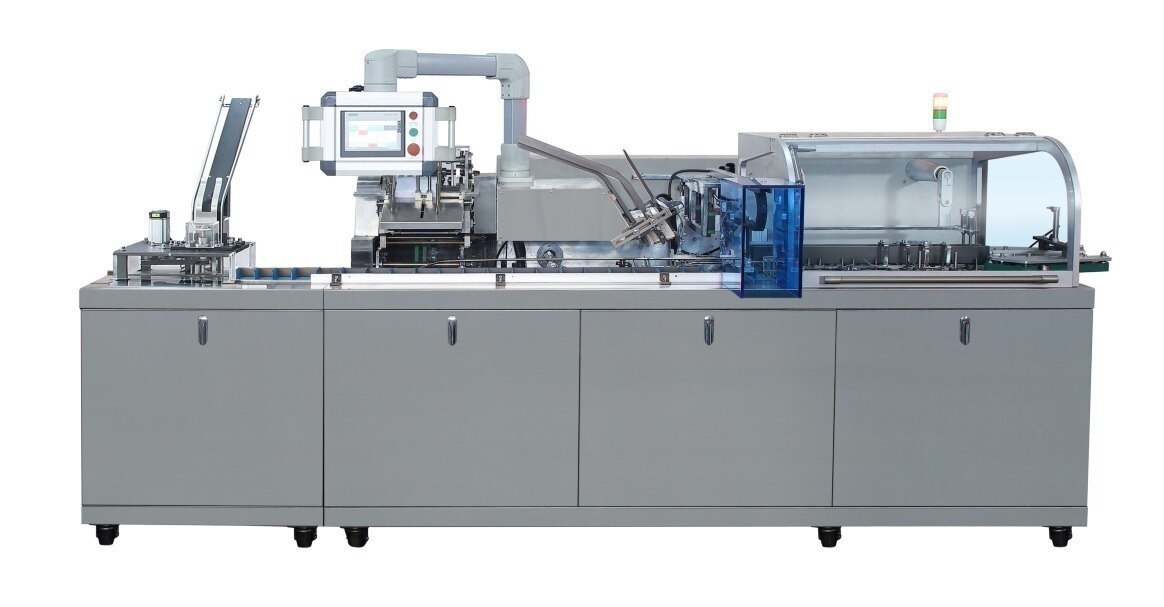
A vessel-only quotation is incomplete if you still need storage, transfer, filling, tube or jar sealing, coding, labelling and secondary packing. Tube lines need orientation and crimping or sealing; jar lines need container handling and closure application.
Which specifications determine whether the plant suits your formulation?
A 500-litre vessel does not mean a 500-litre batch. Compare gross volume with usable working volume, then test the stated batch size at the formulation’s actual viscosity.
A pharmaceutical machinery manufacturer should also state 316L stainless-steel product-contact parts, internal surface finish, agitator type, homogeniser speed and power per litre, vacuum level under product load, heating method and cooling duty.
| Design | Best suited to | Key checks |
|---|---|---|
| Vacuum emulsifying homogeniser | Creams, emulsions and moderate-viscosity ointments | Bottom-entry or inline homogeniser, loaded vacuum test and phase-addition sequence |
| Anchor-scraper vessel plus high-shear homogeniser | Thick products needing wall scraping and separate shear control | Scraper coverage, torque, homogeniser power and transfer path |
| Planetary vacuum mixer | Very thick ointments, pastes and difficult powder incorporation | Planetary torque, vacuum mixing, discharge clearance and cleaning access |
Match the design to the formulation, not the catalogue vessel:
- High wax content needs sufficient melting duty, controlled heating and effective scraping. Thick products need an anchor-scraper or planetary mixer; powders need wetting capability and high shear.
- Abrasive ingredients require compatible pump and seal materials. Heat-sensitive products need controlled temperature ramps, while aeration-prone products need closed charging and vacuum mixing.
- Compare lobe and screw pumps for gentle, viscous transfer; specify shear, cleanability and pressure limits. A bottom-entry or inline homogeniser supplies shear, not reliable product transfer.
- Require cooling capacity at the actual batch load and site utility conditions. A pump’s nameplate vacuum rating does not prove deaeration: demand leak testing and a loaded vacuum-and-mixing demonstration.
How should heating, homogenisation, cooling and filling be specified?
Put operating figures in the purchase specification, not only the formulation name: wax-melting temperature, phase-addition temperature, homogenisation time, vacuum level and hold time, cooling rate, and final filling temperature. State the mixing sequence, including charging, melting, phase addition, shear mixing and vacuum deaeration.
Vacuum performance must be demonstrated with water or a defined placebo under load. Require leak testing, vacuum-hold records, agitator and homogeniser speeds, heating and cooling ramps, transfer, drain-down and fill-weight checks during factory acceptance; repeat critical tests after installation.
The filling line must match the primary pack:
| Pack | Required functions | Main quality risks |
|---|---|---|
| Tube | Tube orientation, dosing, sealing or crimping, coding | Trapped air, poor seals, stringing |
| Jar | Container handling, dosing and closure application | Drips, loose closures, variable weight |
| Laminated tube | Orientation, dosing, compatible sealing or crimping, coding | Seal damage, nozzle blockage, product interaction |
Specify container dimensions, fill-volume range, product-temperature range, nozzle design, clean-out method and product-contact materials such as 316L stainless steel and compatible elastomers. Define controls for stringing and dripping, plus allowable fill-weight variation.
For an ointment manufacturing plant, require cooling and filling trials at the stated viscosity and temperature range. A line that fills quickly with water can still trap air, drip or underfill a wax-rich ointment. Include alarms, interlocks and documented changeover cleaning in the acceptance protocol.
What hygiene and quality controls make the equipment production-ready?
Contamination control starts in the user requirement specification, not after installation. Define zoning, personnel and material flows, closed transfer, and campaign-cleaning controls; open charging, shared utensils, inaccessible seals and difficult-to-clean filling heads can create greater risk than the nominal cleanroom classification.
Specify drainable pipework with controlled dead legs, orbital welds where practicable, polished 316L stainless-steel product-contact surfaces, sanitary valves and gaskets compatible with both the formulation and cleaning agents.
Require accessible spray balls, demonstrated clean-in-place coverage and tool-free dismantling; a stainless-steel vessel is not cleanable if its welds are rough or its agitator seal cannot be reached.
- At FAT, run water or placebo to verify heating and cooling ramps, agitator and homogeniser speeds, vacuum hold, transfer, drain-down, filling-weight variation, alarms and interlocks.
- At SAT, repeat critical tests after installation, because utility pressure, piping and transport damage can change performance.
- Approve cleaning only against written residue and microbiological acceptance criteria, with sampling locations that include valves, seals, filling heads and transfer lines.
- Release batches using appearance, homogeneity, viscosity, fill-weight variation and microbial-quality checks; add pH for water-containing products and preservative-effectiveness testing where applicable.
A pharmaceutical machines manufacturer should provide weld and surface records, gasket details, cleaning procedures and test data rather than relying on a generic GMP claim. That evidence reduces batch-release surprises.
Which buying option works best for a Chandigarh pharmaceutical project?
A turnkey package works best when you want one party accountable for process equipment, packaging, utilities, commissioning and performance. It reduces interface disputes. Split procurement can improve technical choice and price transparency, but you retain responsibility for matching utilities, integrating controls and proving the complete line.
| Option | Strength | Main buyer risk |
|---|---|---|
| Turnkey package | One contract for equipment, packaging, installation and qualification | Less freedom to select specialist suppliers; exclusions can remain hidden |
| Process package plus separate packaging supplier | Better technical choice and clearer equipment pricing | Buyer owns interface testing, controls integration and overall performance |
| Outside equipment plus Chandigarh installation or integration contract | Access to wider equipment sources and local site support | Transport, utility matching, modifications and warranty responsibility need separate contracts |
Evaluate every pharmaceutical machinery manufacturer and pharmaceutical machines manufacturer quotation against usable volume, batch viscosity, product-contact metallurgy, heating and cooling duty, vacuum under load, automation, FAT/SAT, installation, spares and warranty exclusions. A larger gross vessel or higher motor rating does not prove better output.
Request these documents before placing the order:
- URS, P&ID, general-arrangement drawings and a utility-consumption schedule
- Material certificates, finish and weld records, passivation records where applicable, and calibration certificates
- Operating and cleaning manuals, spare-parts list, FAT protocol and IQ/OQ documents
Confirm that the price covers transport to Chandigarh, unloading, anchoring, cleanroom-compatible installation, utility piping, commissioning, training and validation support. Jicon Technologies Pvt Ltd belongs in the comparison when it documents those interfaces for your actual site.
Map the design and qualification package to Indian GMP requirements, including Schedule M where applicable. A CE mark or generic GMP certificate cannot replace India-specific documentation.
Related products
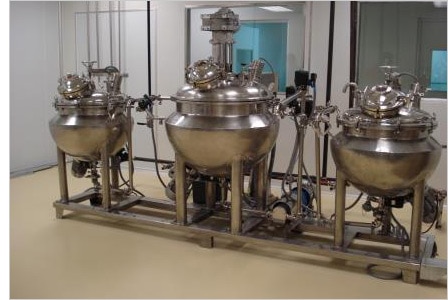 | Process Equipments Ointment Cream and Toothpaste Manufacturing Plant Automatic Ointment / Cream Manufacturing Plant is used to prepare medicated homogenised emulsion of Wax and Water to a particular formulation. View product → |
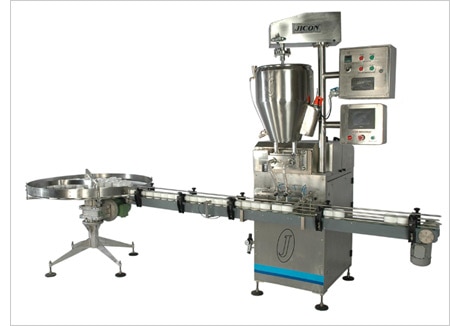 | Container Filling Machines Automatic Container Jar Filling Machine for Ointment and Others High speed automatic multi head container filling machine for filling cream, paste, ointment, wax polish, grease, jam, sauce etc. |
Frequently asked questions
What process does an ointment manufacturing plant perform?
It charges raw materials, melts the oil or wax phase, prepares the aqueous phase, combines and homogenises both phases, removes air under vacuum, cools the batch, transfers it and fills the finished ointment.
Which specifications determine whether an ointment plant suits your formulation?
Compare batch volume, working volume, product viscosity, oil-to-water ratio, ingredient sensitivity, required vacuum, heating and cooling range, product-contact materials and filling format.
How should heating, homogenisation, cooling and filling be specified?
State the heating medium and temperature range, homogeniser speed and shear requirement, cooling time target, vacuum level, transfer method and container size or filling range.
What hygiene and quality controls make ointment equipment production-ready?
Require 316L stainless steel product-contact surfaces, sanitary welds, cleanable pipework, suitable seals, drainability, calibrated instruments, batch records and documented factory acceptance and site testing.
Which buying option works best for a Chandigarh pharmaceutical project?
Choose a complete integrated line when you need one responsibility for process matching, installation and commissioning; choose separate machines when existing equipment or staged investment justifies integration work.
Related products
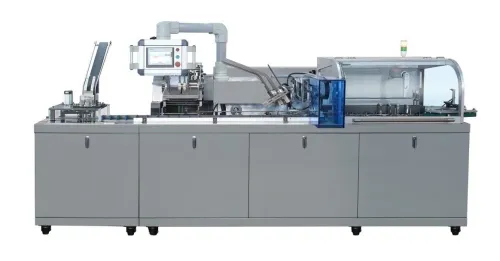
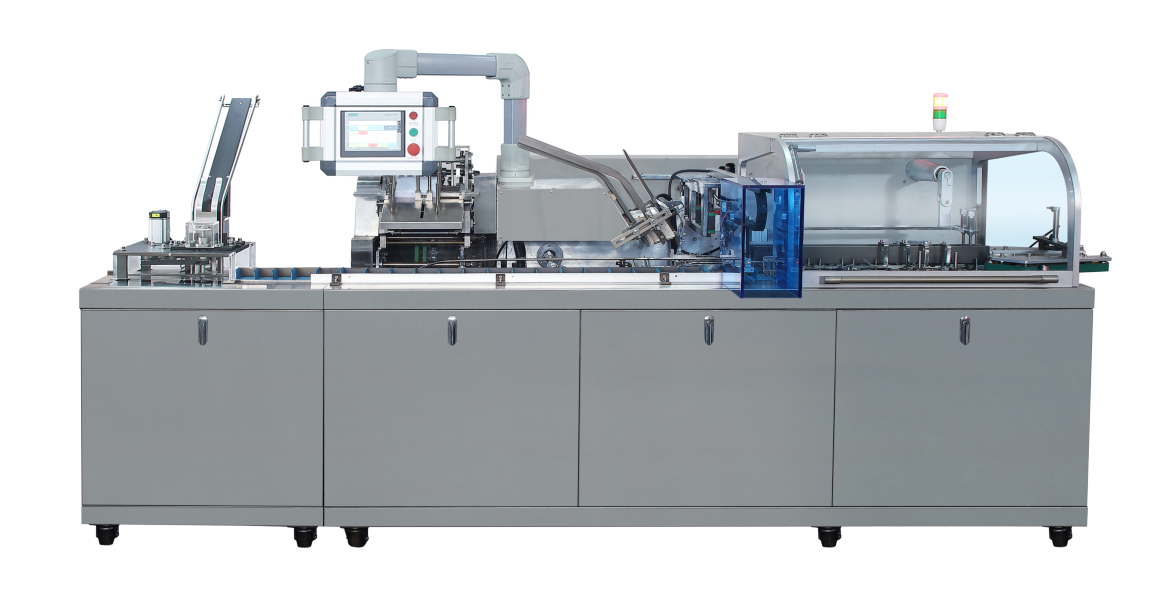 | Accessories & Ancillary Equipments Auto Cartonator for Blistered Strips and Tubes ₹1 JCT-100 and JCTBL -100 are truly powerful horizontal cartoning machines of intermittent motion. View product → |
 | Container Filling Machines Automatic Container Filling Machine High speed automatic multi head container filling machine for filling cream, paste, ointment, wax polish, grease, jam, sauce etc. View product → |
 | Container Filling Machines Semi Automatic Container Filling Machine A simple and sturdy semi-automatic container filling machine for filling cream, paste, ointment, wax polish, grease, jam, sauce etc. View product → |
 | Process Equipments Auto coater is popularly used to coat tablets, pills, candies, granules, sweets with sugar film, an organic film, and aqueous coating in the... View product → |