
Choosing a de-blistering machine starts with the product’s fate: recovery for repacking, gentle handling for investigation, or irreversible destruction. By comparing operating methods, blister construction, recovery controls and supplier support, you can turn an attractive packs-per-minute claim into a defensible equipment specification.
Key takeaways
- Choose rotary, pressing or cutting methods based on pack format and product fragility.
- Give the manufacturer blister material, cavity dimensions, tablet size and hourly output.
- Test recovery rate, broken tablets, powder generation and waste separation with your packs.
- Qualify suppliers through machine trials, documentation, service support and pharmaceutical compliance records.
What does a de-blistering machine do to an existing blister pack?
A de blistering machine opens an existing filled blister, separates each tablet or capsule from its formed cavity, and sends recovered product to a separate container from the empty blister material. It handles PVC-Alu, PVdC-coated PVC, PET and Alu-Alu packs; it does not form a new pack.
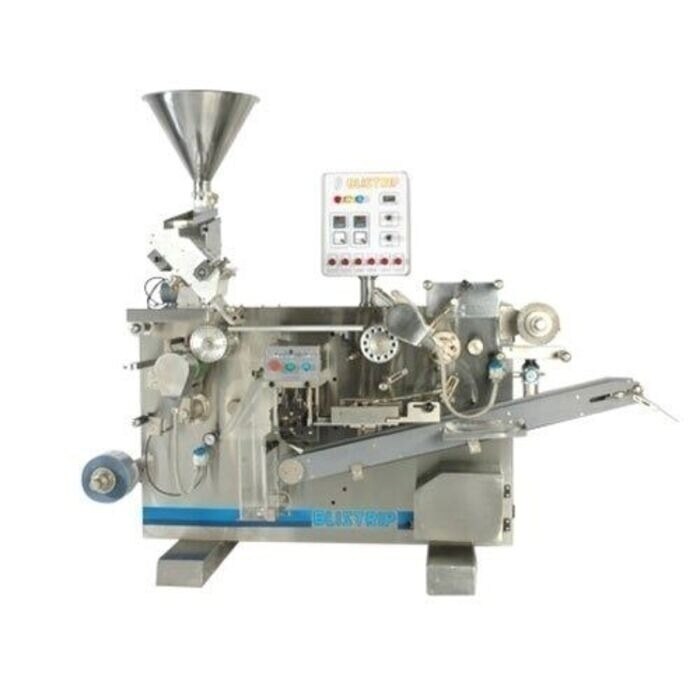
BLISTRIP and ALBLIS form and seal new blister packs, so they are blister-packing equipment, not substitutes for a machine that opens filled packs.
| Recovery method | What happens | Best fit |
|---|---|---|
| Destructive recovery | The machine cuts or perforates the blister to release the dose; packaging is unusable afterward. | Rejected-batch destruction or secure waste segregation |
| Low-damage recovery | Controlled pressure pushes the dose through the lidding material while limiting tablet, capsule and pack damage. | Validated repacking, laboratory samples or market-return investigation |
Choose validated recovery when the product may legally return to production, gentle handling when visual inspection or testing matters, and irreversible destruction when rejected stock must not re-enter use.
Do not assume one tool suits every format. Confirm performance with child-resistant structures, peelable foil, printed foil, cold-form aluminium, damaged packs and partially filled packs. Cold-form aluminium and laminated webs need different force and tooling from thermoformed plastic.
Also check whether the machine separates foil, plastic, powder and recovered doses cleanly enough for your reconciliation and investigation records.
Which de-blistering method matches your workload and product risk?
Choose manual recovery for occasional, low-value work; semi-automatic equipment for controlled sampling or modest returns; and automatic de-blistering for repeatable, high-volume recovery.
| Option | Strength | Main compromise |
|---|---|---|
| Manual recovery | Lowest equipment commitment; flexible across formats | Labour-intensive, operator-dependent, and more exposed to mix-ups and inconsistent damage control |
| Semi-automatic equipment | Better consistency for quality-control samples, returns, or modest batches while retaining manual loading and inspection | Output depends on feeding, format changes, jam clearance, and operator attention |
| Automatic de-blistering | Repeatable processing for routine, higher-volume work | Requires stable formats, tooling, cleaning controls, qualification, and trained support |
Compare effective throughput, not the advertised packs-per-minute figure. Subtract time for loading, rejects, changeovers, stoppages, jam clearance, and inspection; specify the result in blisters or tablets per minute for each format.
A faster de blistering machine is a poor choice if tablets chip, capsules puncture, powder increases, or doses remain trapped in cavities. Those losses reduce recovery yield and can create contamination, reconciliation, and disposal problems.
Use automatic equipment only when format diversity is limited and the recovered material can legally return to production after validation. Choose semi-automatic equipment when operators are available and product value justifies better control without full automation.
Stay manual when volumes are low, formats change constantly, or the work concerns investigation or secure destruction rather than routine recovery. Product value, operator availability, and acceptable damage rate should decide the investment.
Which blister and output specifications must you give the manufacturer?
Give the manufacturer a format-by-format user requirements specification, not only a tablet size and a headline speed. A pharmaceutical machinery manufacturer needs the smallest and largest blister length, width and thickness, cavity count, layout, pitch and depth, plus tablet or capsule diameter, height and fragility.
- State the complete construction: PVC-Alu, PVdC-coated PVC, PET, cold-form aluminium, aluminium lidding foil, peelable foil or laminated web.
- Specify supported foil thicknesses, seal configuration, perforations, printed surfaces and child-resistant formats.
- Include malformed packs, missing doses, already-opened pockets and mixed product orientations.
- Require output for every approved format in blisters per minute and tablets or capsules per minute, with target recovery percentage and maximum chipped, cracked, punctured or trapped units.
- Ask whether guides, pressure tools, perforators, chutes and product-contact parts change without special fabrication, then request documented changeover time for your actual formats.
- Record electrical utilities, container sizes, compressed-air pressure and flow, dust-extraction requirements, cleaning constraints and the largest expected batch.
Compare offers in a table that exposes missing assumptions:
| Specification | Ask the manufacturer to state | Why it matters |
|---|---|---|
| Format range | Smallest and largest dimensions, pitch, depth and construction | Reveals unsupported packs |
| Performance | Output, recovery target and damage limits per format | Separates usable throughput from marketing speed |
| Changeover | Parts changed, special fabrication and actual minutes | Exposes downtime |
| Containment | Extraction, transfer and waste containers | Controls powder and material mix-ups |
This turns machine comparison into a specification you can test and approve.
How should you test recovery, product integrity and waste segregation?
Accept a de-blistering machine only after a product-recovery and damage study across every approved blister format. Use representative tablets, capsules, strengths and damaged packs, not demonstration samples. A fast cycle is unsuitable if it leaves doses trapped or creates damage that prevents lawful reuse.
Record these results for each format:
- Intact recovered tablets or capsules
- Chipped or cracked units, capsule punctures and abrasion
- Powder generation, foil or plastic fragments and foreign material
- Empty cavities and doses left in pockets
Test sensors with missing doses, opened pockets, malformed blisters and mixed orientations. Require a documented response for each condition: stop, reject, divert or alarm. Do not assume a sensor exists because the control panel displays a warning.
Inspect physical separation between containers for recovered product, rejected product, empty blister waste and foreign material. Mixing streams breaks batch accountability. Check that pressure rollers, cavities, chutes and guards can be cleaned without inaccessible dead legs, and assess powder containment for products that generate dust or contain potent or cytotoxic materials.
Require line clearance, batch and format identification, reconciliation of issued and recovered materials, and an auditable link between input packs and output containers. Base acceptance on documented installation qualification, operational qualification and performance qualification using the buyer’s products and materials. A factory demonstration alone proves neither product integrity nor recovery performance.
How do you qualify a pharmaceutical machinery manufacturer for this purchase?
Qualify the supplier by evidence from your installation, products and operating purpose—not by location or a quoted maximum speed. A de blistering machine for pharmaceutical machinery manufacturer in Chandigarh is worth considering only when local support produces measurable service and qualification outcomes.
1. Ask about format-tooling availability, breakdown response time at your site, spare-parts lead times, preventive-maintenance visits, calibration support and engineer assistance with IQ, OQ and PQ documents. Treat Chandigarh proximity as useful only if it shortens these response times.
2. Give the supplier your complete user requirements specification and require trials with your PVC-Alu, Alu-Alu or other actual blister materials. Record recovery percentage, chipped or cracked units, trapped doses, dust generation and segregation of recovered product, rejects, empty blisters and foreign material.
3. Verify the installed control system’s batch traceability, user access controls, record retention and electronic-signature approach when electronic records support regulated decisions. Require line clearance, format identification and reconciliation linking input blister batches to output containers.
4. Inspect guarding, safe access to moving tooling, local extraction, enclosed transfer and cleaning or disposable-contact strategies. These controls matter more than speed for powders, potent products and cytotoxic materials.
Ask what changes between routine repacking, investigation or market-return work and destruction work, then define acceptance criteria for each. A pharma machinery manufacturer in Chandigarh, including Jicon Technologies Pvt Ltd, earns consideration by identifying machine limits and meeting documented criteria, not by naming a model alone. That evidence supports qualification of the installed operating range.
Related products
 | Blister Packing Machines Automatic (High Speed) Blister Packing Machine (Rotary Forming & Rotary Sealing) BLISTRIP-II BLISTRIP–II is a high speed automatic blister packing machine for packing of smaller and regular shaped solid articles such as pharmaceutical... View product → |
 | Blister Packing Machines BLISTRIP-Ixt: Automatic Blister Packing Machine (Rotary Forming & Rotary Sealing) BLISTRIP–I xt is a single track automatic blister packing machine for packing of tablets, capsules, dragees etc., in blister packs using PVC-Alu... View product → |
Frequently asked questions
What does a de-blistering machine do to an existing blister pack?
It opens a filled blister, removes tablets or capsules from their cavities, and separates recovered product from PVC, PVdC-coated PVC, PET, aluminium or Alu-Alu waste. It does not form a new blister pack.
Which de-blistering method matches your workload and product risk?
Use the method that removes product without unacceptable breakage, powder or contamination. Compare pressing, roller or rotary separation and cutting approaches against your blister format, product fragility, recovery target and hourly workload.
Which blister and output specifications must you give the manufacturer?
Provide blister material, laminate structure, pack length and width, cavity dimensions, tablet or capsule size, pack thickness, damaged-pack condition, required hourly throughput and the containers or bins required for recovered product and waste.
How should you test recovery, product integrity and waste segregation?
Run representative production packs and measure recovery percentage, intact units, broken units, powder, empty cavities, foil or plastic carryover, cross-contamination risk and separation of product from blister waste.
How do you qualify a pharmaceutical machinery manufacturer for this purchase?
Request a machine trial with your packs, written performance data, cleaning and changeover procedures, material-contact details, electrical and pneumatic specifications, qualification documents, operator training and local service arrangements.
Related products
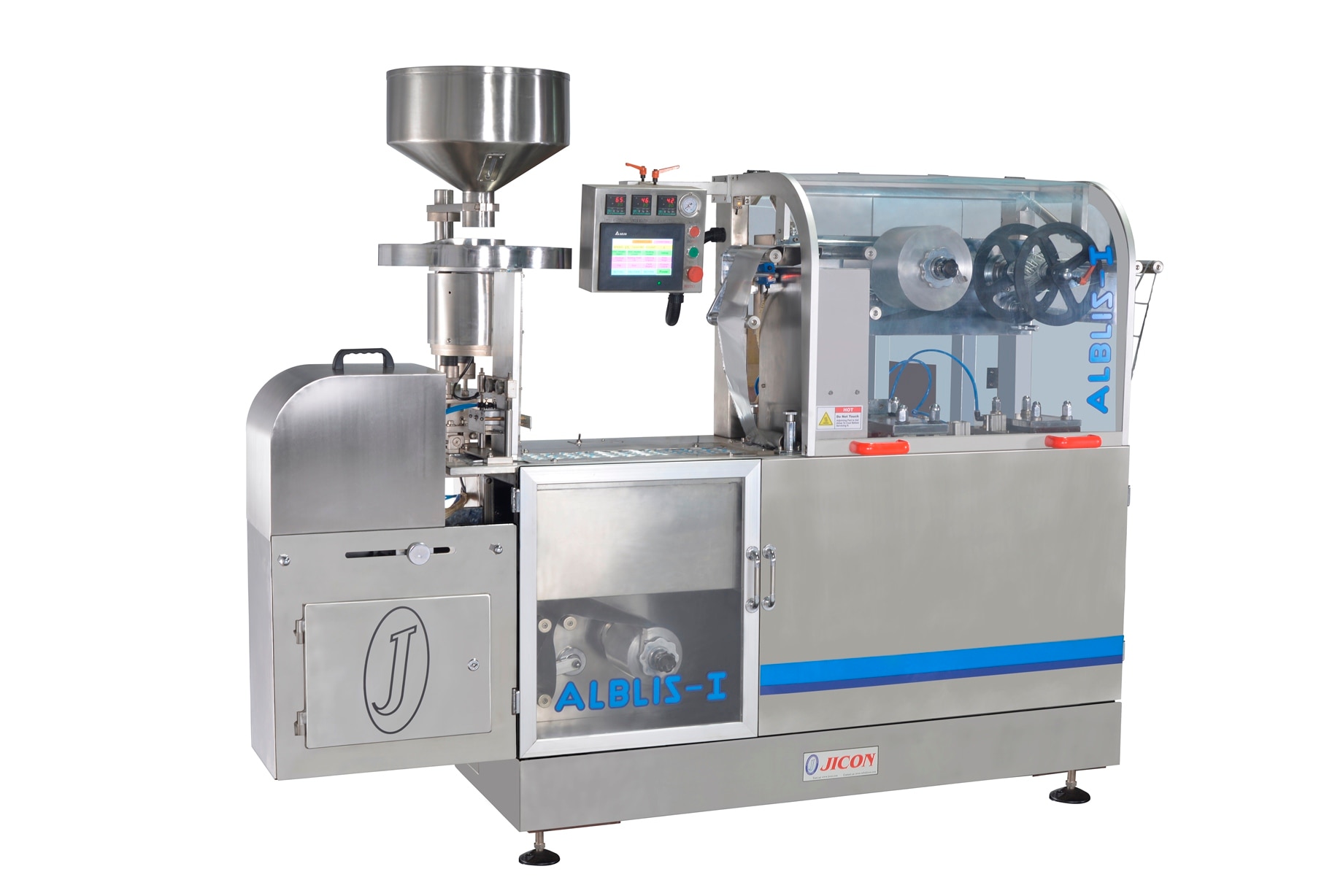 | Blister Packing Machines ALBLIS-I: Automatic Flat Plate Blister Packing Machine Flat Plate Blister Packing Machine Ideal for R&D, pilot plants and small batch production: ALBLIS is a versatile ‘Flat Plate’ intermittent motion... View product → |
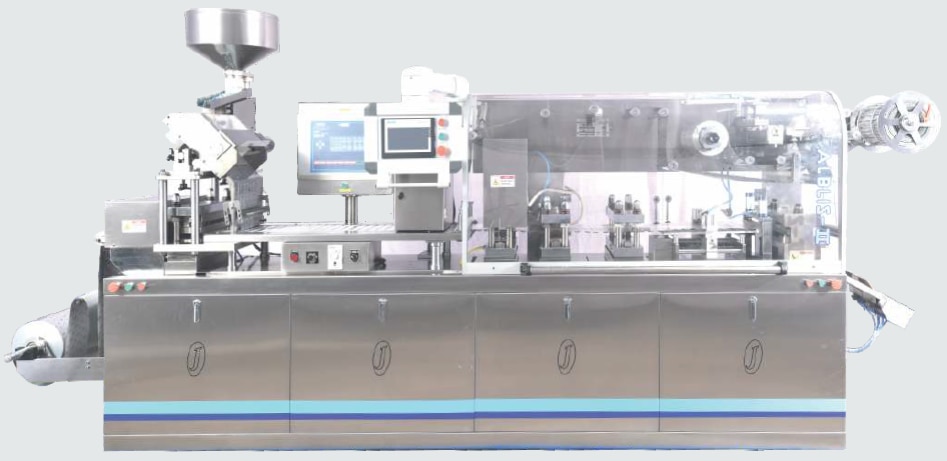 | Blister Packing Machines ALBLIS-II: Automatic Flat Plate Blister Packing Machine Automatic Flat Plate Blister Packing Machine (Ideal for Commercial High Output batches): ALBLIS is a versatile ‘Flat Plate’ intermittent motion... View product → |
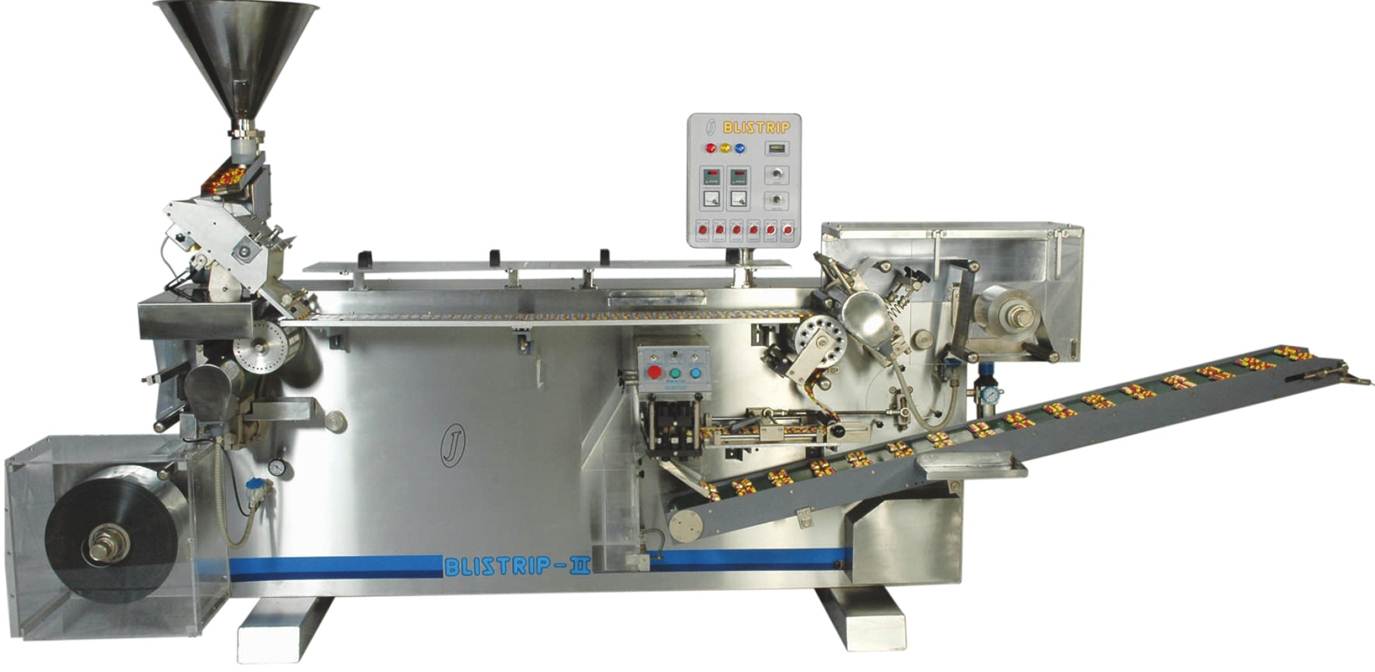 | Blister Packing Machines BLISTRIP-II: Automatic (High Speed) Blister Packing Machine (Rotary Forming & Rotary Sealing) ₹1 BLISTRIP–II is a high speed automatic blister packing machine for packing of smaller and regular shaped solid articles such as pharmaceutical... View product → |
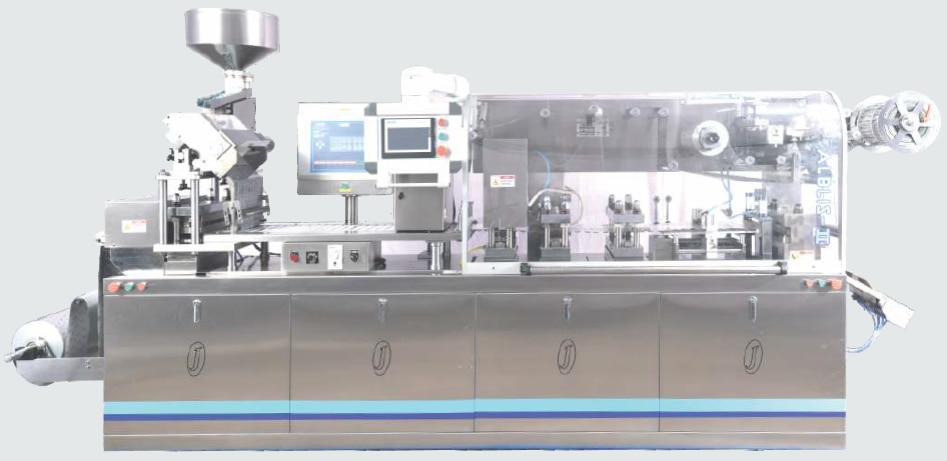 | Blister Packing Machines Automatic Flat Plate Blister Packing Machine ALBLIS-II Automatic Flat Plate Blister Packing Machine (Ideal for Commercial High Output batches): ALBLIS is a versatile ‘Flat Plate’ intermittent motion... View product → |