
A stoppage after changing capsule size or product is not automatically a motor failure. The cause may be an active interlock, incorrect format tooling, lost vacuum, unstable compressed air, poor capsule presentation, changed powder flow or an unsafe restart sequence. By the end, you will be able to identify the stop type, check the right parts and utilities, and define a changeover test that exposes recurring faults.
Key takeaways
- Read the alarm and machine state before pressing Reset.
- Inspect every format part, not only the capsule-size recipe.
- Separate shell defects from powder-flow and utility faults.
- Use recurring stops to define a supplier acceptance test.
Start by identifying the type of stop
Read the alarm and the machine state before pressing Reset: a guard or permissive stop leaves no obstruction, while a mechanical jam leaves a capsule or format part trapped at a physical station.
A quality hold is different again; the operator has stopped the cycle to check fill weight, capsule locking or powder level, not because the machine detected a failure.
- Safety interlock: the diagnostic screen shows an open guard, unlatched hopper, removed dosing plate, displaced separation station or unconfirmed product-contact assembly. Do not bypass it; validate the safety circuit after adjustment or maintenance.
- Mechanical jam: the stop occurs at the same station, with crushed shells, misaligned bodies, blocked guides or an overload indication. Isolate power before clearing it.
- Utility loss: vacuum falls, compressed-air pressure drops, or electrical supply disappears. Check the vacuum gauge, air regulator and machine power indication before changing settings.
- Control fault: no capsule is trapped, but the PLC records a sensor transition error, missing permissive, emergency-stop circuit fault or unexplained motor command failure.
For sacf capsule filler stopping issues, record the active alarm, last sensor change, utility readings and exact changeover step. Then inspect the obstruction, confirm each guard and format assembly, restore utilities, and run one empty cycle before loading shells. Repeated resets can erase the evidence without fixing the cause.
Check the complete format set, not only the capsule-size recipe
A complete format set, not only the capsule-size recipe, determines whether separation, alignment and closing work after a changeover. A size selection cannot correct a wrong loading plate, capsule segment, guide height or closing stop.
| Changeover item | Failure after the size change | What to verify |
|---|---|---|
| Capsule body and cap segments | Bodies do not separate, or caps telescope | Matched part numbers, correct orientation and the specified separation height |
| Loading plates, guides and bushes | Capsules arrive off-centre or jam at transfer | Guide clearance, plate seating and alignment with the machine station |
| Dosing disc, filling ring and tamping pins | Fill station overloads or capsules miss the dosing position | Correct diameter, pin length, disc height and product-contact parts |
| Vacuum tooling and ejector components | Separation fails or empty capsules remain in the machine | Correct vacuum insert, hose connection, timing and ejection position |
| Closing station and stop settings | Caps do not engage, leak powder or trigger an interlock | Body-height setting, cap stop, closing pressure and final alignment |
Store these parts as a uniquely identified, matched set. A screw, spacer, spring or guide from another machine revision can fit while changing capsule presentation by a fraction of a millimetre—enough to create intermittent stops. Record specified heights or torque values and have a second person verify critical settings.
For capsule filling machine changeover troubleshooting, restart in this order:
- Confirm the recipe and every installed part number.
- Check sensor states, guards, vacuum and actuator connections.
- Run without capsules, then test separation and closing manually or at slow speed.
- Inspect the first filled capsules for cap-body engagement, damage, leakage, fill-weight drift and telescoping.
Separate capsule-shell faults from powder-flow and utility faults
A format change can be mechanically correct and still stop because the new shells, powder or utilities behave differently. Check the fault source before changing tamping force or speed; those adjustments can replace a stoppage with weight variation, damaged plugs or poor dissolution.
- Capsule-shell fault: inspect bodies and caps for deformation, moisture damage, dimensional variation and burrs. A shell that does not sit correctly in the loading plate or guide bush will resist separation, misalign at dosing, or fail to close.
- Powder-flow fault: cohesive, electrostatic, damp or low-density powder can bridge in the hopper, leave dosing bores partly empty, overload the dosing station or trigger a fill-weight limit. Check the powder path, not only the capsule recipe.
- Vacuum fault: measure vacuum at the machine connection during separation. A blocked filter, leaking gasket, loose hose, wrong separator plate or inadequate level for the new shell can prevent cap-body separation even when the central pump runs.
- Compressed-air fault: measure pressure and flow at the machine while separation, dosing and closing actuators operate together. A leaking newly fitted actuator or blow-off line can make header pressure look normal while the machine starves.
- Electrical fault: verify the nameplate supply, including 230 V, 50 Hz where specified, stable voltage and sound earthing. Nuisance trips during restart often expose a site-supply or connection problem.
For semi automatic capsule filling changeover problems in Dubai, record temperature, humidity, measured utilities and the exact stop count. Clean guide tracks, capsule pockets, dosing-disc bores and sealing surfaces; excess air can push powder into sensors, bearings or vacuum lines.
Use a controlled stop-and-restart investigation
Before pressing Reset, stop the machine under its normal procedure and identify whether the event is a protective interlock, mechanical jam, utility loss, control fault, emergency stop or quality hold. A quality hold for fill weight or capsule locking is not the same as a machine failure.
1. Record the time, capsule size, product, changeover step, alarm text, active PLC input, preceding sensor transition, vacuum reading and compressed-air pressure. Save a photograph of the diagnostic screen before resetting.
2. Make the machine safe using its isolation and lockout procedure. If a capsule is trapped, inspect the station only after isolation; check guides, bushes, clearances, loading plates and ejection parts for displacement or damage.
3. If no obstruction exists, check the permissive chain: guards, hopper latch, dosing plate, capsule-separation station and product-contact assembly. Read the input status instead of repeatedly resetting, and never bypass a safety circuit.
4. Confirm that the selected recipe matches the installed format. Verify capsule-size tooling, filling ring, dosing components and tamping parts, then check dosing-disc speed, tamping depth, vacuum delay and capsule-count settings.
5. Restore vacuum, clean compressed air and electrical supply within the machine’s specified limits. Check the nameplate supply and earthing before blaming a motor or sensor.
6. Restart at low speed or in jog mode, run empty if the procedure permits, and inspect separation, dosing, closing and ejection before releasing product.
Record each stop and corrective action. This capsule filling machine changeover troubleshooting record turns sacf capsule filler stopping issues into evidence for maintenance and recipe control.
Turn recurring stops into a supplier acceptance test
Require a witnessed changeover test using your capsule shells, powder and site utilities—not a brochure output figure. A buyer investigating semi automatic capsule for filling machine manufacturer changeover problems should define success before ordering: one documented changeover between named capsule sizes, with no bypassed interlocks and no unplanned reset.
- Record the starting and finishing time, every stop, the stop signal, and the corrective action. Separate a planned guard or hopper interlock from a jam, overload, vacuum loss, sensor fault or emergency stop.
- Run the actual product and record first-pass acceptable capsules, fill-weight results, capsule locking, powder spillage and rejects. State the maximum permitted stops and changeover duration in the acceptance protocol.
- Require the supplier to identify every physical part: loading plates, capsule-format tooling, dosing components, filling rings, tamping parts, guides, bushes and ejection components. The procedure must show which parts are replaced, adjusted, cleaned and independently checked.
- Test the machine at your nameplate electrical supply, including the verified voltage, 50 Hz frequency, earthing, compressed-air pressure and quality, vacuum capacity, ambient temperature, humidity and dust-control conditions.
- Require a recipe that links capsule size to physical parts, dosing-disc speed, tamping depth, vacuum delay and capsule count, with a second-person verification for critical settings.
- Have Jicon Technologies Pvt Ltd record the root cause and corrective action for each failed trial, then repeat the changeover after cleaning and operator retraining.
For semi automatic capsule filling changeover problems in Dubai, include spare-format availability and service-response time in the acceptance record; a machine that runs only under demonstration conditions has not passed.
Related products
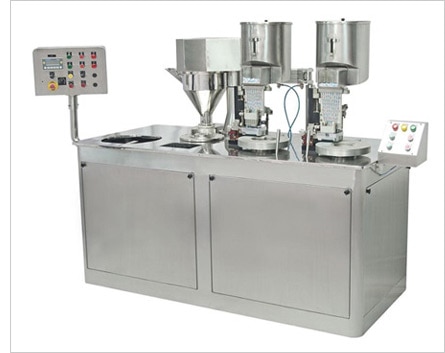 | Capsule Filling Machines Semi Automatic Capsule Filling Machine SACF SACF I & SACF -II (Semi Automatic Capsule Filling Machines) are designed to fill hard gelatin capsules of all sizes with powders, pellets or granular... View product → |
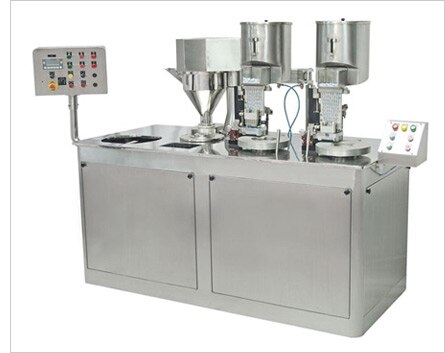 | Capsule Filling Machines SACF: Semi Automatic Capsule Filling Machine SACF I & SACF -II (Semi Automatic Capsule Filling Machines) are designed to fill hard gelatin capsules of all sizes with powders, pellets or granular... View product → |
Frequently asked questions
How do you identify the type of changeover stop?
Read the alarm and machine state first. A guard or permissive stop leaves no obstruction, while a mechanical jam traps a capsule or format part at a station.
Why should you check the complete format set?
A capsule-size recipe does not confirm that dosing discs, guides, bushes, tamping parts, and other change parts match the new format.
How can you separate capsule-shell faults from powder-flow faults?
Inspect empty shells and capsule separation first, then check powder flow, dosing behaviour, compressed air, vacuum, and electrical utilities.
How can recurring stops improve supplier acceptance testing?
Record each stop by station, alarm, format part, material, and restart result, then convert repeated failures into witnessed acceptance-test conditions.