
Returned blister packs create a difficult choice: spend labour opening them by hand, destroy usable-looking medicines, or invest in equipment that still cannot make a product saleable without quality approval. By the end, you will be able to assess your return volumes, compliance controls, pack formats, recovery yield and total cost before choosing a machine or rejecting the idea.
Key takeaways
- Process returns only when lot identity and expiry remain verifiable.
- Test every blister material, tablet shape and capsule format before purchase.
- Separate deblistering from released stock and document each recovered lot.
- Calculate payback from recoverable units, labour, rejects and quality-control costs.
Which distributor returns justify deblistering?
A tablet recovery machine for distributors earns consideration when returned stock arrives in repeatable blister formats, volumes justify controlled processing, and the quality unit can review every lot. The return source matters:
| Source | Typical decision point |
|---|---|
| Crushed cartons | Inspect the blister; carton damage alone does not prove tablet damage |
| Incomplete shippers | Reconcile missing packs and quarantine the remainder |
| Transport damage | Check seal, pocket and storage-condition evidence |
| Short-dated inventory | Confirm whether an authorised disposition is possible before expiry |
| Customer returns | Keep segregated pending identity, condition and storage-history review |
| Recalled batches | Do not recover for reuse; follow the recall and destruction instruction |
| Warehouse-rejected packs | Record the defect and keep the lot segregated |
Do not confuse product recovery with waste handling. Recovering an intact tablet or capsule for possible reuse requires quality-unit approval, traceability and a documented disposition decision. Removing dosage forms before destruction only manages waste; it does not create saleable stock.
The machine is a weak fit for sporadic, mixed, unidentified or recall-controlled returns. Recovered units may need quarantine, destruction, return to the manufacturer, or an approved repacking or relabelling process. They do not become saleable automatically.
In Ho Chi Minh City, check the activity against Ministry of Health requirements, Vietnamese GDP/GSP scope, licence conditions and approved standard operating procedures. Distributor status alone does not authorise pharmaceutical rework, and local heat or humidity does not replace label-based storage controls.
What controls keep returned medicines traceable?
A deblistering machine for returned stock does not restore saleable status. Keep every lot in a controlled quarantine location and create a chain-of-custody record before processing.
1. Identify the lot and record product name, strength, dosage form, batch number, expiry date, quantity, pack integrity, storage temperature and humidity records, recall status, and reason for return. Use barcode scanning, a batch-specific worksheet, or both.
2. Capture batch and expiry information before discarding foil or forming web. Deblistering cannot recover printing that existed only on removed packaging.
3. Inspect the blister and record crushed pockets, broken seals, missing units, contamination and other damage.
4. Confirm the quality-unit disposition decision before setup. Never combine strengths, colours, products or batches in one run.
5. Set up and line-clear the equipment, then feed one pack format from one lot only.
6. Collect recovered tablets or capsules in a labelled, closed container. Segregate aluminium foil, PVC or PVDC, and other waste.
7. Reconcile issued packs, recovered units, rejects and waste. Investigate every unexplained difference.
8. Clean product-contact parts and document the cleaning and line-clearance checks.
9. Obtain quality-unit review before releasing the output from quarantine.
10. Record the outcome separately as approved repackaging, approved relabelling, continued quarantine, destruction, or return to the manufacturer.
EU GDP principles treat returned medicines as segregated stock pending assessment. Vietnamese distributors must confirm the applicable Ministry of Health requirements and company procedures; an overseas rule does not grant permission.
Will the machine handle your actual blister and dosage forms?
A deblisterer fits your operation only if it protects dosage-form quality across your actual SKU range, not because its brochure claims a high pieces-per-minute rate. A machine that cracks tablets or contaminates recovered units creates more quarantine work than value.
Ask the supplier for written operating limits covering:
- Tablet diameter and thickness; capsule size; pocket geometry; blister width; feed direction; PVC/PVDC thermoformed construction; PVC-Alu combinations; Alu-Alu cold-formed packs; peelable foil; foil thickness; and forming-web thickness.
- Separate evidence for tablets, hard capsules and softgels. Hard capsules can split or lose cap-body fit under compression; softgels can puncture, leak or adhere. Do not infer capsule performance from a tablet test. Evaluate capsule deblistering equipment with your own products.
- A sample trial using real products plus damaged, aged and partially empty packs, not only clean production rejects. Measure intact, chipped and crushed units; foil or plastic contamination; powder generation; machine losses; and total reconciliation.
- Results reported by product, blister format, operator setting and lot condition. Define the maximum acceptable breakage rate before testing, and separate recovery percentage from saleable yield.
- Evidence that product identity remains linked to its batch after foil and forming web are discarded. Check whether contact parts are accessible for cleaning and whether line clearance prevents a previous strength entering the next run.
Reject any trial that reports only recovered pieces. Require the supplier to explain what happens to contaminated, damaged and unaccounted units, because recovery is not saleable yield.
Can your warehouse operate it without creating a new risk?
A warehouse can operate a deblistering machine safely only if it controls the stock around it as tightly as the machine itself. Ho Chi Minh City’s ambient climate does not make every medicine stable at uncontrolled room temperature; follow each product label and approved storage requirement for temperature and humidity.
1. Reserve segregated quarantine capacity for unopened returns, recovered units, rejected dosage forms and packaging waste. Use physical barriers, clearly marked locations or electronic status controls so one category cannot be mistaken for another.
2. During the factory-acceptance test, inspect fixed guards, interlocks, emergency stops, roller and pressing-tool pinch-point protection, and safe removal of sharp aluminium and plastic scrap. Check noise levels, dust controls and waste containers rather than accepting a nominal pieces-per-minute claim.
3. Treat crushed tablets as a pharmaceutical-dust hazard. Define ventilation, respiratory protection, spill response and cleaning methods with your quality and workplace-safety teams before installation.
4. Require removable or inspectable product-contact parts, written cleaning instructions and a documented line-clearance check after every product and strength change. Operators must stop when the label, batch record, pack format or count does not match.
5. Reconcile every input pack, recovered unit, damaged unit and waste component. Record the result by batch and product; unexplained losses require a quality investigation, not an efficiency adjustment.
6. Keep trained staff available for setup, inspection, cleaning and status decisions. If you lack space, trained personnel or quality oversight, the machine creates another uncontrolled handling point rather than solving a returns problem.
How should you decide whether the investment pays?
Calculate cost per accepted, traceable unit—not equipment price or advertised throughput. Include operators, inspection, batch reconciliation, cleaning, changeover, qualification, validation support, quality review, rejected-unit disposal, downtime, and the percentage of returns that cannot be recovered legally or technically.
| Option | Cost/value test | Failure to exclude |
|---|---|---|
| Manual opening | Labour and inspection cost per accepted, traceable unit | Count chipped, contaminated or unidentified units as rejects |
| Machine purchase | Total controlled-processing cost divided by accepted, traceable units | Do not treat nominal speed or quarantined output as saleable yield |
| Direct destruction | Disposal and handling cost, with zero recovered stock value | Compare against the authorised value of stock that could return to use |
| Manufacturer return | Freight, credit terms, delay and unrecoverable percentage | Include stock the manufacturer will not legally or technically accept |
For a tablet deblistering machine for pharmaceutical distributors in Ho Chi Minh City, request a written specification, product-format matrix, operating limits, safety documentation, cleaning guidance, qualification support and a sample-trial report. Require results by product and blister format, separating intact, damaged, contaminated, lost and waste units.
A search for blistpop for pharmaceutical distributors should trigger the same checks; the name proves neither permission nor acceptable yield.
Compare Jicon Technologies Pvt Ltd with alternatives using your actual packs, batch controls and acceptance criteria. Buy only when controlled handling costs fall without weakening traceability, product quality or approved disposition procedures.
Related product
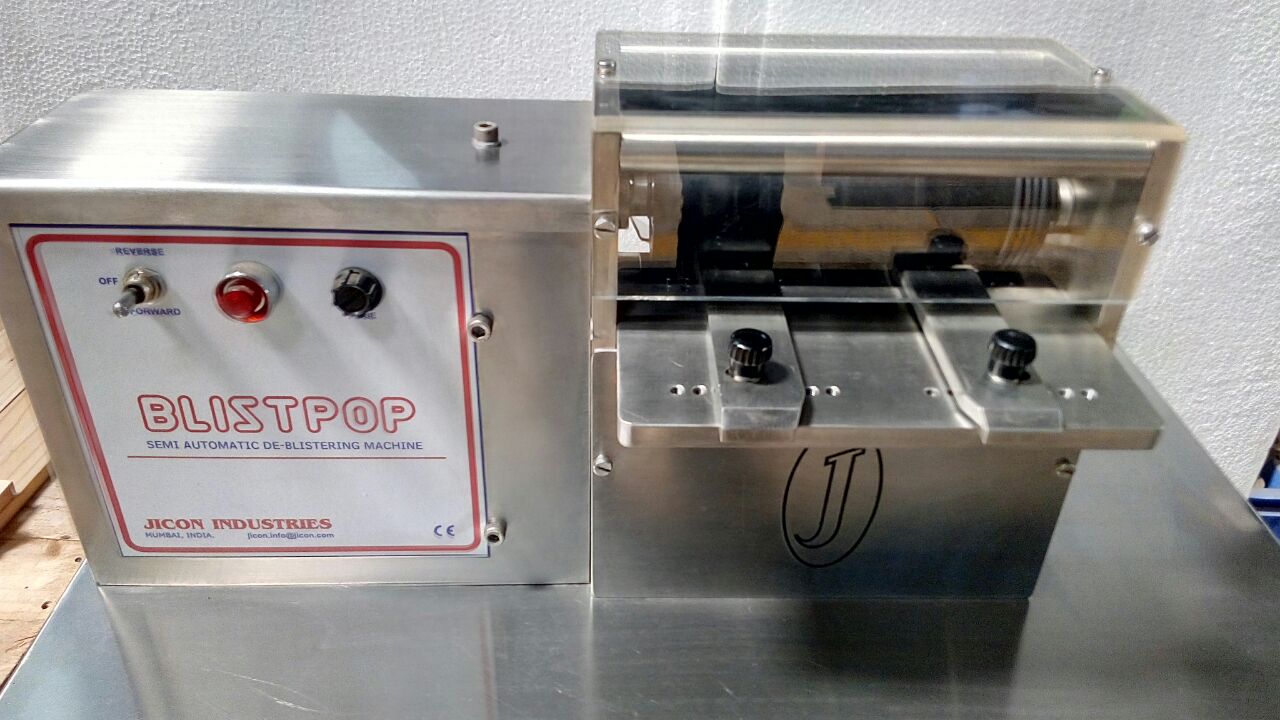 | Accessories & Ancillary Equipments Deblistering Machine for Tablets and Capsules BLISTPOP BLISTPOP is a simple de-blistering machine which is used to recover tablets / capsules / dragees from damaged or incomplete blister packs. |
Frequently asked questions
Which distributor returns justify deblistering?
Returns justify controlled deblistering when volumes are repeatable, blister formats are standardised, and each lot retains readable identity, expiry and return documentation.
What controls keep returned medicines traceable?
Quarantine returned stock, record product and batch details, link recovered units to the original lot, and require quality-unit review before any further disposition.
Will a deblistering machine handle your actual blister and dosage forms?
Confirm compatibility through trials using your own PVC, PVDC, aluminium and laminate blisters, plus the tablet shapes, coatings and capsule formats you receive.
Can a warehouse operate deblistering equipment without creating a new risk?
Operate it in a segregated area with trained staff, line clearance, dust control, cleaning records, reject collection and controls that prevent mix-ups.
How should you decide whether the investment pays?
Compare recoverable product value with equipment, labour, validation, maintenance, rejects, disposal and quality-review costs at your actual return volume.