
Choosing a capsule filler for herbal products requires more than matching a capsules-per-hour figure to a production forecast. You will be able to interpret the ENSULE model options, match the dosing system to your powder, compare automatic and semi-automatic operation, and define a trial that proves the machine can deliver consistent, compliant capsules.
Key takeaways
- Compare output using verified capsules per minute, not the ENSULE model number.
- Test blend flow, moisture and particle size before selecting dosing parts.
- Require filled-weight, defect-rate and changeover results from a witnessed trial.
- Choose automatic filling when volume and repeatability justify setup and cleaning time.
How to compare ENSULE models without relying on the model number
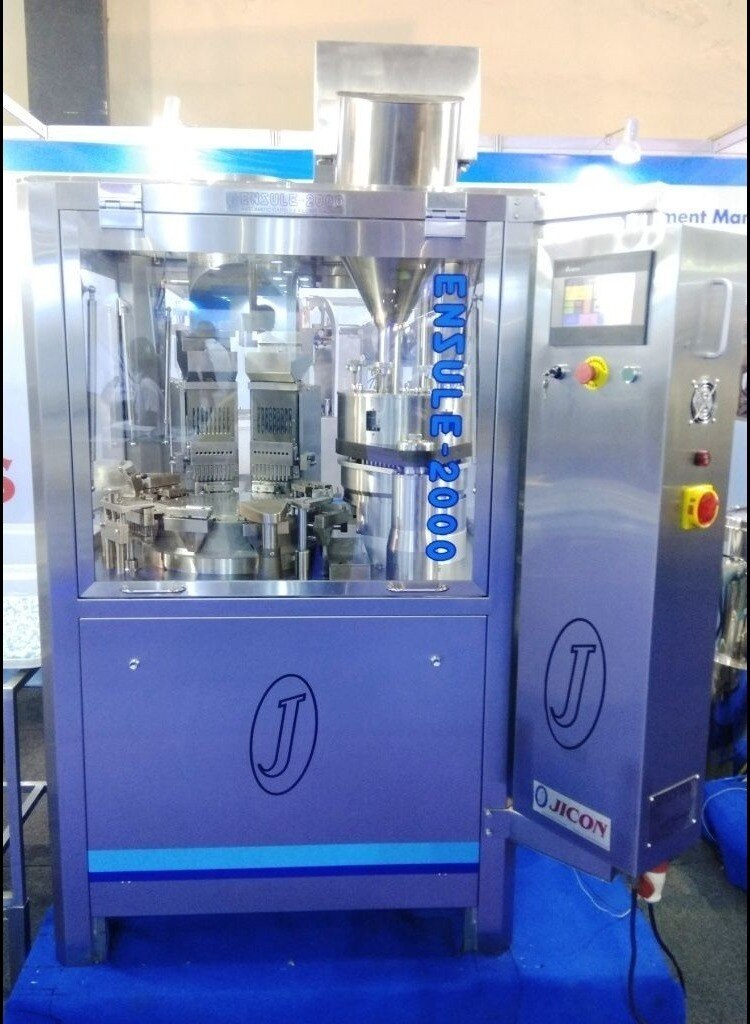
The numbers in ENSULE 200, 400, 750, 1500 and 2000 do not by themselves prove capsules per minute, capsules per hour or another rating. Treat ensule capsule filling options as model choices requiring measurable specifications, not as a generic machine category.
| Model | Compare before choosing |
|---|---|
| ENSULE 200 | Batch size, good capsules per hour, changeover duration, operator count and capital budget |
| ENSULE 400 | Floor space, utilities, cleaning access, daily production and reject handling |
| ENSULE 750 | Running speed, tooling cost, dust extraction and service response |
| ENSULE 1500 | Sustained daily output, staffing, spare-part availability and maintenance access |
| ENSULE 2000 | Demonstrated output, installation requirements, total ownership cost and local support |
Ask for both rated and demonstrated output using your actual capsule size, formulation, fill weight, running speed and reject rate. A nameplate result for an easy-flowing powder in one capsule format is not a reliable production estimate for a portfolio of herbal products.
Use this selection method:
- Calculate required good capsules per hour from your daily demand and available production time.
- Add realistic allowance for start-up, cleaning and changeover losses; do not calculate from theoretical speed alone.
- Run a representative trial and verify good output, fill-weight consistency and reject rate at the intended speed.
For automatic capsule filling for machine options herbal manufacturers in thane, local service response and spare-part availability belong in the comparison alongside floor space, utilities and price. A faster model is the wrong choice if changeovers consume the shift or cleaning leaves powder trapped in inaccessible paths.
Prepare the herbal blend before judging a filler
Start with a characterised blend, not the machine. Mill fibrous botanicals to a controlled range, sieve out oversized pieces, dry to a defined moisture target, blend extracts and carriers uniformly, add lubricant only after the main blend is even, then de-lump before filling.
Particle-size distribution controls packing: broad-size granules segregate, while excess fines bridge or rat-hole in the hopper. Moisture changes cohesion; hygroscopic powders gain water during handling. Bulk density determines volume, tapped density indicates packing potential, poor flow disrupts dosing-chamber filling, and electrostatic charge causes powder to cling, leak and vary from capsule to capsule.
Use target fill mass divided by measured bulk density to choose capsule size. A large shell does not guarantee capacity for a fluffy leaf powder or low-density extract. Granulation, densification or precompression can increase density and improve plug formation, but each treatment can change dissolution and marker-compound uniformity.
Sticky extracts, oil-containing blends and damp powders need different trials from dry, free-flowing powders.
Tamping or dosator systems suit powders that form a coherent plug. Auger or screw assistance can feed poorly flowing powder, but it adds shear, heat and variability to fibrous blends.
| System | Best fit | Main risk |
|---|---|---|
| Tamping or dosator | Cohesive, compressible powder | Weak plugs and weight variation |
| Auger or screw | Poor-flowing, low-density powder | Shear, heat and fibre variability |
A capsule filling machine manufacturer serving herbal products needs your formulation data, not only its product name: particle-size distribution, moisture, bulk and tapped density, flowability, electrostatic behaviour, oil or extract content, and target fill mass. Test the actual blend for bridging, rat-holing, plug strength and weight variation before selecting the filler.
Specify capsule shells, dosing parts and the trial that proves performance
Compare the powder hopper, dosing disc or tamping stations, auger, capsule handling and controls—not just the advertised speed—when choosing an automatic capsule filler for herbal products. Ask whether every powder-contact part has a stated material grade, whether changeover is tool-less or low-tool, and whether operators can inspect and clean each powder path.
| Part | What to verify | Failure prevented |
|---|---|---|
| Hopper and dosing | Agitation, dosing-disc or tamping control, auger specification if fitted | Bridging, rat-holing and variable fills |
| Capsule handling | Orientation, separation, vacuum, closing and ejection stations | Empty bodies, telescoping and poor locking |
| Tooling and controls | Size change parts, recipes, alarms and speed control | Setup errors and start-up rejects |
| Dust path | Extraction inlet, filters, access and cleaning procedure | Powder at joints, contamination and dust accumulation |
Run the buyer’s materials across every intended capsule size and target fill weight. Record:
- Shell supplier, gelatin or HPMC type, capsule size, room temperature, relative humidity and conditioning time; gelatin becomes brittle when too dry or tacky when humid, while HPMC still needs controlled storage.
- Average and individual weight, empty or underfilled bodies, double fills, powder at the joint, cracked shells, cap-body misalignment, locking failures and start-up rejects.
Pair weight checks with blend-uniformity and finished-capsule testing. Mass consistency alone cannot prove marker-compound uniformity; USP General Chapter <905> begins its initial assessment with 10 units and relates individual results to the batch mean. Machine repeatability is not automatic USP compliance.
Decide when automatic operation beats semi-automatic filling
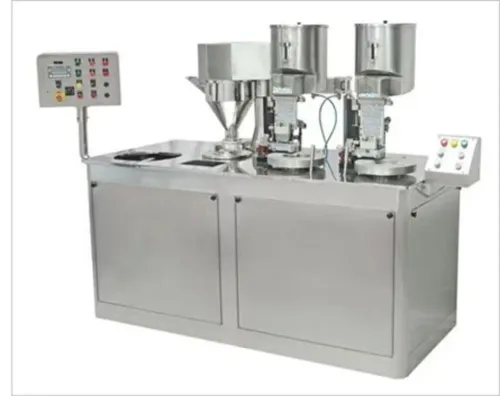
Automatic filling earns its place when sustained demand, tight fill-weight control, multiple shifts, or repetitive manual loading creates a bottleneck. Semi-automatic filling remains sensible for development batches, short campaigns, uncertain demand, many low-volume formulations, and products still changing.
Automatic | Semi-automatic Labour per batch | Lower loading labour; higher setup and cleaning skill | More operators; simpler equipment Output stability | Consistent after validated setup | More dependent on operator technique Formats per month | Best with few recurring sizes; dedicated tooling can be justified | Better for many capsule formats and frequent changes Documentation | More alarms, settings, batch records and training | Fewer electronic records, but manual checks remain essential
Compare the complete workload, not capsules per hour: setup and changeover time, rejects during changeover, cleaning access and duration, operator training, dust exposure, documentation, and the cost of storing dedicated tooling. If you run several shifts, calculate labour across every batch; if you change formats weekly, include lost time and tooling handling.
Control herbal dust with local extraction, grounding and bonding, routine removal of deposits, safe filter handling and a documented combustible-dust risk assessment. A large vacuum alone does not control ignition or filter hazards.
Before defining cleaning controls, batch records and GMP expectations, classify the finished product in India as an Ayurvedic, Siddha or Unani medicine, or as a food or dietary supplement. The machine does not establish AYUSH GMP or food-safety compliance.
Turn the purchase into a documented acceptance decision
Write acceptance criteria before the factory trial, or an attractive output number can survive without proving your batch will work. Define target fill mass, permitted individual-weight variation, capsule sizes, minimum good capsules per hour, maximum reject rate, changeover time, cleaning time, dust controls and required documentation.
Run a formulation-representative FAT with your intended powder, shell supplier and operating speed, then repeat the agreed checks in an SAT at the installation site. Record actual good capsules per hour, not theoretical cycles, and compare the trial data with your internal blend-uniformity, capsule-inspection and batch-record requirements.
| Qualification stage | Evidence to approve it |
|---|---|
| DQ | Approved user requirements, design review, dosing principle, capsule-size range, contact-material specifications and dust-control design |
| IQ | Site utilities, installed equipment identity, drawings, parts list, calibration records and installation checks |
| OQ | Challenge runs at set speeds, alarms, interlocks, vacuum and reject controls against written limits |
| PQ | Repeated production runs using the approved blend, fill weight and shell, with weight, inspection and yield results |
Ask for operating and cleaning manuals, software and alarm documentation, parts lists, calibration certificates, contact-material details and service-response terms. Jicon Technologies Pvt Ltd is relevant when it can produce this evidence for pharmaceutical, cosmetic or food machinery, not merely quote a model.
Approve the purchase on validated good capsules per hour and total ownership effort. The phrase ensule capsule filling options alone is not a specification.
Related products
 | Capsule Filling Machines Automatic Capsule Filling Machines ENSULE ₹1 Our ENSULE series of machines are Fully Automatic Capsule Filling machines used to fill powders (in the form of slugs, pellets or mini tablets) in... View product → |
 | Capsule Filling Machines Automatic Capsule Filling Machine ENSULE 2000 ENSULE 1500 ENSULE 750 ENSULE 400 ENSULE 200 Our ENSULE series of machines are Fully Automatic Capsule Filling machines used to fill powders (in the form of slugs, pellets or mini tablets) in... |
Frequently asked questions
How should you compare ENSULE capsule filling options?
Compare verified output, capsule-size range, dosing method, changeover time, cleaning access and trial results rather than relying on the model number.
What should herbal manufacturers prepare before testing a capsule filler?
Define the blend’s particle size, moisture, bulk density, flow behaviour and formulation characteristics before judging machine performance.
What should a capsule-filler trial prove?
The trial should record filled-weight variation, machine speed, empty or damaged capsules, powder leakage, changeover time and cleaning requirements.
When does automatic operation beat semi-automatic filling?
Automatic filling is the stronger choice when production volume, consistent dosing and reduced operator handling outweigh setup, cleaning and maintenance demands.
How do you document acceptance of an automatic capsule filling machine?
Record the agreed specification, capsule shell, tooling, product blend, test speed, sampling plan, results, deviations and signed acceptance decision.
Related products
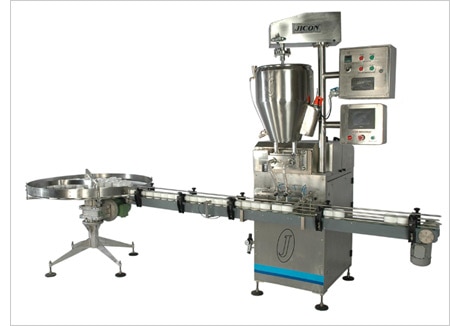 | Container Filling Machines Automatic Container Jar Filling Machine for Ointment and Others High speed automatic multi head container filling machine for filling cream, paste, ointment, wax polish, grease, jam, sauce etc. |
 | Capsule Filling Machines Semi Automatic Capsule Filling Machine SACF SACF I & SACF -II (Semi Automatic Capsule Filling Machines) are designed to fill hard gelatin capsules of all sizes with powders, pellets or granular... View product → |
 | Capsule Filling Machines ENSULE: Automatic Capsule Filling Machines ₹1 Our ENSULE series of machines are Fully Automatic Capsule Filling machines used to fill powders (in the form of slugs, pellets or mini tablets) in... View product → |
 | Container Filling Machines Automatic Container Filling Machine ₹1 High speed automatic multi head container filling machine for filling cream, paste, ointment, wax polish, grease, jam, sauce etc. View product → |