
Weak, wrinkled, incomplete or intermittent blister seals rarely have one universal cause. By separating heat, pressure, dwell, tooling, material, alignment and contamination faults, you can identify the failure mode and require the exporter to prove a stable sealing process with documented tests and operating limits.
Key takeaways
- Read the fault pattern before raising temperature.
- Check platen parallelism, pressure, dwell, cooling and web alignment in sequence.
- Use separate sealing windows for PVC-Alu and Alu-Alu packs.
- Require seal tests, drawings and recovery instructions from the exporter.
Read the Seal Fault Before Changing the Temperature
A weak seal across the entire format points first to insufficient heat transfer, dwell, pressure, or cooling—not automatically to a low temperature setting. A seal that is strong on one edge and weak on the opposite edge indicates platen non-parallelism or uneven pressure distribution.
- A clean, uniformly weak seal suggests a process-window problem: platen temperature, dwell time, pressure, line speed, or cooling is outside its qualified range.
- Channels, gaps, or a broken seal around individual cavities indicate product dust, powder, liquid, or tablet fragments in the seal land. Improve product control, cavity evacuation, and cleaning; extra pressure can crush tablets or deform the blister without removing contamination.
- Wrinkles, folded foil, and a narrow or uneven seal suggest web misalignment, foil tension, tooling damage, or platen contact that begins on one side.
- A brittle, discoloured, stuck, or squeezed-out seal points to excessive heat or dwell, or incompatibility between the heat-seal lacquer and the forming web.
- Seals that pass one cycle and fail the next indicate unstable platen temperature, pressure, dwell, web tracking, or contamination rather than a single incorrect temperature.
For automatic flat plate blister packing machine sealing faults, require the exporter to establish minimum and maximum limits for temperature, dwell, pressure, cooling, and line speed during FAT and OQ. Record pressure uniformity, platen parallelism, seal-width variation, and leak-test limits; these measurements expose flat plate blister machine seal problems before changing the recipe blindly.
Follow a Fixed Diagnostic Sequence from Platen to Web
Start at the sealing platen, not the temperature setpoint. For flat plate blister machine seal problems, a platen that touches one edge first creates a strong seal on one side and channels or leaks on the other.
Check the machine in this order:
- Inspect platen faces, sealing plates and pressure marks. Require a documented parallelism check and pressure-uniformity test across the complete format.
- Confirm forming-web and lidding-foil alignment. Misregistration can place the seal land partly over a cavity edge or outside the coated area.
- Compare actual platen temperature with the displayed value, then check temperature uniformity across the tool.
- Verify pneumatic pressure stability, sealing dwell and line speed. Low pressure, unstable air or excessive speed produces intermittent contact.
- Examine the foil, PVC or other forming web for wrinkles, coating damage and the specified lacquer system.
- Clean product dust, powder, liquid and tablet fragments from the seal land and improve cavity evacuation. More pressure will not remove contamination; it can crush product or deform the blister.
| Check | What failure indicates | Evidence to request |
|---|---|---|
| Platen parallelism | Edge-to-edge seal variation | Pressure map and measured parallelism |
| Web alignment | Partial or displaced seals | Registration records and sample packs |
| Temperature and dwell | Incomplete bonding | Calibrated readings and timed cycle data |
| Pressure stability | Intermittent seals | Pressure trend during production |
| Material combination | Coating incompatibility | Trial results on the actual web and foil |
Do not accept one nominal recipe. Require a documented process window covering minimum and maximum temperature, dwell, pressure, cooling condition and line speed, established during FAT or OQ on your production materials. Temperature increases can distort PVC, damage lacquer, stick foil to tooling or embrittle the seal.
Set Separate Process Windows for PVC-Alu and Alu-Alu Packs
Qualify PVC-Alu and Alu-Alu as separate processes; one sealing recipe cannot safely cover both constructions. Record a process window, not just a nominal temperature, during FAT and OQ on the exact forming web, lidding foil and heat-seal lacquer intended for production.
- Platen temperature: minimum and maximum interface temperatures, verified by an independent survey rather than the controller display alone.
- Sealing pressure: target range, stability during the cycle and pressure across the full platen.
- Dwell and line speed: shortest acceptable dwell and fastest acceptable speed, including cooling time before web release.
- Forming conditions: heating profile, forming temperature, vacuum or air pressure, plug-assist settings and cavity depth.
- Materials: PVC or PVdC-coated PVC with its specified aluminium foil lacquer for thermoforming; aluminium forming foil with its specified lidding lacquer for cold forming.
2. Qualify PVC-Alu with enough forming heat to produce complete cavities without thinning, whitening or cracking the web. Check that excessive sealing heat does not distort PVC, transfer lacquer or stick foil to the platen.
3. Qualify Alu-Alu for uniform cold-formed cavities, consistent foil thickness and accurate registration. Confirm that pressure and dwell close the lacquered foil without pinholes, wrinkles or crushed cavities.
4. Require acceptance limits for leak testing, seal-strength sampling, seal width, platen temperature uniformity, pressure variation, rejection logic and changeover repeatability. Requalify after changing foil lacquer, web coating, tooling or forming depth.
Prove Seal Integrity with Tests, Not Appearance Alone
A blister seal is not proven because its perimeter looks closed. Sample sealed packs from the start, middle and end of a run, then test both separation force and package integrity using the actual forming web, lidding foil and product format.
| Test | What it proves | Limitation |
|---|---|---|
| ASTM F88/F88M seal-strength test | Measures the force required to separate a flexible seal and reveals weak or inconsistent bonding | A high peel force can coexist with a channel leak |
| ASTM F2096 bubble test | Detects gross leaks by pressurising the pack under water; useful for seal edges and blister cavities | It does not establish sensitivity to every microleak |
| Dye-penetration test | Shows channels that allow dye to travel through the seal | Destructive; validate dye, exposure time and acceptance limit |
| Vacuum-decay or bubble-emission test | Detects pressure loss or emitted gas from a sealed pack | Select and validate the method for the pack geometry and required sensitivity |
Define the acceptance plan before commissioning: number of samples per run stage, minimum seal strength, leak-test method and limit, allowable seal-width variation, and rejection logic. Record platen temperature uniformity, pressure stability and parallelism across the complete sealing format; one edge contacting first can leave the opposite edge weak while the centre passes.
Repeat the tests after changeover and with each PVC-aluminium or aluminium-aluminium material combination. A seal setting that passes one lacquer system does not qualify another.
Make the Exporter Supply Evidence, Drawings and Recovery Support
Do not accept shipment on a demonstration alone. Your specification for a flat plate blister packing machine for exporter supply must include measurable acceptance limits, signed FAT results and a recovery package that lets your team identify the failed variable.
1. Require an FAT/OQ protocol and results covering platen parallelism, pressure uniformity across the complete sealing format, platen temperature uniformity, pressure stability, dwell, cooling and line speed.
2. Require a documented process window, not one nominal recipe: minimum and maximum temperature, dwell time, pressure, cooling condition and speed for each PVC-Alu and Alu-Alu format.
- Leak-test method and maximum permitted leakage
- ASTM F88/F88M seal-strength method, sampling plan and minimum force
- Seal-width variation, rejection logic and changeover repeatability
- First-off inspection results on your specified foil, PVC and adhesive coating
4. Request format-specific tooling drawings showing cavity-to-seal-land alignment, change-part height, shims, pressure pads and correct sealing-plate orientation. Include wear limits and the restart procedure after a format change.
5. Obtain electrical and pneumatic schematics, heater and thermocouple part numbers, calibration instructions, alarm-history access, recommended sealing-plate spares and remote fault-isolation support.
Whether you are evaluating Jicon Technologies Pvt Ltd or another blister packing machine exporter, make these documents contractual deliverables. A buyer investigating exporter sealing problems in Thane needs evidence that a weak seal can be traced to tooling, pressure or temperature instead of guessed at from the recipe.
Related products
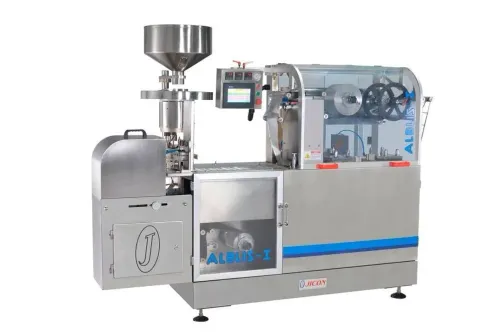
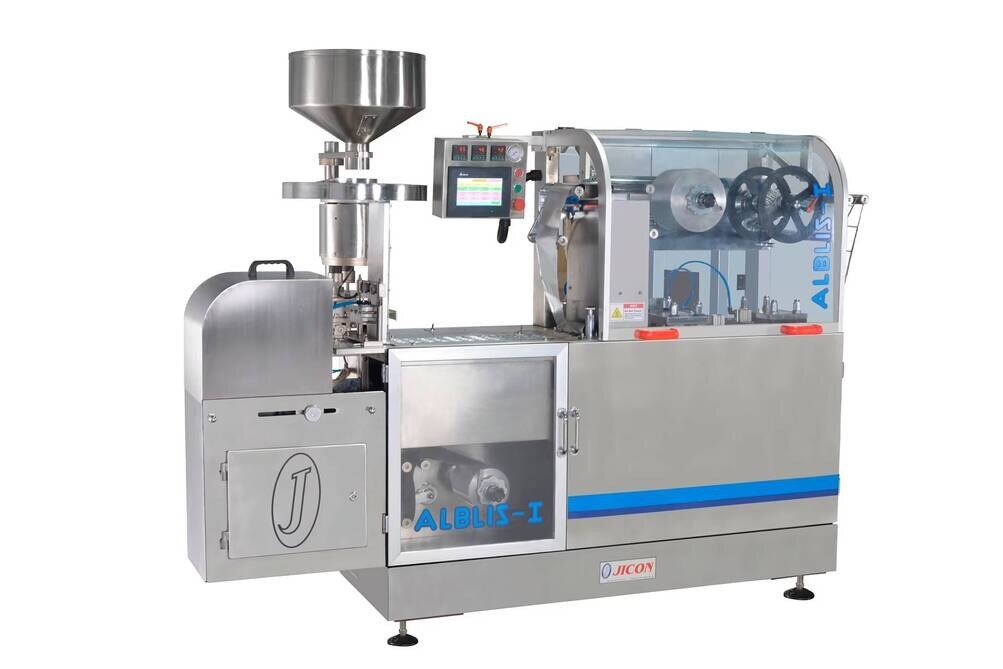
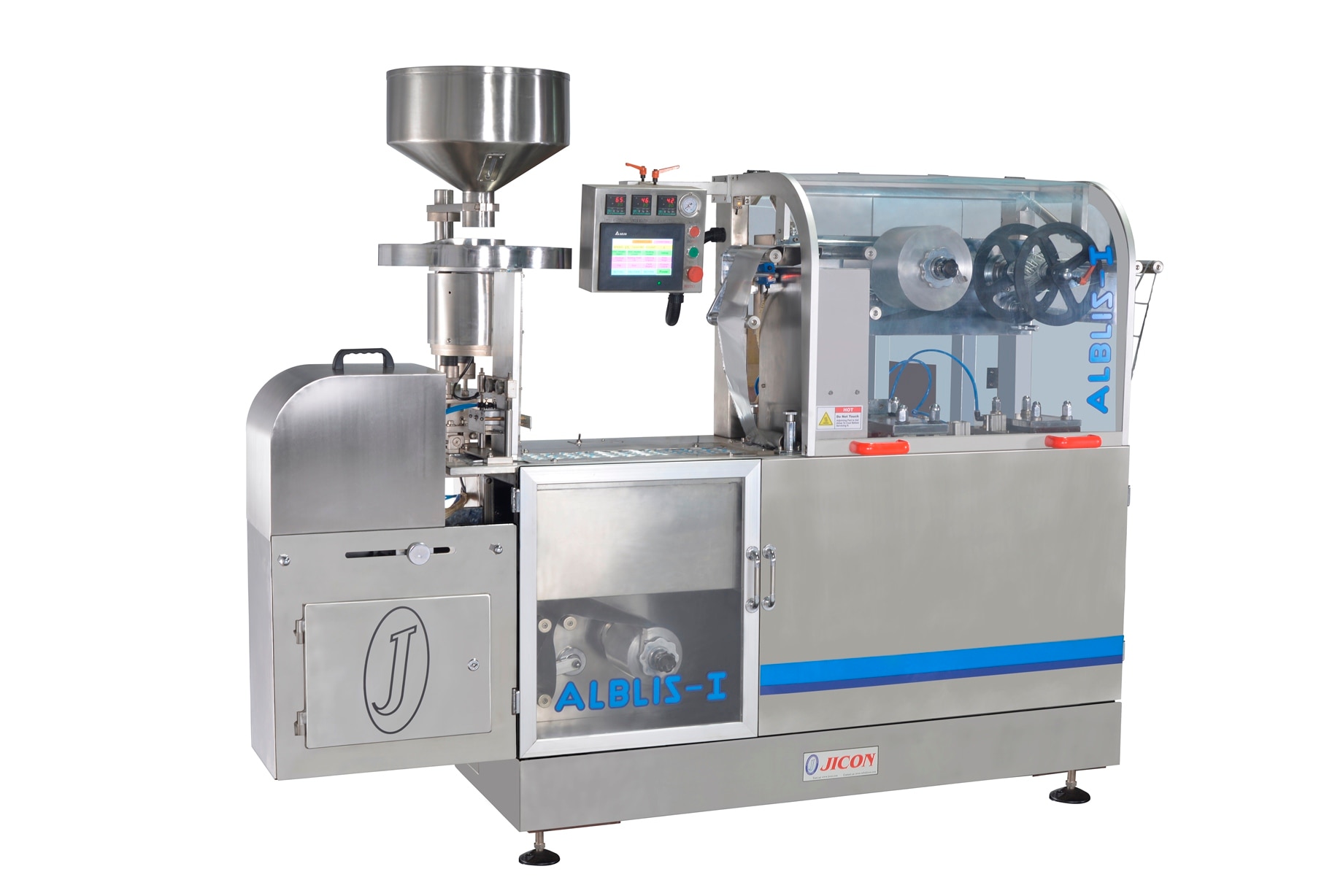 | Blister Packing Machines ALBLIS-I: Automatic Flat Plate Blister Packing Machine Flat Plate Blister Packing Machine Ideal for R&D, pilot plants and small batch production: ALBLIS is a versatile ‘Flat Plate’ intermittent motion... View product → |
 | Blister Packing Machines Automatic Flat Plate Blister Packing Machine ALBLIS-350 ₹1 ALBLIS-350 is a versatile ‘Flat Plate’ intermittent motion automatic blister packing machine that can produce Alu-Alu blister packs by cold forming... View product → |
Frequently asked questions
What does a weak seal across the whole blister format indicate?
Check heat transfer, dwell time, pressure and cooling before changing the temperature setting.
What causes a seal that is strong on one edge and weak on the opposite edge?
Check platen non-parallelism and uneven pressure distribution across the sealing area.
Should PVC-Alu and Alu-Alu blister packs use the same process settings?
No. Set and validate separate process windows because the two web combinations transfer heat and seal differently.
How can you prove that a blister seal is intact?
Use documented seal-integrity tests rather than relying on visual appearance alone.
What evidence should a blister packing machine exporter provide?
Request sealing data, tooling and machine drawings, test records, operating limits and written recovery support.
Related products
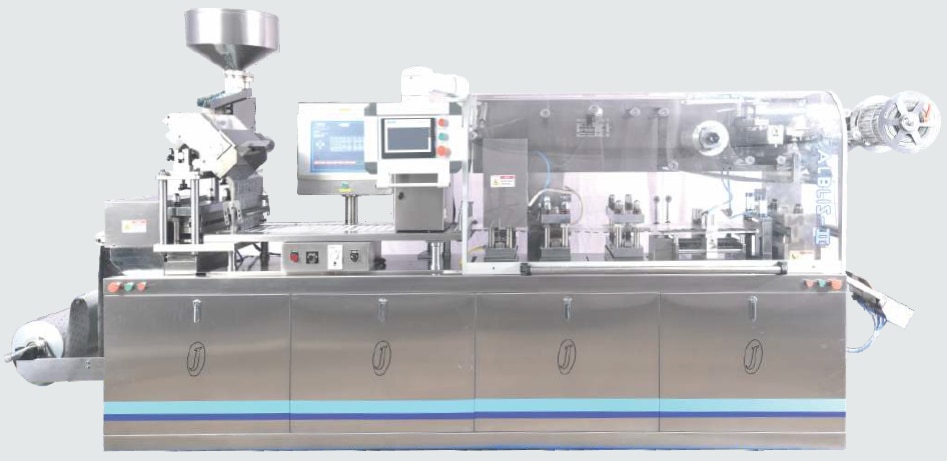 | Blister Packing Machines ALBLIS-II: Automatic Flat Plate Blister Packing Machine ₹1 Automatic Flat Plate Blister Packing Machine (Ideal for Commercial High Output batches): ALBLIS is a versatile ‘Flat Plate’ intermittent motion... View product → |
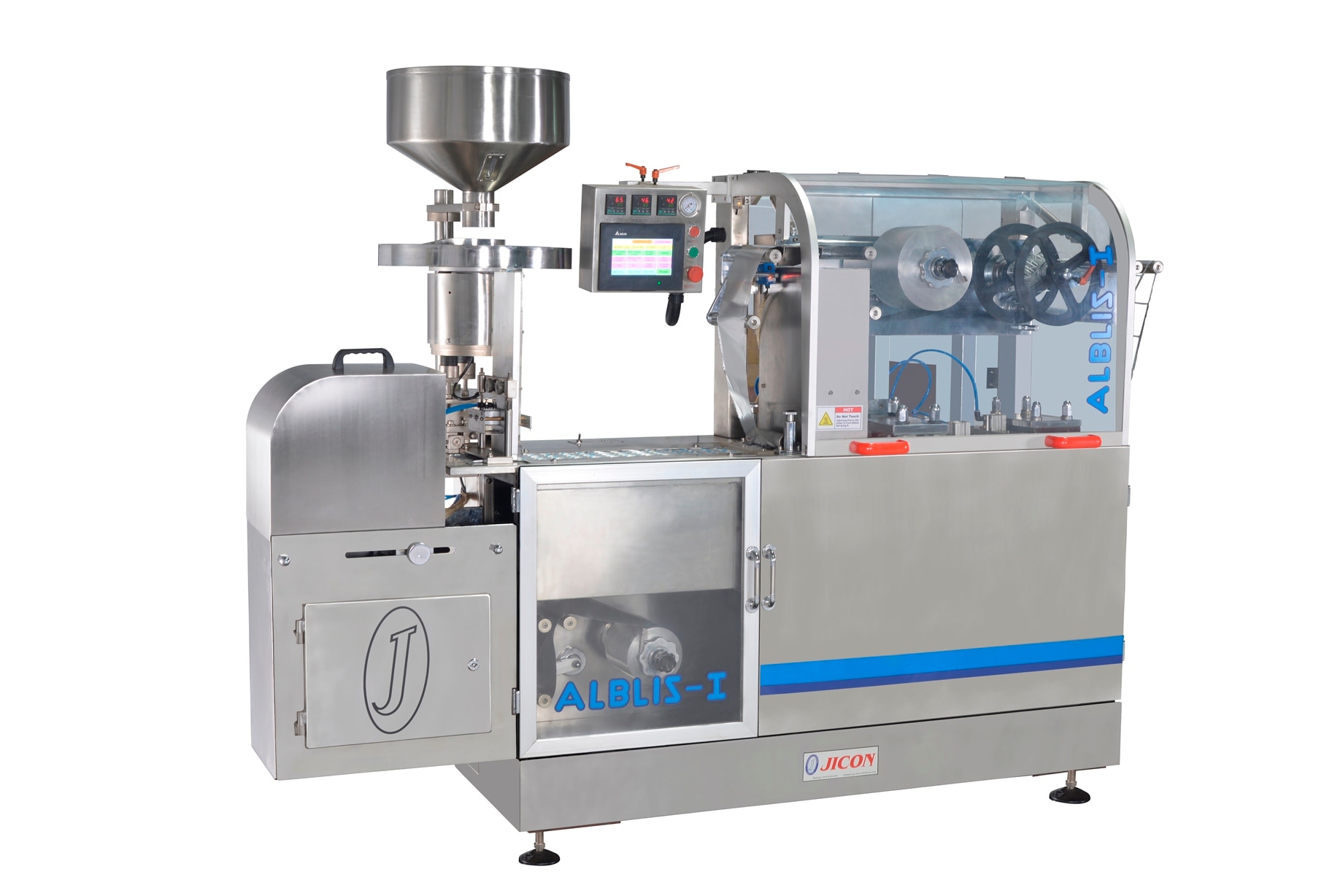 | Blister Packing Machines Automatic Flat Plate Blister Packing Machine ALBLIS-I Flat Plate Blister Packing Machine Ideal for R&D, pilot plants and small batch production: ALBLIS is a versatile ‘Flat Plate’ intermittent motion... View product → |
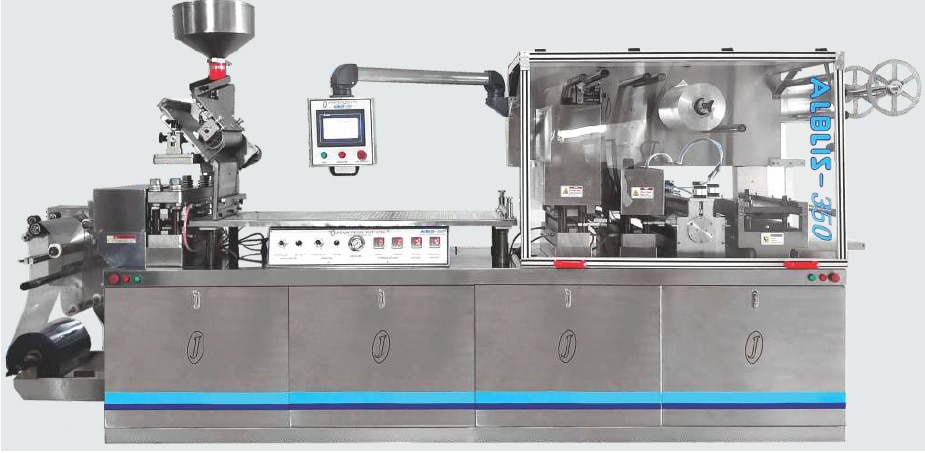 | Blister Packing Machines ALBLIS-350: Automatic Flat Plate Blister Packing Machine ALBLIS-350 is a versatile ‘Flat Plate’ intermittent motion automatic blister packing machine that can produce Alu-Alu blister packs by cold forming... View product → |