
Capsule separation failures, weight variation, powder leakage and repeated stoppages can originate in the shells, formulation, tooling, utilities or operator method. A structured diagnosis lets you isolate the cause, recover affected production safely and define the evidence required before releasing the batch or changing machine settings.
Key takeaways
- Match each symptom to a defined check before changing machine settings.
- Compare powder flow, moisture and fill weight before blaming the filler.
- Record capsule size, tooling condition and settings during every changeover.
- Quarantine failed output and document the cause before restarting SACF production.
Which SACF faults point to a specific cause?
Match the first symptom to a defined check list; random setting changes can hide the real cause. Use this fault map to classify semi automatic capsule filler faults before adjustment.
| Fault | Checks to make | Likely consequence |
|---|---|---|
| Capsules do not separate | Measure shell dimensions; verify capsule-size tooling and segment alignment; check vacuum level, vacuum-line leaks, blocked filters and worn suction seals | Empty bodies or caps remain attached |
| Body or cap damage | Confirm the change parts; inspect for forced placement, cracked shells and misalignment at the holder or locking station | Crushed, split or distorted capsules |
| Powder at the joint | Check overfill, powder on the cap or body rim, excessive fines, static adhesion and locking alignment | Leakage and weak locks |
| Underfill, overfill or variable weight | Check powder-bed height, scraping technique, dosing-plate condition, fill depth, tamping and bulk-density changes | Dose failure or poor weight uniformity |
| Incomplete locking | Inspect powder on the rim, overfilled bodies, damaged shells, incorrect size parts and cap-body alignment | Telescoping, reopening or cracked capsules |
| Machine stoppage | Review the last movement, interlock, jam location, electrical supply, compressed air, vacuum and dust accumulation | Repeated stops or unsafe restart |
Do not increase locking force before identifying the failure mode. Excess force can create telescoping or cracked capsules; correcting rim contamination, alignment or the wrong tooling addresses the cause.
How do you separate a powder problem from a machine problem?
Run a controlled comparison before altering the dose setting. Hold the machine settings steady, use the same operator and powder lot, and define the powder-bed height, scraping method and replenishment interval.
Record these controls before sampling:
- Capsule size, shell material, target fill weight, empty-capsule dimensions, powder bulk density, moisture content, particle-size distribution, flowability and visible fines.
- Whether the powder bridges, segregates, clings through electrostatic charge or changes density during replenishment. Hygroscopic powder can become cohesive as it absorbs moisture; very dry air can increase static adhesion.
- Fill weights at set points through the run, plus dosing-plate flatness and wear, cavity cleanliness and the recorded settings.
- At a Thane installation, room temperature and relative humidity at the machine, compressed-air pressure and dew point, electrical stability, vacuum performance and dust-extraction performance. Set product-specific temperature and humidity limits.
| Comparison | Evidence to examine | Likely interpretation |
|---|---|---|
| Formulation-related fault | Fill-weight or flow trends follow changes in bulk density, moisture, particle-size distribution or replenishment, while the machine remains stable | Investigate powder conditioning, storage, flow and electrostatic control before changing dose settings |
| Machine-related fault | The defect follows one station, cavity, operator or setting and remains with a controlled powder sample | Check vacuum performance, filters, seals, alignment, dosing-plate wear and cavity cleanliness separately from powder behaviour |
A stable powder-bed height and scraping method prevent operator technique from disguising the cause. Dust extraction and grounding must control static without disturbing the powder bed. This evidence-based approach is essential for SACF capsule filling problems in Thane.
What must be checked during changeover, cleaning and daily operation?
Treat every capsule-size change as a documented setup, not a quick part replacement. Complete line clearance, verify each part number against the intended size, and record the previous settings before making adjustments.
1. Inspect the segment, capsule holder, bush, separation components, dosing plate and locking parts before installation. Confirm segment alignment, set the dosing plate, check the locking station, and run empty capsules. Caps and bodies must separate cleanly without forced placement.
2. During operation, keep powder-bed height and scraping consistent between operators and shifts. Do not force capsules into the segment, alter settings without recording them, or return rejected capsules to the batch. If static adhesion or powder clouds appear, check grounding and dust extraction; extraction must capture dust without disturbing the powder bed.
3. Disassemble, clean, dry and inspect the product path during each defined cleaning cycle. Check beneath the dosing disc, inside dosing cavities, vacuum filters and around rim-contact surfaces; use only approved tools that do not scratch surfaces or leave fibres. Never run a damaged or warped dosing plate.
Include vacuum leakage, blocked filters, pneumatic pressure and compressed-air quality in routine maintenance.
A clean external surface does not prove the machine is ready. Residual powder can alter dosing, contaminate later product or prevent proper locking, while a blocked filter can reduce capsule separation performance. Record cleaning verification, utility readings and any replaced part before release.
How should you recover from a stoppage or failed batch?
Quarantine first: sacf capsule production recovery begins by stopping and isolating the machine. Identify every capsule and quantity inside the machine, exposed to spilled powder, or produced since the last acceptable in-process check; quarantine those capsules and associated powder. Do not treat the first visually clean capsules after restart as proof of recovery.
Record the stoppage time, fault location, settings, operator, utility readings, environmental conditions, affected quantity and defect photographs. Then remove spilled powder, clean the product path, empty dosing cavities, clean vacuum filters and capsule-contact surfaces, and inspect the segment, dosing plate, seals and locking station.
Verify change parts, alignment, powder-bed height, vacuum, compressed air and recorded settings.
Run a small restart sample with the intended material. Compare it with the approved limits:
| Check | Accept recovery | Do not accept recovery |
|---|---|---|
| Capsules | Separation, appearance and lock integrity pass | Cracks, reopening, powder at rims or attached caps |
| Fill | Weight and variation meet limits | Out-of-limit weight or unstable trend |
| Process | Rejection rate, line clearance and sampling are documented | Unreconciled quantity or missing records |
Obtain Quality approval before returning material to the batch or releasing recovered capsules. The batch record must state the last acceptable check, segregation, reconciliation, reprocessing or rejection decision, and the person authorising restart. Accept the run only after all criteria pass.
What should a pharmaceutical machinery manufacturer provide for site-specific SACF support?
Choose support that leaves a repeatable process, not a technician’s last set of adjustments.
For pharmaceutical machinery manufacturer SACF capsule filling for problems in Thane, send the team the capsule size and shell material, target fill weight, powder characteristics, defect photographs, machine settings, fill-weight trend, room readings, utility readings and the batch point where the fault begins.
Test the installed machine with the intended powder, or a justified surrogate, under recorded temperature and relative-humidity conditions.
Request these deliverables from a pharmaceutical machinery manufacturer SACF support programme:
- Controlled changeover instruction with part numbers for the segment, dosing plate, holder, bush, separation parts and locking parts
- Cleaning, line-clearance and preventive-maintenance records, including intervals and critical spares
- Vacuum, compressed-air, electrical and dust-extraction diagnostic checks
- Operator training and a controlled-stoppage challenge
- A written corrective-action report with approval criteria and recurring-fault trend method
Compare the acceptance evidence, not just empty-machine movement:
| Test | Evidence to record | Failure exposed |
|---|---|---|
| Separation and filling | Clean separation and fill-weight trend with powder | Wrong tooling, vacuum loss or powder behaviour |
| Locking and rejection | Joint integrity and correct reject handling | Rim powder, misalignment or damaged shells |
| Changeover and restart | Verified parts, cleaning access and recovery sample | Setup error or unstable restart |
Jicon Technologies Pvt Ltd should be assessed against this evidence: operator and shift results must be comparable, and recurring faults must be trended against formulation, utilities and room conditions.
Related products
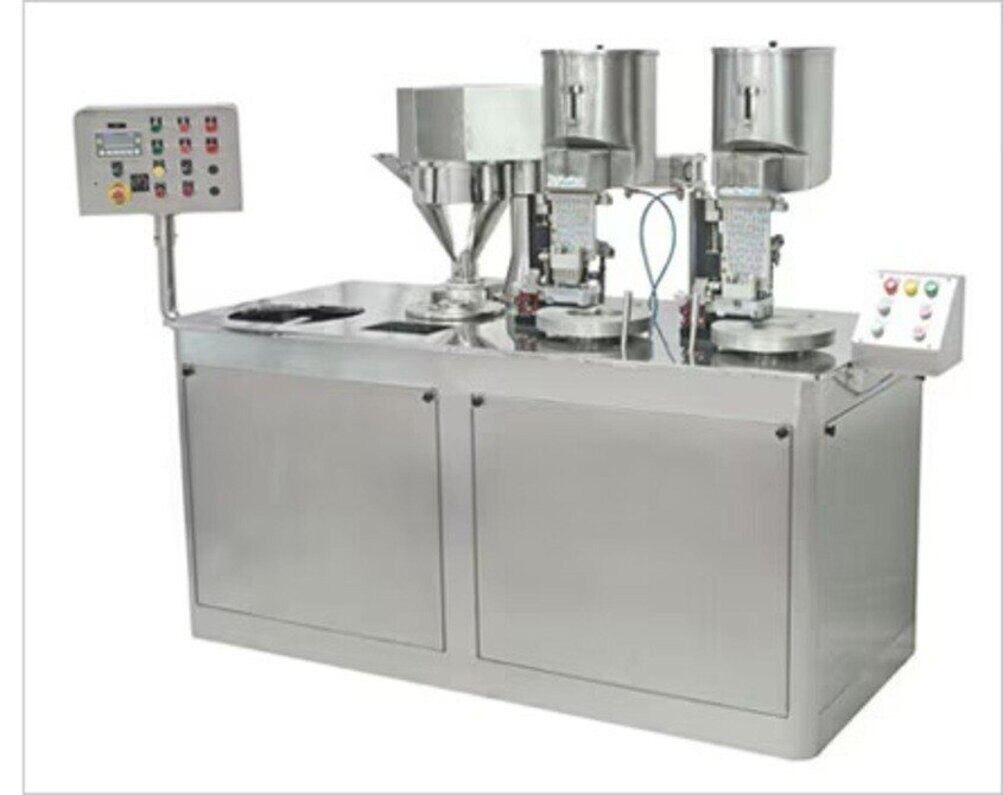
 | Capsule Filling Machines Semi Automatic Capsule Filling Machine SACF ₹1 SACF I & SACF -II (Semi Automatic Capsule Filling Machines) are designed to fill hard gelatin capsules of all sizes with powders, pellets or granular... View product → |
 | Capsule Filling Machines SACF: Semi Automatic Capsule Filling Machine ₹1 SACF I & SACF -II (Semi Automatic Capsule Filling Machines) are designed to fill hard gelatin capsules of all sizes with powders, pellets or granular... View product → |
Frequently asked questions
Which SACF faults point to a specific cause?
Identify the symptom first: split capsules indicate alignment or closing pressure issues, while variable fill weight points to powder flow, dosing or machine-feed problems.
How do you separate a powder problem from a machine problem?
Check powder flow, moisture, particle size and bulk density, then compare fill-weight variation across stations and repeated machine cycles.
What must be checked during SACF changeover, cleaning and daily operation?
Verify capsule size, tooling alignment, dosing parts, guards, product-contact surfaces, lubrication points, vacuum and operating records.
How should you recover from a stoppage or failed batch?
Stop the machine, segregate affected capsules, record the last accepted checks, investigate the cause and restart only after documented clearance.
What should a pharmaceutical machinery manufacturer provide for site-specific SACF support?
Request machine trials, product-specific settings, format-change instructions, cleaning guidance, operator training, troubleshooting records and post-installation support.