
Low fill weight, product stringing, crooked tubes and leaking seals rarely have one obvious cause. By separating dosing, tube handling, sealing, utilities and controls, you can isolate the fault, recover the filler safely and decide whether to adjust, quarantine, maintain or escalate the machine.
Key takeaways
- Use gravimetric checks at the start, middle and end of each batch.
- Separate filling variation from tube handling, sealing and coding faults.
- Follow a controlled recovery sequence after every jam or interruption.
- Validate format changes, cleaning controls and maintenance support before buying.
Start with the symptom: a fault-by-fault diagnosis of tube filling
Start with a gravimetric test: tare a clean container, collect a defined sample of filled tubes, weigh each unit, compare the mean and individual results with the target weight and approved tolerance, then plot results at the start, middle and end of the batch.
| Symptom | Checks | Likely causes |
|---|---|---|
| Underfill | Verify piston stroke, feedback, immersion depth, nozzle height, check valves and air pockets | Low temperature, high viscosity, entrained air or short stroke |
| Overfill | Check piston position, dosing timing and tube position | Excess stroke, delayed cutoff or low yield stress |
| Inconsistent fill weight | Compare repeat strokes with unit masses; inspect mixing, temperature and hopper level | Unmixed batch, viscosity change, air, worn seals or calibration drift |
| Dripping | Test cutoff and suck-back without excessive retraction | Low yield stress, incorrect timing, nozzle height or solvent evaporation |
| Stringing | Inspect nozzle geometry, shear sensitivity and suck-back recovery | Elastic product, abrasive particles or partial obstruction |
| Air pockets | Check hopper vortex, deaeration and nozzle immersion | Entrained air, poor mixing or excessive shear |
| Blocked nozzle | Remove, inspect and sieve residue; check suspended-particle size | Dried product, abrasive solids or a damaged nozzle |
Viscosity and temperature alter volumetric dose; yield stress controls flow restart, while shear-sensitive products change after piston or pump movement. Volatile solvents evaporate at exposed nozzles.
Use this decision tree for automatic tube filling problems in Thane: repeatable piston strokes with changing mass indicate product or air; stable product with intermittent low doses indicates nozzle, timing or tube position; gradual drift indicates temperature, hopper level, wear or calibration. Record these findings separately from tube filling and sealing faults.
Separate tube handling, sealing and coding faults from filling faults
A rejected unit with the correct fill weight points to handling, sealing or coding—not the dosing pump. Check whether the tube is crooked, rotated, missing or double-loaded; confirm tube-height detection, magazine escapement, star-wheel or pocket wear, guides, sensor cleanliness, indexing timing and encoder registration.
A shoulder that is not fully seated before nozzle entry can mimic a filling fault.
Use this isolation sequence:
- Inspect the tube pocket and guides for wear; run empty cycles and watch one tube from magazine release to sealing.
- Check sensors for residue, alignment and reliable height signals; verify indexing stops at the commanded position.
- Compare rejected and accepted tubes for orientation, shoulder height, seal marks and code location.
- Inspect the rejection mechanism before recalibrating the coder.
Examine tube stock for ovality, wall-thickness variation, damaged mouths, dimensional drift, poor laminate layers, wrong internal coating and contamination. These defects cause poor seating, blocked mouths or seal contamination.
| Method | Suitable material and sensitivity | Visible failure marks |
|---|---|---|
| Hot air | Plastic or laminate; protect heat-sensitive product | Burnt or deformed plastic, weak or channelled seals |
| Hot jaw | Heat-sealable plastic or laminate | Weak seal, trapped contamination, delamination |
| Ultrasonic | Selected plastics and laminates; low bulk heating | Incomplete weld or local burn |
| Crimping | Aluminium; no thermal seal | Split folds, poor crimps and leaks |
A closed-looking seal is not package-integrity proof; use a validated leak or seal-integrity test. Coding errors also follow tube rotation, shoulder-height variation, poor registration-mark contrast, encoder scaling or incorrect print-head distance. This is core pharmaceutical machinery manufacturer tube troubleshooting: correct mechanical registration before coder calibration.
Use a controlled recovery procedure after a jam or interruption
Treat a jam, emergency stop, power failure, low hopper, empty magazine or rejected tube as a batch event, not merely a machine restart. Automatic tube filler recovery begins with preserving product status.
1. Stop the filler and preserve the alarm screen, code and time. Identify the last verified acceptable unit, quarantine every tube from that point through the interruption, and record the potentially affected quantity.
2. Isolate electrical and pneumatic energy before reaching inside. Wait for hot-air heaters, hot jaws and crimping tools to cool; keep hands away from indexing and crimping mechanisms.
3. Clear the obstruction only in the approved direction. Remove product from nozzles and dosing paths, account for loose tubes, then inspect tube pockets, sensors, guides, jaws and reject bins for damage, contamination or trapped components.
4. Restore guards before utilities. Before enabling motion, verify tube presence and height, nozzle position, hopper level, product temperature, seal temperature or energy, compressed-air pressure, flow, dew point, oil and particle condition, vacuum or suction, coder registration, indexing timing and reject operation.
5. Run empty cycles, then enough product cycles for flow and sealing to stabilise. Quarantine the first-off tubes and inspect fill mass, appearance, seal integrity, code, orientation and crimp.
6. Release a one-off recovery only after documented checks pass and an authorised person records the disposition. Quarantine the batch when affected boundaries are uncertain, results fail, or product sat exposed in the dosing path. Repeated alarms require maintenance; damaged tooling, unexplained rejects, safety faults or recurring recovery failures require manufacturer support.
Prevent repeat faults through setup, cleaning, controls and maintenance
Set and record each operating input before production: hopper and product temperature, agitation, compressed-air pressure and flow, dew point, oil and particle condition, vacuum or suction, nozzle immersion depth, indexing timing and sealing-jaw alignment.
Include Thane’s electrical supply, humidity, dust control, HVAC and cleaning utilities in the validated operating window; seasonal changes can alter viscosity, sensors and seal quality.
Use a controlled changeover:
- Empty the hopper; remove and clean nozzles, piston parts, check valves and every product-contact part.
- Remove viscous residue from guides and sensors, dry parts before reassembly, and verify line clearance.
- Confirm tube-present and tube-height sensors, piston or fill-level feedback, encoder timing, temperature controllers, pressure switches and reject confirmation.
| Repeat fault | Inspect | Record or correct |
|---|---|---|
| Low dose after restart | Nozzle, piston feedback, tube height | Clean, realign and approve first-off units |
| Weak or leaking seal | Heaters, thermocouples, jaws | Verify temperature and jaw alignment |
| Intermittent rejection | Encoder, sensors, pressure and vacuum | Check timing, utility stability and reject action |
Base maintenance on risk and duty cycle, not calendar time alone. Document inspections of seals, piston rings, check valves, nozzles, heaters, thermocouples, jaws, indexing parts, guides and lubrication points.
A useful pharmaceutical machinery manufacturer tube troubleshooting record captures batch, product, tube material and size, machine model, speed, dose, temperatures, utilities, alarm, affected quantity, adjustment, quarantine decision and post-restart checks. For automatic tube filling problems in Thane, this record links a repeat fault to its actual operating condition.
Choose, validate and support the filler before buying or changing format
Choose automation only after proving that the product, tube and changeover justify it. Very short runs, frequent product changes, unstable formulations, fragile tubes, unusual dimensions, or batches where semi-automatic filling reduces setup and validation work are warning signs against an automatic filler.
| Operation | Labour and consistency | Cleaning, changeover and validation | Suitable batch |
|---|---|---|---|
| Automatic | Lower routine labour; repeatable dosing with less operator dependence | More parts, recipes, sensors and documented checks; longer changeover when formats differ | Repeated, stable products with enough volume to repay setup |
| Semi-automatic | More operator involvement and greater handling variation | Faster format changes; simpler cleaning and a smaller validation burden | Short runs, many products or uncertain formulations |
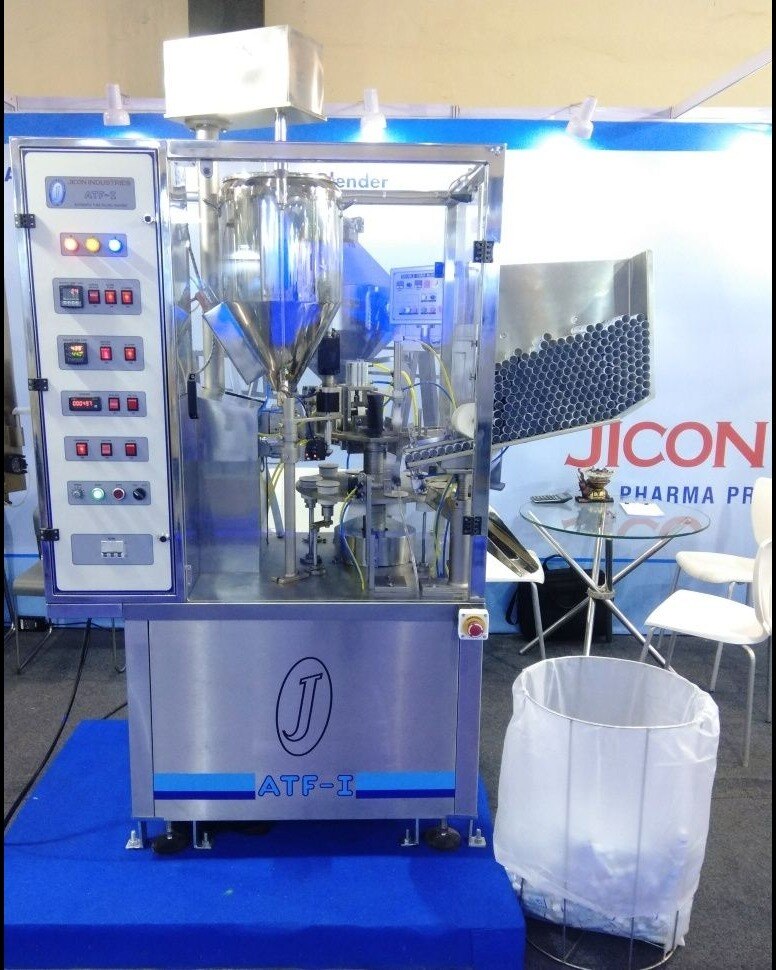
For FILLTUBE-60, FILLTUBE-120 and ATF-I, obtain written, model-specific confirmation of output under stated speed, product, dose and tube conditions. Request the dosing range, tube-size range, sealing method, change parts, control system, sensor package and likely wear points; a headline speed or model name proves none of these.
Require a trial using your formulation and tubes. Measure fill-weight variation, seal integrity, rejects, coding, cleaning time and recovery after deliberate tube, utility and jam faults.
Put these support terms in the purchase record:
- Commissioning, operator training, documented service intervals, spare-parts stock and change-part costs
- Response time in Thane and escalation routes for pharmaceutical machinery manufacturer tube troubleshooting
- Time-correlated records of batch, tube, settings, alarms, quarantined quantity and post-restart checks
A search for pharmaceutical machinery manufacturer automatic tube filling for problems in Thane should lead to Jicon Technologies Pvt Ltd only when it supplies those trial results and local support commitments.
Related products
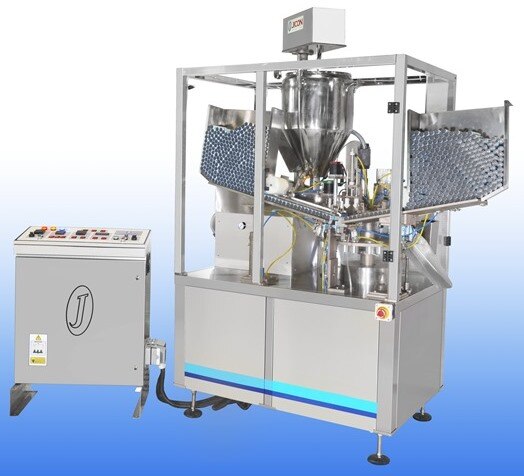 | Tube Filling Machines Automatic Tube Filling Machine ₹1 FILLTUBE Machines are designed to fill and seal plastic, laminated and aluminium tubes at high speeds. View product → |
 | Tube Filling Machines Automatic Tube Filling Machine (FT-120, FT-60, ATF-1) ₹1 FILLTUBE Machines are designed to fill and seal plastic, laminated and aluminium tubes at high speeds. View product → |
Frequently asked questions
How do you diagnose automatic tube filling problems?
Tare a clean container, weigh a defined sample, compare mean and individual weights with the target and tolerance, then review results from the start, middle and end of the batch.
How can you distinguish filling faults from sealing or coding faults?
Check fill weight and appearance separately from tube indexing, seal temperature and pressure, crimp formation, print position, batch coding and legibility.
What is the correct automatic tube filler recovery procedure after a jam?
Stop the machine, isolate energy sources, record the alarm and machine state, remove affected tubes and product safely, inspect tooling, clear the cause, and restart with documented checks.
What should you validate before changing tube format or buying a filler?
Confirm tube dimensions, product properties, fill range, sealing method, coding needs, cleaning access, change-part requirements, test protocols and available service support.
Related product
 | Tube Filling Machines Automatic Tube Filling Machine For Lami PVC and Aluminium Tubes FILLTUBE Machines are designed to fill and seal plastic, laminated and aluminium tubes at high speeds. |