
A stopped Alu-Alu blister line creates two problems at once: the machine is unavailable, and packs made around the failure may need to be held. You will learn how to make the line safe, isolate the fault, verify pack integrity, document the event and give a service team enough evidence to restore production without repeating the failure.
Key takeaways
- Press emergency stop and quarantine every pack linked to the failure.
- Check setup, sensors, drives, heaters, and controls before replacing components.
- Align forming, sealing, cutting, and feeding tooling before restarting.
- Record machine data, alarms, photos, and rejected packs for service support.
Secure the line and hold every pack linked to the failure
Press the emergency stop, keep hands out of the tooling, and prevent an automatic restart. Treat the event as both a safety incident and a product-quality event; clearing the jam and restarting does not establish that the packs are acceptable.
- Isolate electrical, pneumatic and vacuum energy under your site lockout/tagout procedure before opening guards or removing foil.
- Mark the machine status, batch number, product, format, station, alarm, and exact stoppage time.
- Identify and quarantine product from the last confirmed good inspection through the next confirmed good inspection.
- Photograph the formed web, lidding foil, seal area, cut edge, rejected packs, alarm screen, and any broken foil or displaced tablet before cleaning or adjustment.
Keep the failed web, loose tablets, foil splice, rejected blisters, and damaged tooling together in a labelled container. Record which packs were removed and who placed them on hold; an untracked tray can allow suspect packs back into released stock.
For Alu-Alu blister packing machine recovery in Thane, send this evidence with the machine model and serial number, foil structure and thickness, product format, alarm history, and last accepted settings. State whether the line stopped during forming, feeding, sealing, cutting, or rejection.
Do not describe the event only as “machine not running”; that loses the clues needed to separate a quality failure from a simple availability failure.
Separate a setup fault from a component or control failure
Treat the stoppage as a setup fault only until a controlled check shows that a part, sensor, drive or control has failed. Record the alarm, machine state, station position, last accepted settings and affected pack numbers before clearing anything.
Do not reset the alarm, bypass a guard or reject interlock, or adjust several parameters at once.
Check without changing the evidence:
- Compare foil width, structure and thickness with the approved format; inspect for edge damage, wrinkles, pinholes, hairline cracks and work-hardening.
- Check foil guides, tension, registration photocell and feed length before blaming the drive or feed motor.
- Compare forming depth, vacuum, forming-plate datum and cavity position with the last accepted setup.
- Inspect lidding-foil tracking, sealing-plate alignment, pressure, temperature and dwell; a clean-looking blister can still have a weak seal.
- Examine incomplete perforation, burrs, tearing and cut registration before replacing the cutting die.
- Check tablet position, cavity presence, reject timing and reject confirmation separately; a rejected blister is not proof of a defective blister.
A repeatable defect after restoring the approved settings points toward worn tooling, a blocked vacuum line, leaking pneumatics, a failed heater sensor, photocell, encoder or control output. A defect that disappears after one documented adjustment is a setup issue, but retain the affected packs for review.
For alu alu blister packing machine maintenance in Thane, record photographs of the formed web and seal, model and serial number, product format, alarm history and last accepted settings. That record lets a service team distinguish setup drift from component failure without destroying the trail.
Restart with aligned tooling and prove the first accepted blister
Do not release the line on a simple jam clearance. Before restarting, verify that the repaired station is clean, guards and interlocks are functional, utilities are stable, and tooling has been restored to its recorded datum heights and timing. Base acceptance on the approved batch record and in-process specification, not appearance alone.
- Confirm the foil web direction, tension, registration-mark response and splice position; remove or identify any splice inside the held run.
- Confirm forming-plate, sealing-plate and cutting-die alignment, including cavity-to-seal registration and station datum heights.
- Verify forming depth and cavity shape against the approved format, with no cracked, shallow or distorted pockets.
- Verify sealing temperature, pressure, dwell and lidding-foil tracking against the last accepted settings.
- Check cutter timing and inspect cuts for incomplete separation, burrs, foil tearing and displaced coding.
- Confirm product feeding, sensor status, reject actuation and reject confirmation.
- Run trial blisters at controlled speed, then inspect the first accepted blister and record the result.
The first accepted blister must match the site specification for cavity dimensions, product position, seal continuity, cut quality, code, cleanliness and count. Use the site’s approved seal-integrity or leak-test method where required; a visually closed blister is not proof of a sound seal.
Document trial quantity, rejected quantity, settings, inspection results and approval before releasing material held from the last confirmed good inspection through the next confirmed good inspection.
Give the service team the information needed for a model-specific recovery
Send the service team the machine identity and failure evidence before anyone resets alarms or changes parameters. “Machine not running” cannot distinguish a drive fault from a forming, feeding, sealing, sensor or reject-system problem.
1. Record the exact model, serial number, installation location, operating hours, product name, blister format and cavity layout. State whether the stoppage followed a foil break, tooling change, cleaning activity or maintenance job.
2. Attach the alarm history, event log, batch number, stoppage time, operator observations and the last confirmed good inspection. Identify the packs held from that inspection through the next confirmed good inspection.
3. Photograph the complete machine, HMI fault screen, forming station, sealing plate and counterplate, foil path, registration marks, cutter, sensors, reject station and any damaged web. Include close images of formed cavities, seal edges, coding and the first defective blister.
4. Send the last accepted recipe and settings: forming depth, web tension, registration position, sealing temperature, pressure or dwell, feed timing, cutter timing and reject delay. Mark every value changed after the failure.
5. Provide the foil structure and thickness, product dimensions, format-part list, control-system revision, software or recipe version, electrical drawings and pneumatic diagram. Include recent replacement-part details and calibration records.
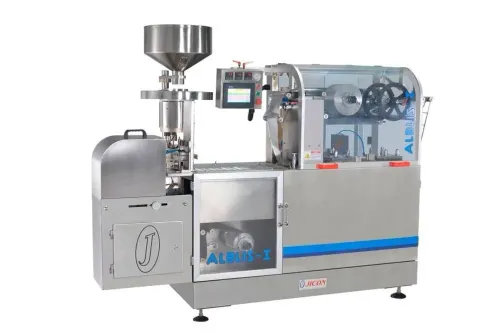
Jicon Technologies Pvt Ltd can use this information to distinguish an ALBLIS-II configuration issue from a failed component before recommending parts or restoring settings. Keep photographs dated and label each file with the station and time.
Related products
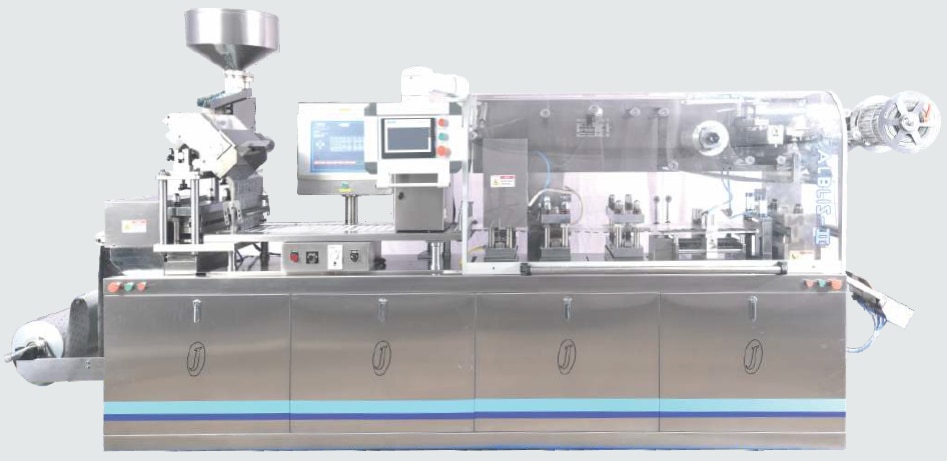 | Blister Packing Machines ALBLIS-II: Automatic Flat Plate Blister Packing Machine ₹1 Automatic Flat Plate Blister Packing Machine (Ideal for Commercial High Output batches): ALBLIS is a versatile ‘Flat Plate’ intermittent motion... View product → |
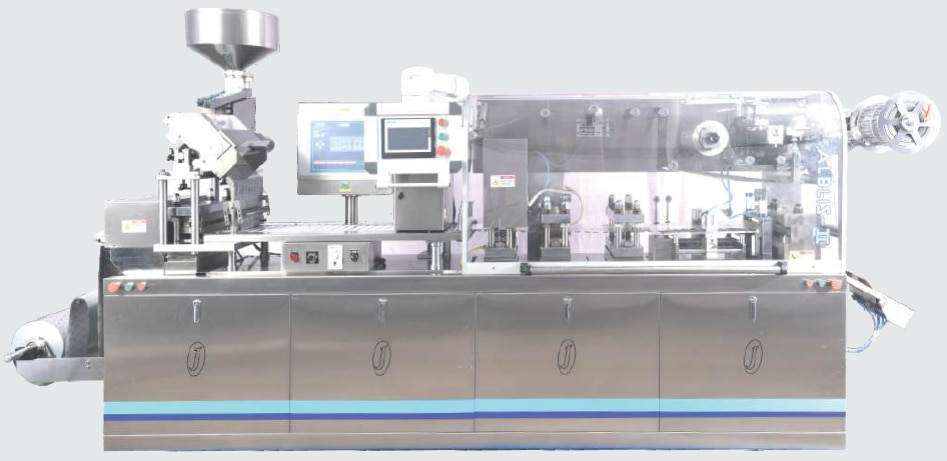 | Blister Packing Machines Automatic Flat Plate Blister Packing Machine ALBLIS-II ₹1 Automatic Flat Plate Blister Packing Machine (Ideal for Commercial High Output batches): ALBLIS is a versatile ‘Flat Plate’ intermittent motion... View product → |
Turn the repair into a preventive maintenance routine
Record the exact fault, machine condition and last accepted settings before closing the job. After flat plate blister machine repair in Thane, inspect the forming plate, sealing plate and cutting die together; confirm datum heights, timing, wear, burrs and foil tracking. Cleaning alone will not reveal a worn bearing, stretched chain or damaged guide.
- Check drive belts or chains, bearings, foil guides, vacuum lines, pneumatic regulators, heater sensors and registration photocells.
- Challenge guarding interlocks, reject confirmation, registration, alarm and sensor functions after replacing a thermocouple, proximity sensor or photocell.
- Run trial packs and record forming depth, seal quality, cut completeness, registration, rejected quantity and the settings used.
| Inspection or record | What to capture | Repeat-stoppage warning |
|---|---|---|
| Forming, sealing and cutting | Datum heights, timing, wear and test-pack results | Cavities look acceptable but seals fail, cuts burr or foil tears |
| Foil path and drive | Guide condition, tension, belt or chain condition, bearing noise | Tracking drift, intermittent feed or sudden jams |
| Sensors and utilities | Sensor position, polarity, sensing distance, vacuum and air readings | The line runs while misregistered or unsealed blisters pass |
| Repair history | Fault, parts, adjustments, inspections, rejected quantity and release approval | The same failure returns without a traceable cause |
Attach photographs of the formed web and seal, alarm history and test results to the maintenance record. Retain the completed cleaning and maintenance record, as required by written procedures and in-process controls.
Frequently asked questions
What should you do first after an alu alu blister machine failure?
Press the emergency stop, prevent automatic restart, keep hands out of the tooling, and hold every pack connected to the event.
How can you distinguish a setup fault from a machine failure?
Check product feed, foil path, tooling alignment, settings, sensors, alarms, drives, heaters, and control signals before changing parts.
How do you prove the first blister is acceptable after a restart?
Align the tooling, clear the fault, run a controlled trial, and inspect sealing, forming, cutting, print, pocket fill, and pack integrity.
What information should you send to a pharmaceutical machinery service team?
Provide the machine model, batch details, alarm history, settings, photographs, affected samples, timing, and work already completed.
How can a repair become preventive maintenance?
Document the root cause, add inspection points, verify sensors and tooling alignment, and schedule checks for wear, heat, lubrication, and controls.