
A failed ointment, cream or toothpaste batch can result from formulation, operating conditions, equipment design, utilities or cleaning—not from the visible vessel alone. You will be able to isolate the failure, decide whether recovery is scientifically justified, and compare machinery suppliers by the evidence they provide for repeatable, cleanable operation.
Key takeaways
- Compare measured process conditions with a successful batch record.
- Check agitator speed, temperature, vacuum and addition order before changing formulation.
- Quarantine batches with unknown exposure, contamination risk or failed quality tests.
- Require documented recovery procedures for heating, cooling, vacuum and utility failures.
How do you separate a formulation error from an equipment fault?
Use a fixed diagnostic sequence before changing the batch. Ointment manufacturing plant problems often look like formulation failures until you compare measured process conditions with a successful batch record, not appearance alone.
- Confirm raw-material identity, quantity, and temperature at charging. Check wax-to-water addition order, agitator speed, batch size, hold time, homogeniser clearance, vacuum level, and temperature at the vessel, jacket inlet, jacket outlet, and product outlet.
- Inspect impeller rotation, scraper contact, dead zones, valve cavities, transfer hoses, pump pressure, and line restrictions. Include shaft seals, sampling ports, dead legs, gaskets, and transfer connections.
- A vessel reaching catalogue speed or volume has not demonstrated uniform heating, cooling, mixing, vacuum performance, drainability, or cleanability. A pharmaceutical machinery manufacturer in Ahmedabad for ointment plant problems should verify those functions at the actual working range.
| Failure | Evidence to compare | Likely direction |
|---|---|---|
| Failed homogenisation | Homogeniser clearance, rotor rotation, shear time, vacuum, and recirculation | Equipment setting or inadequate emulsification |
| Phase separation | Addition order, phase temperatures, hold time, and successful-batch record | Formulation sequence or heat-transfer failure |
| Lumps | Powder wetting, cold surfaces, scraper contact, and dead zones | Charging, mixing, or vessel fault |
| Incorrect viscosity | Raw-material temperature, product temperatures, batch size, and hold time | Temperature control or formulation error |
| Incomplete discharge | Valve cavities, hose restrictions, pump pressure, drain slope, and product outlet temperature | Drainability, transfer, or cooling fault |
Do not extend mixing until the evidence identifies the cause; extra shear can add heat and air.
What causes failed homogenisation, lumps, separation and air entrapment?
Do not extend mixing until you match the defect to its process cause. Extra shear can add air and heat while leaving a failed addition sequence or solidified wax unchanged, a common trap in ointment manufacturing plant problems.
1. Phase separation points to incorrect addition order, inadequate emulsification temperature, insufficient homogeniser clearance, poor recirculation, or wax that began setting before transfer.
2. Lumps indicate poorly wetted powders, cold vessel walls, worn scraper blades, blocked recirculation paths, or an impeller turning in the wrong direction. Inspect scraper contact and circulation before increasing speed.
3. Air entrapment can start during powder wetting, high-shear mixing, recirculation, pump cavitation, or filling. A strong vessel vacuum does not prove that viscous product has been deaerated.
4. Check the lid seal, closed valves, vacuum-line leaks, vacuum stability, foam behaviour, and pump suction. A fluctuating vacuum or starved pump can draw air into the product even while the vessel gauge shows vacuum.
Toothpaste manufacturing plant problems need separate controls because abrasive powders settle, wear scrapers and seals, damage valves, and threaten fluoride or active-ingredient uniformity. Control powder wetting, scraper action, water quality, vacuum timing, and transfer conditions independently.
Do not copy cream settings into toothpaste manufacture. Compare the actual defect with batch temperature, addition order, homogeniser clearance, recirculation, and filling conditions before deciding whether recovery is possible.
When can a failed batch be reworked, and when must it be quarantined?
Quarantine the batch when identity, uniformity, microbial quality, temperature exposure, contamination status, or specification compliance is uncertain. A smooth appearance does not prove chemical strength, physical uniformity, or microbiological quality.
1. Stop transfer or filling, identify the batch, and record the deviation, complete batch history, equipment condition, utility interruption, retained samples, sample locations, and test results. Obtain quality-unit approval before reprocessing, reworking, or recovery.
2. Re-homogenise only when the investigation identifies inadequate dispersion or emulsification as the cause. The approved procedure must define product temperature, shear rate, vacuum level, mixing time, sampling points, and chemical, physical, and microbiological acceptance tests.
3. Adjust temperature or viscosity only when the formulation and validated process permit it. Raising heat after wax has set on cold vessel walls or transfer surfaces can create a different failure instead of restoring uniformity.
4. Do not extend mixing as a substitute for finding the cause. Extra mixing can add air, raise temperature, oxidise ingredients, damage shear-sensitive materials, and leave a failed addition sequence or solidified wax uncorrected.
5. Release the batch only after documented evidence meets specifications; visual acceptability is not enough. Investigate associated batches when the same equipment, raw material, operator action, or utility interruption could have affected them.
For ointment cream plant recovery, this decision discipline prevents ointment manufacturing plant problems from becoming undocumented rework. Water-quality excursions, contamination events, or uncertain hold temperatures require assessment rather than a late preservative addition or convenient batch release.
How should heating, cooling, vacuum and utility failures be recovered?
Treat heating, cooling and homogenisation as one linked process in any ointment cream plant recovery. Compare product temperature with jacket inlet and outlet temperatures, agitation state, batch volume, scraper operation, ramp rate and fouling. A jacket set point does not prove uniform product temperature.
Restore cooling before wax sets in the vessel or transfer line. Confirm chilled-water flow, temperature, valve position and heat-transfer surface performance under load.
After loss of power, compressed air, steam, hot water, chilled water or vacuum, stop or isolate the affected step, protect the batch from contamination, record time and temperature, and follow the validated hold-time decision.
| Failure | Compare before restart | Recovery focus |
|---|---|---|
| Heating or cooling | Product, jacket inlet and outlet temperatures; ramp rate; fouling | Restore utility flow and verify heat transfer under load |
| Vacuum | Vacuum reading, lid seal, valves, product condition and air content | Find leaks; do not treat vessel vacuum as proof of deaeration |
| Agitation or homogenisation | Speed, direction, clearance, scraper contact and batch volume | Check drive, blades, seals and dead zones |
| Transfer or filling | Pump pressure, product temperature, line condition and nozzle movement | Remove restrictions and confirm container control |
Check valves, seals, instrument calibration and pump condition before restarting. During filling, verify air pressure, nozzle movement, product temperature, line pressure and container control.
For toothpaste manufacturing plant problems, water quality, abrasive settling, seal wear and active-ingredient distribution require separate checks; cream settings cannot simply be copied. Positive-displacement pumps often suit viscous products better than centrifugal pumps, but excessive pressure, sharp elbows, restrictive valves, unsuitable elastomers or undersized lines can cause heating, leakage, hold-up and air entrainment.
Evaluate the pump at actual viscosity and temperature, not with water alone.
What should you require from a pharmaceutical machinery manufacturer in Ahmedabad?
Require proof at the working range, not a catalogue capacity. A pharmaceutical machinery manufacturer in Ahmedabad should run the intended ointment, cream, or toothpaste, or a justified rheological surrogate, at minimum and maximum working volumes and relevant temperatures. Water-only tests can hide powder-wetting failures, pump slip, settling, unstable vacuum, slow discharge, and cleaning problems.
1. Put these FAT and SAT checks in the protocol: heating and cooling ramps, scraper coverage, homogenisation, vacuum stability, discharge, filling, cleaning, and recovery after loss of steam, chilled water, compressed air, power, or vacuum. Define hold-time decisions, restart conditions, samples, and acceptance limits.
2. Request vessel and piping drawings, P&IDs, instrument lists, calibration provisions, product-contact material certificates, weld and surface-finish records, gasket and elastomer compatibility data, drainability evidence, manuals, spare-parts lists, and change-control records. A sound stainless-steel grade does not fix rough welds, dead legs, valve cavities, damaged seals, or restrictive hoses.
3. Require cleaning validation for the hardest-to-clean product and locations: dead legs, valve cavities, seals, hoses, sampling points, and transfer lines. After a failed cycle, visible residue, microbial excursion, or medicated-to-cosmetic or toothpaste changeover, quarantine the equipment and follow the validated cleaning agent, rinse criterion, sampling method, and line-clearance checklist.
Visual inspection alone is not enough.
Jicon Technologies Pvt Ltd should be assessed by this evidence package and service response, not its location. That is the meaningful comparison when selecting a pharmaceutical machinery manufacturer in ahmedabad for ointment plant problems.
Related products
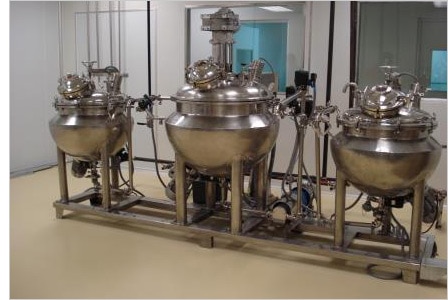 | Process Equipments Ointment Cream and Toothpaste Manufacturing Plant Automatic Ointment / Cream Manufacturing Plant is used to prepare medicated homogenised emulsion of Wax and Water to a particular formulation. View product → |
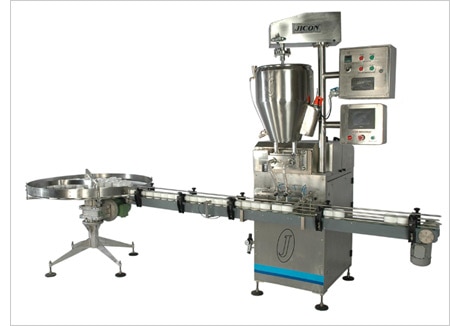 | Container Filling Machines Automatic Container Jar Filling Machine for Ointment and Others High speed automatic multi head container filling machine for filling cream, paste, ointment, wax polish, grease, jam, sauce etc. |
Frequently asked questions
How do you separate a formulation error from an equipment fault?
Compare the failed batch’s measured temperature, agitator speed, vacuum, mixing time and addition order with a successful batch record before changing ingredients.
What causes failed homogenisation, lumps, separation and air entrapment?
Common causes include incorrect addition order, insufficient shear, unsuitable temperature, inadequate mixing time, poor scraper action and excessive air drawn into the vessel.
When can a failed batch be reworked, and when must it be quarantined?
Rework only under an approved, documented procedure after quality and production teams assess identity, contamination risk, exposure history and the effect of reprocessing. Quarantine the batch when those facts are unknown or testing fails.
How should heating, cooling, vacuum and utility failures be recovered?
Record the failure time, batch temperature, pressure, agitation state and utility conditions, then follow a validated recovery instruction before resuming processing.
What should you require from a pharmaceutical machinery manufacturer in Ahmedabad?
Require equipment-specific fault diagnostics, operating limits, alarm responses, recovery procedures, validation documentation and service support for the ointment plant.
Related product
 | Container Filling Machines Automatic Container Filling Machine ₹1 High speed automatic multi head container filling machine for filling cream, paste, ointment, wax polish, grease, jam, sauce etc. View product → |