
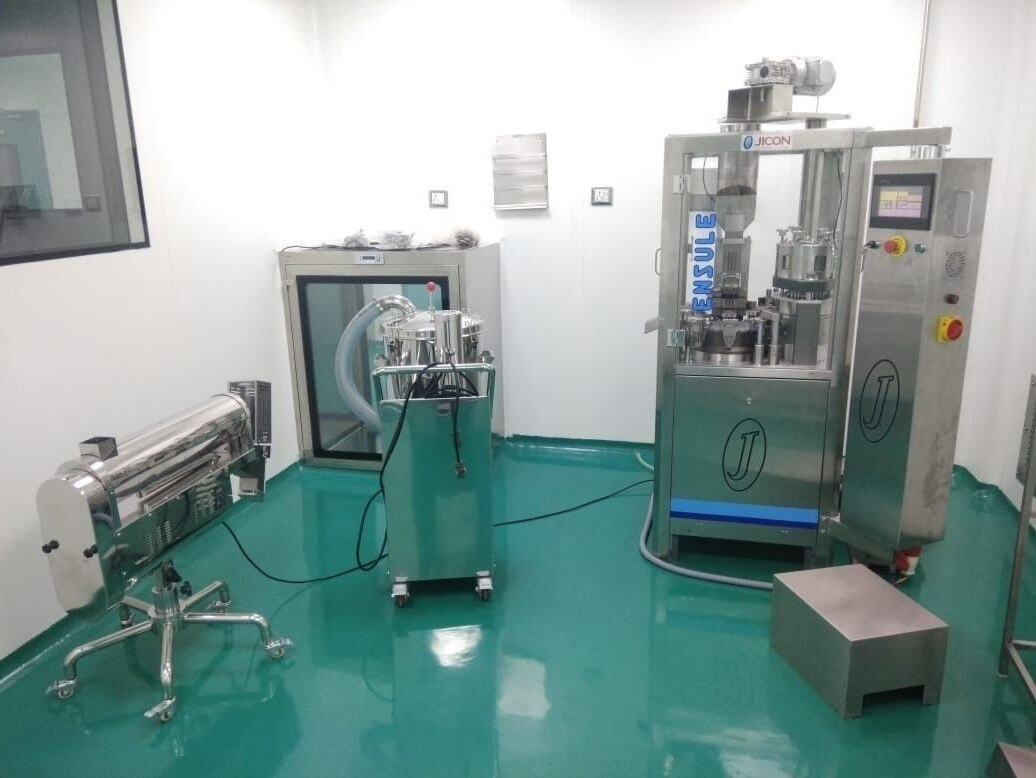
Coating tablets consistently requires more than rotating a pan and spraying a liquid: the machine must balance tablet movement, heat, airflow, atomisation and drying. By the end, you will understand each auto coater process pharmaceutical production phase, recognise coating defects, calculate weight gain, and compare an automatic coater with a conventional pan before selecting equipment.
Key takeaways
- Specify pan speed, spray rate, inlet air and exhaust control.
- Choose aqueous coating for simpler solvent handling when the formulation permits.
- Confirm dryness with endpoint checks, weight gain and coating inspection.
- Choose an automatic coater when repeatability and batch records matter.
How the Auto Coater Process Moves Tablets from Loading to Unloading
The auto coater process pharmaceutical production cycle moves tablets through a perforated pan while controlled air and spray conditions create a uniform film. The pan’s rotation repeatedly lifts, rolls and cascades the bed, bringing different tablet faces into the spray zone rather than coating only the upper layer.
1. Loading: Charge the specified tablet quantity through the inlet. Keep the batch within the validated load range; an underfilled pan gives poor mixing, while an overloaded bed restricts movement and spray access.
2. Preheating and dedusting: Rotate the pan and introduce conditioned air. This removes loose powder and brings the tablet bed to the target temperature before liquid reaches it.
3. Spraying: Pump the coating suspension or solution to atomising guns positioned above the moving bed. Each gun breaks the liquid into droplets; pan rotation exposes tablet faces, edges and embossed surfaces in repeated passes.
4. Drying: Heated inlet air evaporates the vehicle as exhaust removes moisture or solvent. Balance spray rate, airflow and tablet-bed temperature: excess wetting causes sticking, twinning, picking and logo bridging.
5. Endpoint and cooling: Continue mixing until the programmed spray quantity, weight gain and drying readings are reached. Stop spraying, then use conditioned air to cool tablets without creating condensation.
6. Unloading: Open the discharge arrangement while the pan turns at the specified speed. Tablets move out through the outlet for inspection, sampling and transfer to the next process. A final visual check should look for mottling, roughness, chipped edges and uncoated areas.
Sugar, Organic-Solvent and Aqueous Coatings: What Changes in the Process
The coating liquid changes the balance between wetting, drying and safety. Sugar coating builds layers through syrup application, while film coating deposits a thin polymer membrane from water or an organic solvent.
| System | Formulation | Drying and solvent handling | Product suitability | Equipment implications |
|---|---|---|---|---|
| Sugar | Sucrose syrup, often with binders, colourants, fillers and polishing agents | Several application-and-drying cycles; water evaporation is slower and produces a heavy moisture load | Masks taste, colour and tablet shape; adds substantial weight and batch time | Pan needs strong mixing, controlled syrup delivery, heated air and enough exhaust capacity; spray guns may be unnecessary for some steps |
| Organic-solvent film | Polymer dissolved in ethanol, acetone or another approved solvent, with plasticiser and pigments | Fast evaporation, but vapour extraction, solvent recovery or abatement, ventilation and ignition-risk controls are essential | Useful for moisture-sensitive tablets or polymers that do not dissolve well in water | Use solvent-compatible seals, pumps and ducting; document the hazardous-area design instead of relying on an “explosion-proof” label |
| Aqueous film | Water-dispersed polymer, plasticiser, pigments and anti-tacking agents | Requires high evaporation capacity and effective exhaust; residual moisture causes sticking | Suits many immediate-release and enteric products when the formulation tolerates water | Specify airflow, dehumidification where needed, spray control and exhaust capacity |
Do not set drying from inlet temperature alone. Control tablet-bed or exhaust conditions: excessive heat can damage the formulation, while inadequate evaporation leaves tacky tablets. For enteric products, confirm acid resistance and buffer-stage dissolution; colour and weight gain cannot prove functional performance.
The Controls and Machine Parts That Prevent Uneven Coating
Uniform coating depends on matching liquid delivery to tablet movement and drying capacity; no single setting fixes uneven coverage. The perforated pan and baffles create a repeatable cascade, while spray guns, metering pumps, heated inlet air, exhaust fans and temperature or humidity sensors control where liquid lands and how quickly it dries.
The recipe system must record each variable, not only pan speed.
- Set pan speed high enough to expose fresh tablet surfaces, but not so high that tablets slide, fracture or remain in the spray zone.
- Match spray rate to tablet-bed mass, exposed bed area and drying capacity. Excess liquid causes twinning, sticking, picking and logo bridging.
- Control atomizing-air pressure to produce droplets that wet and spread without forming a coarse, mottled film or a dry spray plume.
- Keep gun-to-bed distance and gun angle fixed; misplaced guns create shadowed areas and excessive local wetting.
- Control tablet-bed temperature during spraying. Inlet temperature alone cannot show whether the tablets are wet, overdried or heat-stressed.
- Balance inlet-air volume and temperature against exhaust temperature or humidity so moisture leaves the bed without drying droplets before impact.
- Hold suspension solids content and viscosity within the validated range; thick liquid blocks guns, while dilute liquid increases drying demand and process time.
| Adjustment | Main effect | Defect if excessive |
|---|---|---|
| Pan speed | Tablet turnover and exposure | Chipping or uneven coverage |
| Spray rate | Surface wetting and throughput | Sticking and rough film |
| Atomizing air | Droplet size and spray pattern | Mottling or dry spray |
| Airflow and heat | Moisture removal | Cracking or residual moisture |
How to Confirm Dryness, Weight Gain and Coating Performance
A batch is ready for discharge only when the tablet bed is dry, non-tacky and mechanically sound, and testing confirms the intended coating performance. Do not use inlet-air temperature alone: review tablet-bed or exhaust conditions, residual moisture by loss on drying or Karl Fischer testing, visual uniformity and friability.
1. Weigh a representative sample of uncoated cores, then weigh the same number after coating. Calculate weight gain as (coated weight − core weight) ÷ core weight × 100. Report the mean and tablet-to-tablet variation; an acceptable average cannot hide thin spots or over-coated tablets.
2. Control weight gain through spray rate, coating-solids concentration, atomisation and drying capacity. Adjust one variable at a time, record the actual spray mass, and stop spraying when the target and uniformity results are reached. A dry-looking surface does not prove adequate film thickness.
3. Investigate defects by mapping their location and timing. Picking or twinning points to overwetting or poor separation; roughness suggests rapid drying or large droplets; colour variation indicates spray coverage or mixing imbalance; cracking indicates film stress, inadequate plasticisation or excessive drying.
Check gun alignment, bed temperature, airflow, pan speed and solution viscosity before changing the formula.
4. During scale-up, match spray rate per kilogram of tablets, spray-zone coverage, exposed bed area, atomisation, mixing pattern and drying time—not pan diameter alone. Confirm coating uniformity, weight-gain variation, defect rate and dissolution, including acid-stage and buffer-stage testing for enteric products, across minimum and maximum usable loads.
Automatic Coater or Conventional Pan: What Should You Specify in Chandigarh?
Choose an automatic coater when repeatability, recorded process data and frequent batch changeovers matter more than the lower capital cost of a conventional pan. A pan can suit small, stable products with skilled operators; it becomes a weak choice when spray rate, air balance and tablet-bed temperature must remain consistent across batches.
| Option | Strength | When it applies |
|---|---|---|
| Automatic coater | Recipe control, controlled airflow, spray monitoring and electronic records | Multiple products, tighter uniformity targets or regulated production |
| Conventional pan | Simpler equipment and lower automation burden | Small batches, established products and experienced operators |
| Automatic coater with containment and wash-in-place provisions | Faster, more documented changeover | Potent products or frequent product changes |
Do not accept catalogue capacity as usable batch range. Ask the auto coater machine manufacturer in Chandigarh to run placebo or representative tablets at minimum and maximum loads, showing spray-rate and pan-speed ranges, drying capacity, coating-uniformity results, weight-gain variation and defect rates.
Request a documented user-requirements specification, design qualification, factory and site acceptance tests, calibration records, material certificates, software and alarm documentation, and performance-qualification support. Confirm recipe version control, access levels, audit trails, electronic batch-record export and alarm history.
Cleaning evidence must cover spray guns, hoses, filters, exhaust paths, pan perforations and every product-contact crevice.
Jicon Technologies Pvt Ltd is one local supplier to include in a comparison with any auto coater pharmaceutical machines manufacturer in Chandigarh, rather than treating the label pharmaceutical machines manufacturer for auto coater process in Chandigarh as proof of GMP suitability.
Related product
 | Process Equipments Auto coater is popularly used to coat tablets, pills, candies, granules, sweets with sugar film, an organic film, and aqueous coating in the... View product → |
Frequently asked questions
How does an automatic tablet coater move tablets through the process?
The perforated pan loads, rotates and cascades the tablet bed through the spray zone, drying zone and unloading stage.
What changes between sugar, organic-solvent and aqueous coating?
The coating system changes spray conditions, drying capacity, ventilation, solvent controls and safety requirements.
Which machine parts help prevent uneven tablet coating?
Pan rotation, baffles, spray guns, pump control, atomising air, inlet-air handling and exhaust control determine bed movement and drying uniformity.
How do you confirm tablet coating performance?
Check coating weight gain, dryness, appearance, tablet defects and performance tests against the batch specification.
When should you choose an automatic coater instead of a conventional pan?
Choose an automatic coater when you need repeatable recipes, controlled spray and drying conditions, documented batches and reduced operator intervention.