
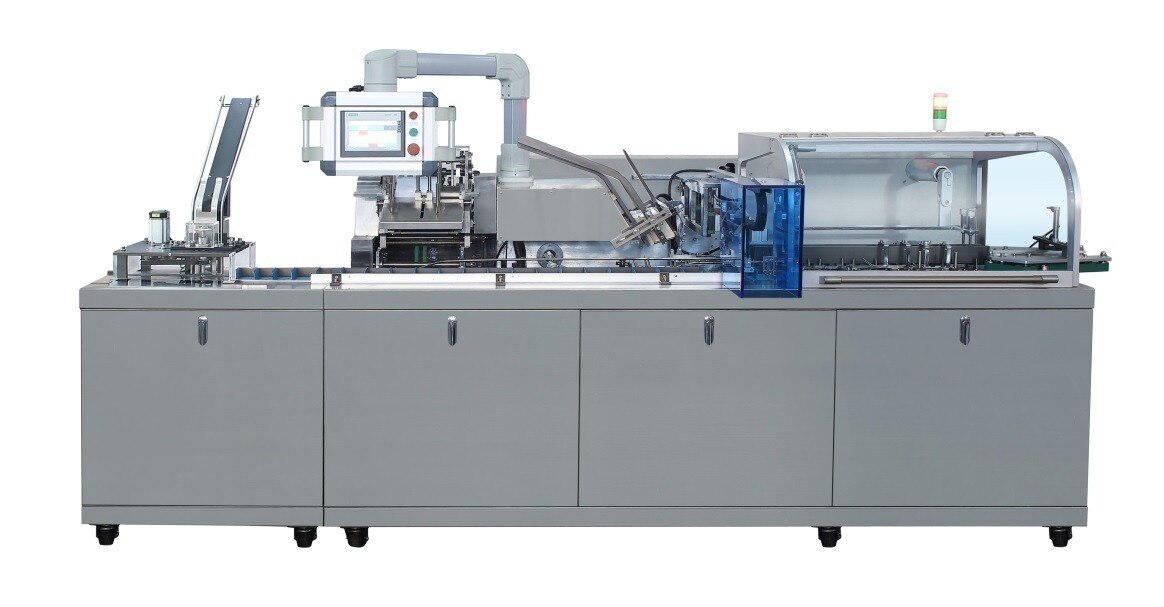
A quoted ointment manufacturing plant can mean one vacuum vessel or a complete process-and-packing line, and that difference changes the price, utilities, validation work and production capacity. By the end, you will be able to identify the equipment, specifications, documents and acceptance tests that belong in the supply package.
Key takeaways
- Request a line-by-line equipment scope, including filling, packing and utilities.
- Trace the process from weighing and melting through homogenising, filling and sealing.
- Compare vessel volume, agitator design, vacuum, temperature control and homogenizer speed.
- Ask for cleanability evidence, control-system details and qualification documents before ordering.
What equipment belongs in an ointment manufacturing plant package?
A quoted ointment manufacturing plant is usually a process train, not automatically a complete production line. Confirm the scope line by line before comparing prices.
| Scope | Equipment | What to confirm |
|---|---|---|
| Core process train | Manufacturing vessel, premix vessel or separate oil-phase and aqueous-phase vessels, vacuum system, anchor agitator, homogenizer, transfer pump, storage vessel | Vessel capacity, phase vessels, vacuum range, agitator type, homogenizer position, pump capacity and storage volume |
| Product connection | Product piping, valves, temperature instruments and filling interface | Hygienic routing, drainability, temperature measurement, connection size and compatibility with the proposed filler |
| Downstream line | Filling machine, heated hopper, tube or jar sealer, labelling equipment, coding system, checkweigher and cartoner | Whether each item is included, with format parts, nozzle shutoff, sealing method and container range |
Demand a bill of materials from the pharmaceutical machines manufacturer. Mark every item as included, excluded, supplied by others or available as an option; “complete plant” is not a standard scope. A filling interface alone does not provide a filler, sealer or cartoner.
Treat sterile ointment manufacture as a separate project. It needs a product-specific contamination-control plan covering validated sterilisation or aseptic processing, environmental controls, sterile hold and transfer, and contamination-control validation. A standard non-sterile vacuum emulsifier and tube filler cannot establish a sterile plant by themselves.
How does the process move from raw materials to sealed packs?
Dispense and weigh each raw material against the batch record before charging the process train. An ointment manufacturing plant should control both material identity and order of addition, not merely provide a large vessel.
1. Melt waxes, oils and other heat-sensitive ingredients in the oil-phase or premix vessel. Measure and record temperature in that vessel and in every other vessel holding product or phase.
2. Prepare the aqueous phase when the formulation requires one, using its specified temperature, mixing time and addition sequence. Keep calibrated transfer lines ready for controlled charging.
3. Add one phase to the other at the defined rate in the manufacturing vessel. The anchor or scraper agitator moves viscous bulk and sweeps the heated wall; a high-shear mixer disperses droplets or solids, followed by homogenisation at the specified speed or energy.
4. Apply vacuum for deaeration. It reduces entrained air, oxidation exposure and filling variation, but the process record must state the vacuum range and hold time.
5. Cool under controlled agitation, then transfer through a suitable pump and product line to a storage or filling vessel. Cooling rate changes viscosity, which changes transfer pressure, fill accuracy and final texture.
6. Fill tubes or jars at the defined product temperature, using nozzle shutoff to prevent strings and drips. Seal the container, apply batch coding and labels, verify line clearance, then carton the finished packs.
Request the charging order, addition rate, temperature profile, vacuum range, mixing time, cooling endpoint and bulk hold time as written process parameters.
Which vessel, agitator, homogenizer and utility specifications matter?
Size the plant from the formulation and smallest intended batch, not the vessel’s nominal capacity. The quotation must state gross volume, working volume, minimum working volume, batch size, hourly output and fill-volume range. An oversized vessel loses mixing efficiency and heat-transfer control on small batches.
Specify 316L stainless steel, or the approved product-contact material, with documented internal surface finish, hygienic fittings, weld records, passivation or other surface treatment, compatible elastomers, a drainable bottom outlet and controlled dead legs.
| Equipment | What it does | What to verify |
|---|---|---|
| Anchor agitator | Moves viscous bulk and sweeps vessel walls | Torque at minimum and maximum viscosity, scraper geometry and speed range |
| High-shear homogenizer | Reduces droplet or particle size | Speed, power, shear exposure and temperature rise |
| Bottom-entry homogenizer | Applies shear within the vessel | Rotor-stator position, drainability and batch coverage |
| Inline homogenizer | Shears during recirculation or transfer | Flow rate, recirculation loop, pressure drop and cleanability |
The quotation from a pharmaceutical machines manufacturer must state jacket heating duty, wax-melting temperature range, cooling-water or chilled-water demand, electrical load, compressed-air pressure and quality, vacuum-pump capacity, drainage and room heat-removal capacity. Confirm vacuum control, carryover protection and safe isolation before accepting the stated pump rating.
A vessel sized for output but lacking cooling, air or drainage capacity will fail at commissioning.
How do cleanability, controls and qualification become part of the supply?
Cleanability, controls and qualification belong in the purchase contract for an ointment manufacturing plant, not in factory improvisation. Require a cleaning design covering the vessel, shaft, valves, hoses, homogenizer head and filler. If CIP is proposed, define the detergent, temperature, flow velocity or mechanical action, rinse endpoint, drainability and sampling locations.
Waxy or active-containing residues may make validated manual cleaning the better design.
The control system must record recipe values, temperature and vacuum trends, alarms, user access, batch events and audit trails when electronic records are relied upon. A touchscreen alone does not establish 21 CFR Part 11 compliance.
| Stage | Supplier deliverable | Acceptance focus |
|---|---|---|
| FAT | Factory test protocol | Controls, alarms, recipes and dry-run functions |
| SAT | Site test protocol | Installed utilities, connections and safety functions |
| Commissioning | Start-up records and training | Stable operation with site services |
| IQ | Approved installation evidence | Equipment, materials, instruments and documents match specifications |
| OQ/PQ | Operating and performance protocols | Defined ranges and repeatable product results |
Acceptance tests must challenge phase temperature, addition rate, homogenization speed or energy, vacuum level, cooling profile, viscosity, content uniformity, appearance, microbial quality and fill weight. Include the bulk hold time and transfer or filling temperature where they affect quality.
Require these supply documents:
- Approved drawings, P&IDs, material and weld certificates, and calibration records.
- Software backup, manuals, cleaning instructions and spare-parts lists.
- Signed FAT, SAT, IQ, OQ and PQ protocols with approval responsibilities and acceptance limits.
How should you compare a pharmaceutical machines manufacturer in Chandigarh?
Issue a user requirements specification before comparing quotations. State the formulation viscosity, batch size, minimum batch, target fill weight, container and closure, heating and cooling profile, vacuum requirement, cleaning method, output, room classification, and whether the product is sterile or non-sterile.
Ask each supplier to map every requirement to a drawing, specification, test, or acceptance criterion. A phrase such as “complete plant” has no fixed commercial meaning.
| Evidence | What to compare | Why it matters |
|---|---|---|
| P&IDs and equipment list | Vessels, pumps, homogenizer, filler, piping and controls | Exposes excluded process steps |
| Utility schedule | Steam or electrical heating, chilled water, compressed air and vacuum load | Prevents an undersized facility connection |
| Change parts | Nozzles, hopper, container guides and tube or jar format parts | Determines whether your pack format can run |
| FAT protocol | Actual product, or a justified rheological surrogate, filled at the intended temperature and container format | Reveals dose variation before shipment |
| Supply documents | Drawings, certificates, calibration records, manuals and software backup | Supports installation and traceability |
| Execution scope | Installation, training, response times and validation assistance | Shows who resolves commissioning failures |
Compare FAT, SAT, commissioning, IQ, OQ and PQ as separate deliverables. A successful factory test does not prove that the installed line repeatedly makes conforming ointment.
Assess Jicon Technologies Pvt Ltd, or any pharma machinery manufacturer in Chandigarh, against this evidence rather than location or sales language. For ointment manufacturing for plant pharmaceutical machines manufacturer in chandigarh searches, remember that sterile production demands a separate sterilisation or aseptic-processing and contamination-control strategy; a non-sterile process vessel is not a qualified sterile line.
Related products
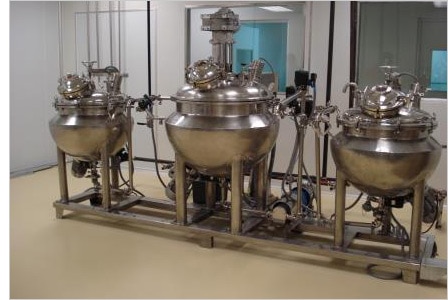 | Process Equipments Ointment Cream and Toothpaste Manufacturing Plant Automatic Ointment / Cream Manufacturing Plant is used to prepare medicated homogenised emulsion of Wax and Water to a particular formulation. View product → |
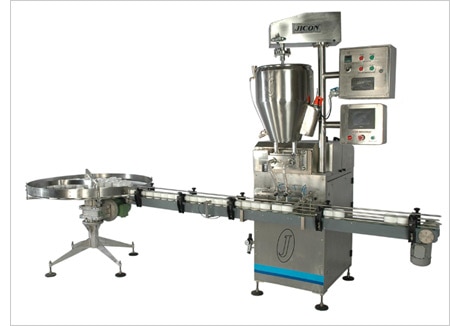 | Container Filling Machines Automatic Container Jar Filling Machine for Ointment and Others High speed automatic multi head container filling machine for filling cream, paste, ointment, wax polish, grease, jam, sauce etc. |
Frequently asked questions
What equipment belongs in an ointment manufacturing plant package?
A complete package can include manufacturing vessels, melting and storage tanks, agitators, homogenizers, transfer pumps, vacuum equipment, filling and sealing machines, coding equipment, inspection systems and utilities. Confirm each item, capacity and responsibility in the quotation.
How does the process move from raw materials to sealed ointment packs?
The process normally covers dispensing and weighing, melting or heating, mixing, emulsification or homogenization, cooling, vacuum deaeration, transfer to a holding vessel, filling into tubes or jars, sealing, coding and inspection. The exact sequence depends on the formulation and pack.
Which vessel and process specifications matter in an ointment plant?
Compare working and total vessel volume, stainless-steel grade, jacket temperature range, agitator type and speed, scraper design, homogenizer speed, vacuum level, transfer method and the stated batch size. Ask how each specification matches your formulation.
How do cleanability, controls and qualification become part of the supply?
Define product-contact finish, drainability, cleaning method, spray devices, instrument list, recipe controls, alarms and data records. Include agreed FAT, SAT, installation qualification, operational qualification and performance qualification deliverables where your quality system requires them.
How should you compare a pharmaceutical machines manufacturer in Chandigarh?
Compare the written scope rather than the headline price. Check process design support, fabrication details, testing, documentation, installation, operator training, after-sales service and the manufacturer’s ability to integrate manufacturing, filling, packing and utility equipment.
Related products
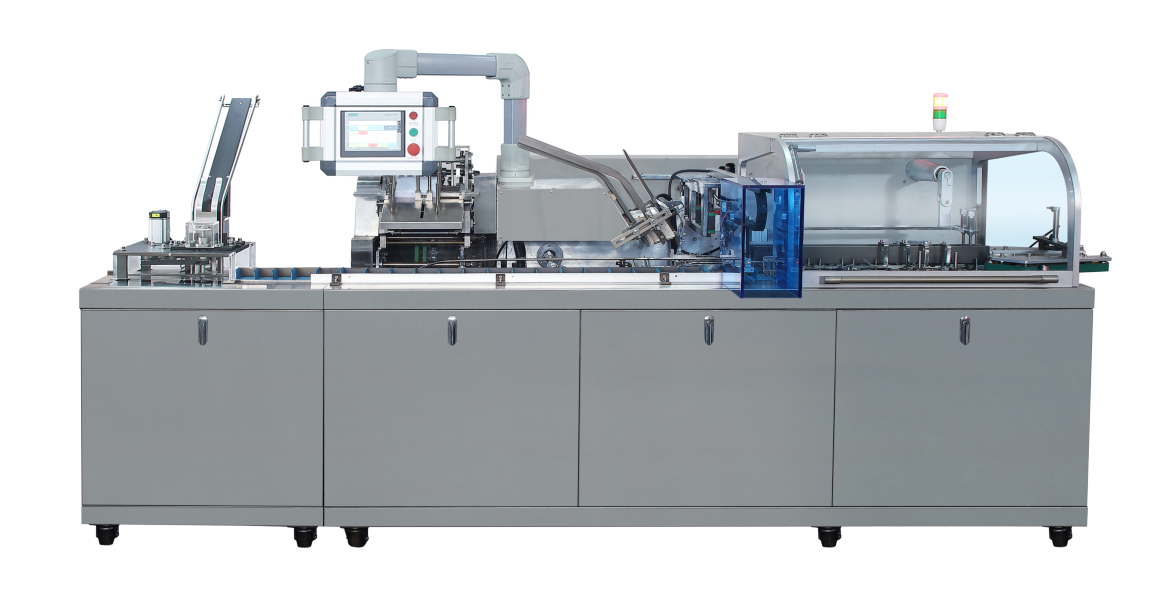 | Accessories & Ancillary Equipments Auto Cartonator for Blistered Strips and Tubes ₹1 JCT-100 and JCTBL -100 are truly powerful horizontal cartoning machines of intermittent motion. View product → |
 | Container Filling Machines Semi Automatic Container Filling Machine A simple and sturdy semi-automatic container filling machine for filling cream, paste, ointment, wax polish, grease, jam, sauce etc. View product → |
 | Container Filling Machines Automatic Container Filling Machine ₹1 High speed automatic multi head container filling machine for filling cream, paste, ointment, wax polish, grease, jam, sauce etc. View product → |
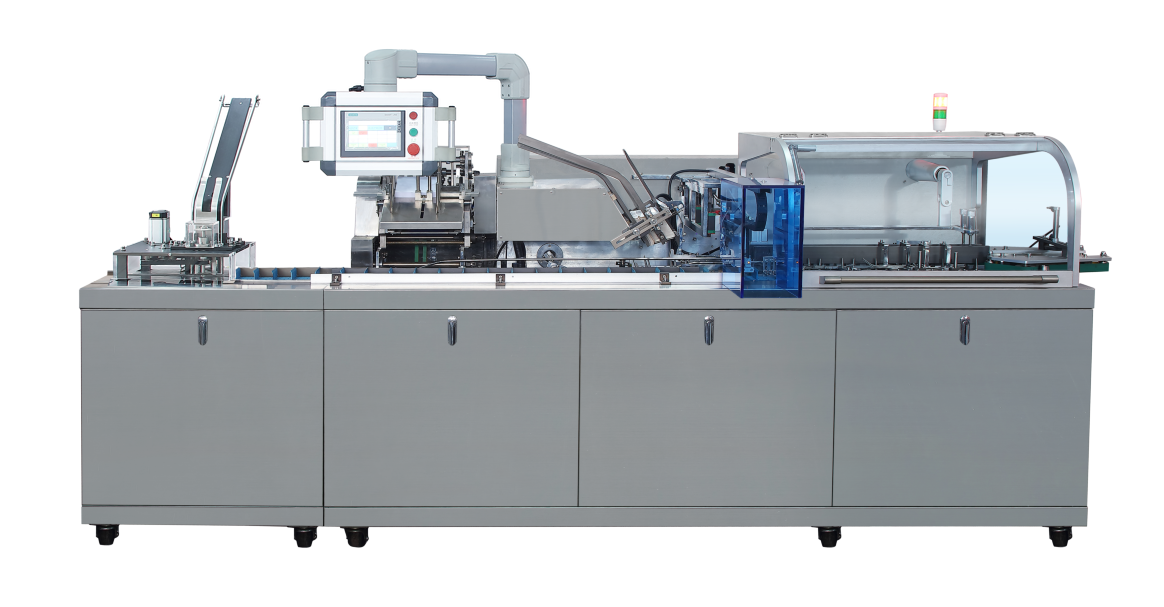 | Accessories & Ancillary Equipments Automatic Cartoning Machine for Blisterpacks Ointment Tubes and others JCT-100 and JCTBL -100 are truely powerful horizontal cartoning machines of intermittent motion. |