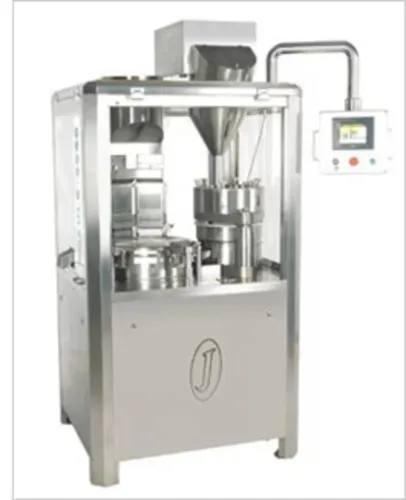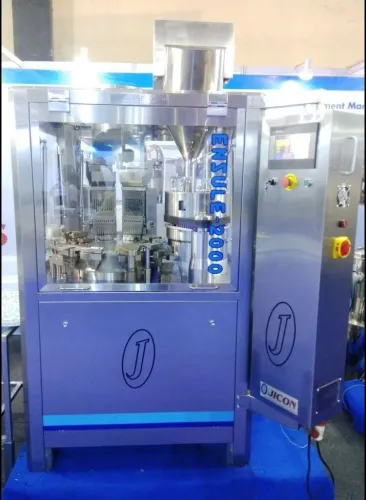

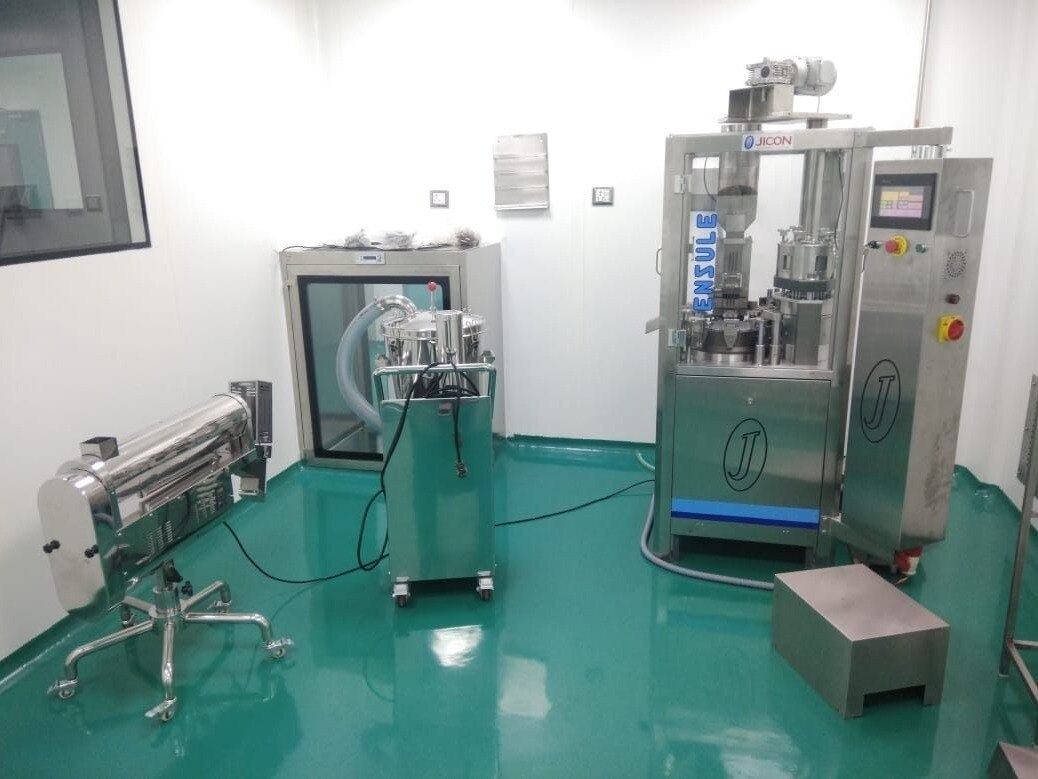
A semi-automatic capsule filler can fit a GMP pharmaceutical plant, but suitability depends on more than the machine’s advertised speed. By examining the production purpose, formulation, dosing method, operator controls, validation evidence and total operating cost, you can decide whether it belongs in development, clinical, commercial or limited-output manufacturing.
Key takeaways
- GMP permits semi-automatic capsule filling when the process is qualified and controlled.
- Match the filler to powder, pellet, tablet-in-capsule, or liquid formulation requirements.
- Control dose uniformity through powder flow, machine settings, in-process checks, and testing.
- Demand cleaning, maintenance, qualification, and installation documentation before purchase.
When a Semi-Automatic Capsule Filler Fits Pharmaceutical Production
A GMP pharmaceutical plant can use a semi automatic capsule filling machine for pharmaceuticals for actual production; it is not restricted to development work. GMP does not require every operation to be fully automatic. It requires equipment and processes to be suitable, cleanable, maintained, qualified and controlled.
1. Semi-automatic filling fits development batches, clinical-trial batches, small-to-medium commercial batches and products with frequent formulation or capsule-size changes. It remains suitable when operators control empty-capsule loading, powder replenishment, filled-capsule transfer and reject handling.
2. Treat every manual intervention as a GMP process step. Provide a written procedure, trained operators, line clearance, material reconciliation, contamination controls and batch-record entries. Line clearance must confirm removal of previous product, capsules, labels, documents and tooling; reconciliation must account for issued, filled, rejected, sampled, returned and unused materials.
3. Compare sustained output, not the machine’s nominal stroke rate. Calculate production after powder replenishment, in-process sampling, stoppages, cleaning, reject removal and changeovers. A high-volume product can become uneconomical when operator time and slower material handling outweigh the machine’s lower purchase cost.
4. Approve the machine only after qualification demonstrates performance with the intended product, capsule shell, tooling, settings and routine operators. If variability, containment demands or labour requirements exceed the plant’s controls, a fully automatic line may provide the better production choice.
What Happens During Filling and Which Formulations the Machine Can Handle
The cycle loads empty two-piece capsules, separates each cap from its body, meters the formulation, closes the shell and ejects the filled capsule. Operator involvement remains at loading, powder replenishment, transfer and reject handling.
- Load the specified empty capsules into the hopper or loading tray.
- Separate cap and body using the machine’s vacuum, mechanical, or combination system.
- Meter powder by volumetric cavities, tamping stations, or a dosator. Tamping and dosator systems form a compressed plug.
- Place the cap over the filled body and apply closing pressure.
- Eject filled capsules into a clean container, while collecting or segregating damaged, empty, underfilled or improperly closed capsules.
Verify the formulation before production. Record bulk density, flowability, cohesion, moisture, particle-size distribution, electrostatic behaviour and aeration; a cohesive or aerated powder can bridge, cling to metal, or form inconsistent plugs.
| Formulation | What to verify | Main risk |
|---|---|---|
| Powder | Dosing method, density and flow through the hopper | Fill-weight variation or bridging |
| Pellets | Compatible feeder, hopper and tooling | Pellet breakage or poor feeding |
| Mini-tablets | Compatible dosing path and capsule tooling | Jamming or uneven placement |
Hard gelatin and HPMC shells differ in moisture response, static charge, friction, mechanical strength and separation behaviour. Test the specified supplier and shell type; do not assume interchangeability.
Confirm that the exact machine accepts sizes 000 through 5. Each capsule size and formulation requires its own confirmed change parts or tooling, followed by a documented trial before routine filling.
How to Control Dose Uniformity on a Semi-Automatic Line
Dose uniformity is demonstrated by repeated net-fill measurements within approved limits, not by a machine’s stated output. Your pharmaceutical capsule filling equipment must be evaluated across the intended operating range, including low and high target weights.
| System | How dose is formed | Main variables |
|---|---|---|
| Volumetric | A calibrated cavity presents a measured volume of powder | Stable powder presentation, bulk density and calibrated cavity volume |
| Tamping disk | Successive stations compress powder into plugs | Compression force, plug length, powder flow and bulk-density changes |
| Dosator | A dosator picks up and compresses a powder plug before transfer | Plug length, compression force, powder flow and bulk density |
Run a trial with the actual formulation, capsule shell and tooling. Tamping and dosator systems form compressed powder plugs; cohesive, aerated or poorly flowing powder can bridge, vary plug density and change fill weight.
Use this in-process plan:
- Weigh empty shells, then weigh filled capsules; calculate each net fill as filled weight minus shell weight.
- Record individual results and the average, with sampling frequency, balance readability and acceptance limits defined in the approved batch record.
- Check after start-up, every adjustment, powder replenishment, stoppage and changeover.
- Calibrate and verify the balance, then verify dosing settings before production and after changes.
If results exceed limits, stop or follow the approved adjustment procedure, segregate potentially affected capsules, and document the investigation, assessment and disposition. Do not release material based on an average that conceals individual failures.
When Semi-Automatic Is Better Than Fully Automatic
Semi-automatic filling is better for small or medium batches, multiple products, frequent capsule-size changes, and plants with limited capital or available floor space. Fully automatic equipment becomes stronger when one product demands high sustained output and labour cost, handling variability, and repeatability outweigh the lower purchase price.
| Option | Best fit | Main trade-off |
|---|---|---|
| Semi-automatic | Small batches, frequent changeovers, flexible production | More operator handling and lower sustained output |
| Fully automatic | High-volume, repeatable production | Higher capital, space, maintenance and change-part costs |
Do not compare catalogue stroke rates. Request a demonstrated sustained output using your intended capsule size, formulation and fill weight. Calculate capacity after operator loading, powder replenishment, in-process sampling, cleaning, reject removal, stoppage recovery and changeover time.
A machine advertised at a high capsules-per-hour rate can deliver a poor production result if these interruptions consume each shift.
Include labour cost, operator training, supervision, containment, maintenance, spare parts and floor space in the total-cost comparison. Semi-automatic equipment can reduce initial capital cost and support several products, but operator-to-operator variation grows when powder handling and capsule transfer remain manual. Fully automatic lines reduce manual handling and improve repeatability at high volume.
An open machine is a poor choice for potent, sensitising, dusty or highly active powders unless you provide effective containment, local extraction, controlled material transfer and validated cleaning or campaign controls. Filling accuracy alone does not control exposure or cross-contamination.
What to Demand Before Installing the Machine in Dubai
Do not approve the equipment from a catalogue description alone. A capsule filling machine manufacturer in Dubai is not automatically suitable for a licensed UAE site; verify the supplier’s evidence against your URS, site procedures and UAE GMP obligations.
1. Approve a user requirements specification covering capsule sizes, formulation, fill-weight range, output, materials, containment, cleaning, alarms, data controls and operator tasks. Complete a documented design review showing how the proposed machine meets each requirement.
2. Require qualification protocols and reports for installation qualification, operational qualification and performance qualification. Performance qualification should use the actual product, capsule shell, tooling, operating settings and routine operators where practicable—not only water, dummy powder or an engineer’s demonstration.
3. Request product-contact material certificates, hygienic drawings, manuals, software and alarm documentation, calibration information, spare-parts lists, FAT and SAT support, cleaning instructions and operator-training records. Confirm that contact parts are accessible, removable or cleanable by a justified validated method.
4. Test line-clearance controls before release. The procedure must verify removal of previous product, labels, documents, empty capsules and tooling, then reconcile issued, filled, rejected, sampled and returned materials. Missing reconciliation evidence creates a mix-up risk.
5. Confirm data-integrity controls for electronic records, audit trails, access rights and backup. A capsule filling machine manufacturer for pharmaceutical plants in Dubai does not replace site validation or compliance responsibility.
Jicon Technologies Pvt Ltd can be evaluated as a local equipment partner for documentation, installation response and support, but verify those capabilities rather than infer them from location.
Related product
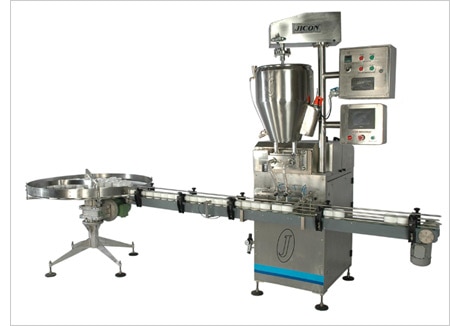 | Container Filling Machines Automatic Container Jar Filling Machine for Ointment and Others High speed automatic multi head container filling machine for filling cream, paste, ointment, wax polish, grease, jam, sauce etc. |
Frequently asked questions
Can a GMP pharmaceutical plant use a semi-automatic capsule filling machine for production?
Yes. GMP does not require every operation to be fully automatic; the equipment and process must be suitable, cleanable, maintained, qualified, and controlled.
Which formulations can a semi-automatic capsule filler handle?
The suitable formulation depends on the machine design and product. Assess whether it supports your powder, pellets, tablets-in-capsule, or liquid formulation before installation.
How do you control dose uniformity on a semi-automatic capsule filling line?
Control powder flow and machine settings, then use in-process checks and finished-product testing to verify the target fill weight and uniformity.
What should a Dubai pharmaceutical plant demand before installing the machine?
Request documentation covering cleaning, maintenance, operation, qualification, and process controls, then confirm the machine suits your facility and formulation.