
The meaningful choice is not the label automatic or semi automatic; it is the number of good capsules you can produce per hour with your formulation, operators, changeovers and quality controls. By the end, you will have a model-by-model comparison method, a labour and payback calculation, and a supplier checklist that exposes whether a quoted capacity is usable.
Key takeaways
- Compare good capsules per hour, not the machine’s headline speed.
- Match ENSULE capacity to powder flow, dose accuracy and batch size.
- Calculate labor, changeover time and rejected capsules before paying for automation.
- Demand trial data, dose checks, batch records and validation documents from the manufacturer.
What changes between ENSULE and SACF during a batch?
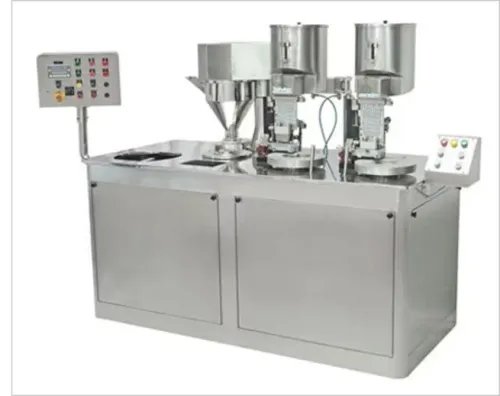
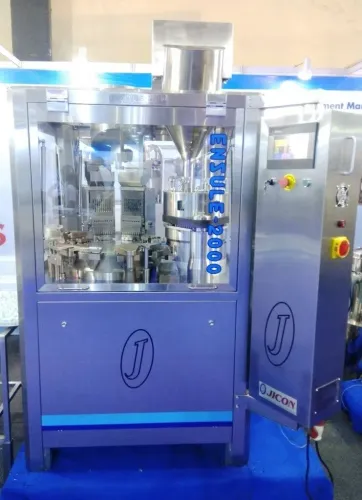
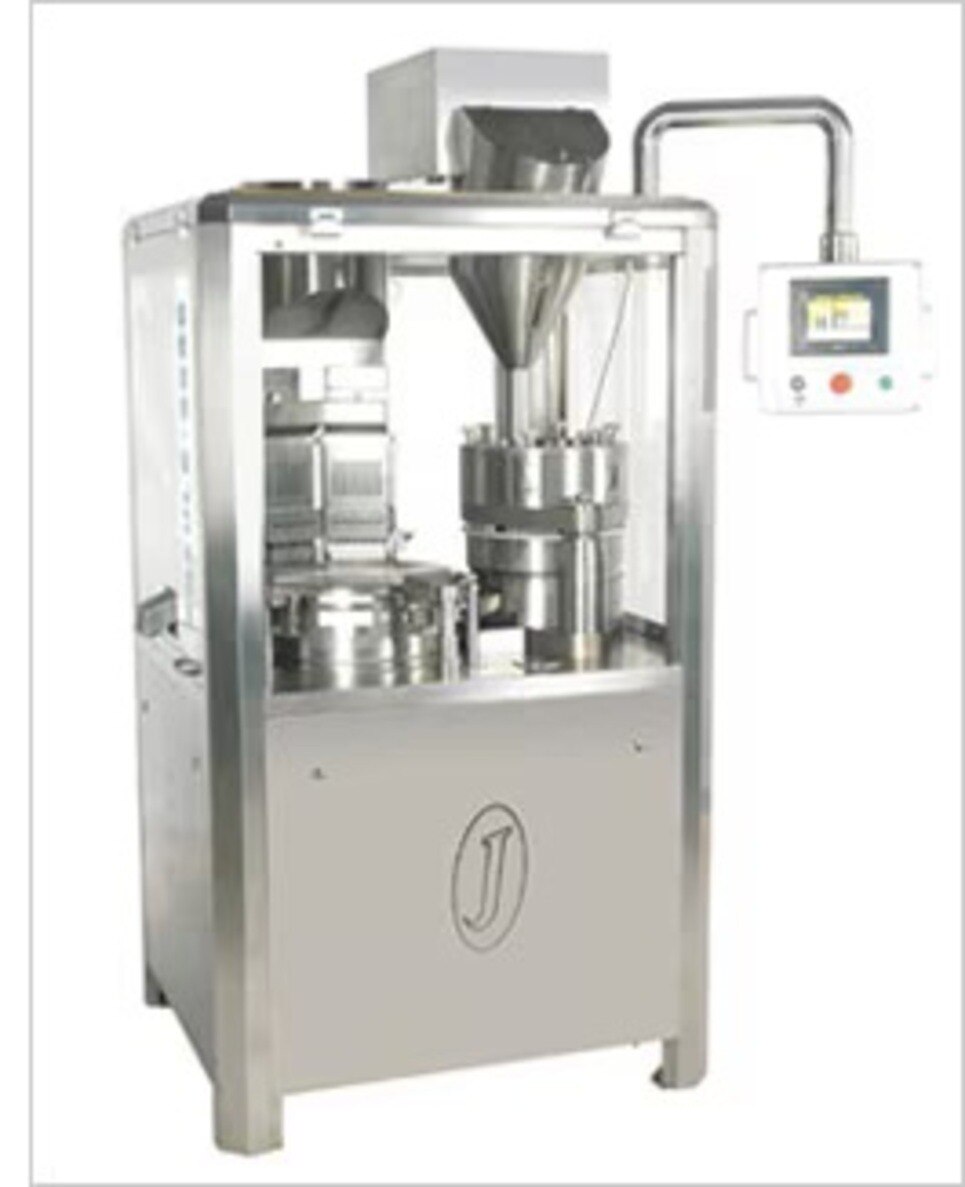
An Ensule automatic filler integrates capsule orientation, separation, dosing, closing, ejection and collection into one cycle. SACF equipment divides those actions between the machine and an operator, so the useful comparison is good capsules per hour—not the headline mechanical speed.
| Stage | ENSULE automatic filler | SACF semi automatic equipment |
|---|---|---|
| Capsule handling | Orients and separates bodies and caps automatically | Operator loads or orients capsule parts and feeds the plates |
| Dosing | Meters powder, pellets or another approved fill into each separated body | Operator transfers or positions filled plates after dosing |
| Closing | Aligns and locks the cap automatically | Operator completes closing or operates the closing station |
| Ejection and collection | Ejects closed capsules into a collection container | Operator removes plates, completes ejection and collects capsules |
| Checks | Operator supervises alarms, rejects, fill weight and capsule condition | Operator performs these checks while handling the batch |
The phrase ensule capsule filler versus sacf therefore describes a labour and workflow decision, not a guaranteed capacity difference. SACF suits development work, low-volume batches or frequent formulation changes when manual handling is acceptable; repeated daily batches favour ENSULE when reduced handling and steadier output outweigh added format parts, sensors, cleaning points and maintenance.
A SACF batch also consumes operator time during loading, plate transfer and closing. Measure that time across the full batch frequency, then compare saleable capsules per hour and supervision hours rather than rated speed alone.
How should you compare ENSULE 200, 400, 750, 1500 and 2000?
The numbers 200, 400, 750, 1500 and 2000 do not, by themselves, prove machine dimensions, capsule capacity or guaranteed output. Ask the supplier to define the numbering convention before making an automatic capsule filling machine comparison.
| Model | Rated capsules per hour | Guaranteed good-capsule output | Capsule size | Dosing principle | Dosing stations | Operating speed | Rejection system | Utilities | Format parts |
|---|---|---|---|---|---|---|---|---|---|
| ENSULE 200 | Datasheet value | Guaranteed value | State range | Powder, pellet or other | State number | rpm or cycles/minute | Describe mechanism | Power, air, vacuum, extraction | List size parts |
| ENSULE 400 | Datasheet value | Guaranteed value | State range | Powder, pellet or other | State number | rpm or cycles/minute | Describe mechanism | Power, air, vacuum, extraction | List size parts |
| ENSULE 750 | Datasheet value | Guaranteed value | State range | Powder, pellet or other | State number | rpm or cycles/minute | Describe mechanism | Power, air, vacuum, extraction | List size parts |
| ENSULE 1500 | Datasheet value | Guaranteed value | State range | Powder, pellet or other | State number | rpm or cycles/minute | Describe mechanism | Power, air, vacuum, extraction | List size parts |
| ENSULE 2000 | Datasheet value | Guaranteed value | State range | Powder, pellet or other | State number | rpm or cycles/minute | Describe mechanism | Power, air, vacuum, extraction | List size parts |
Treat rated speed as a nominal mechanical rate, not saleable production. Separation failures, dosing variation, rejected capsules, stoppages and inspection reduce actual output. Record changeover time only after defining whether it includes size-part replacement, product-contact cleaning, line clearance, reassembly and first-article approval; otherwise two quotations are measuring different work.
Which powder and dose characteristics decide the machine choice?
A faster filler produces worse capsules when the formulation cannot form a consistent dose. Choose the dosing arrangement before comparing rated speed: loose powder may need gravity or vacuum dosing; free-flowing powder suits tamped plugs or slugs; pellets need controlled volumetric dosing; mini tablets need counted or pocketed dosing.
| Form | Dosing arrangement | Main risk to verify |
|---|---|---|
| Loose powder | Gravity, vacuum or auger dosing | Segregation and variable fill |
| Tamped plugs or slugs | Tamping pins and dosing disc | Poor plug formation from cohesive powder |
| Pellets | Volumetric pockets or controlled feed | Bridging, breakage and segregation |
| Mini tablets | Counting, pockets or dedicated tooling | Chipping, double loading and blockage |
Before selecting equipment, measure bulk density, flowability, cohesion, particle-size distribution, moisture, aeration and electrostatic charge. A capsule filling machine manufacturer should trial your formulation, not a substitute powder.
Require a written trial protocol covering:
- Capsule size, target fill weight, machine speed and dosing method
- Mean fill weight, standard deviation or coefficient of variation
- Sampling frequency, reject rate and visibly defective capsules
- Empty, split, telescoped or poorly locked capsules
Average batch weight can meet the target while individual capsules vary beyond an acceptable dose. Review raw unit-level or subgroup data, not only the batch average. Test smaller or fragile shells separately: they can require slower operation and produce more shell damage, reducing attainable good-capsule output even when the machine’s headline speed remains unchanged.
When does automatic throughput justify its added cost?
Automatic throughput earns its premium only when saleable demand uses it. Compare usable annual capacity, not rated speed: good capsules per hour × productive hours per batch × batches per month × 12, after changeover, cleaning, planned maintenance and expected downtime. A 2,000-capsule-per-hour claim is irrelevant if rejects and stoppages reduce good output to 1,500.
Use the same worksheet for the Ensule capsule filler versus SACF decision:
- Record good capsules per hour, batches per month, operators per shift, loaded labour cost, changeover hours, cleaning time, reject cost per capsule, annual maintenance, installed utilities, training, spare parts and downtime.
- Annual labour saving = (SACF operators − ENSULE operators) × loaded labour cost × productive hours.
- Incremental annual contribution = extra saleable output × contribution per capsule + annual labour saving − maintenance − utilities − training, spare-parts and downtime costs.
- Payback period = automatic-line premium, including installation and utilities, ÷ incremental annual contribution.
SACF can win for development, low-volume or frequently changing work because it limits initial complexity and format investment. ENSULE becomes stronger when recurring batches consume SACF labour and demand supports its capacity, reduced direct handling and repeatability.
For an automatic capsule filling machine comparison, include changeover labour and rejected product; a short payback disappears when commissioning, training or a breakdown stops production. Use conservative good-output data from product trials, not nominal speed.
What evidence should you demand from a capsule filling machine manufacturer?
Turn the comparison into a purchase specification by giving every capsule filling machine manufacturer the same evidence sheet. Demand model-specific figures, not a series-level promise, and define “good capsule” as an accepted unit meeting your fill and appearance criteria.
- Rated capsules per hour and guaranteed good-capsule output, with capsule size, dosing principle, dosing-station count, operating speed and stoppage assumptions.
- Raw product-trial data using your formulation: individual and subgroup fill weights, mean, standard deviation or coefficient of variation, sampling frequency, reject rate and visible defects.
- Changeover scope and elapsed time, including format-part replacement, cleaning, line clearance, reassembly and first-article approval.
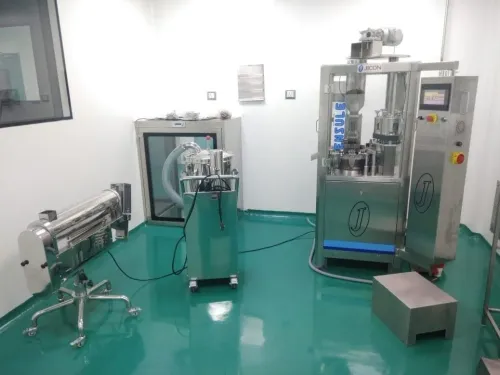
- Installed power, compressed-air pressure, flow and quality, dust-extraction demand, noise, critical spares, preventive-maintenance intervals, training and service-response times.
| Evidence area | Demand from every bidder | Compare against |
|---|---|---|
| Dust and safety | Extraction airflow, containment boundary, grounding method and hazardous-dust assessment | Your powder’s exposure and ignition risks |
| Controls and data | User access levels, recipes, audit trails, backup and restore, electronic records and data-integrity responsibilities | GMP validation and IT ownership |
| Qualification | Design, installation, operational and performance qualification protocols | Intended formulation, shell, operating range and routine operators |
Ask Jicon Technologies Pvt Ltd for this model-specific evidence when comparing ENSULE equipment with SACF alternatives. A factory demonstration alone does not prove performance; reject any offer that will not commit to acceptance criteria, raw data and documented qualification responsibilities.
Related products
 | Capsule Filling Machines Automatic Capsule Filling Machine ENSULE 2000 ENSULE 1500 ENSULE 750 ENSULE 400 ENSULE 200 Our ENSULE series of machines are Fully Automatic Capsule Filling machines used to fill powders (in the form of slugs, pellets or mini tablets) in... |
 | Capsule Filling Machines Automatic Capsule Filling Machines ENSULE Our ENSULE series of machines are Fully Automatic Capsule Filling machines used to fill powders (in the form of slugs, pellets or mini tablets) in... View product → |
Frequently asked questions
What changes between ENSULE and SACF during a batch?
An ENSULE automatic filler combines capsule orientation, separation, dosing, closing, ejection and collection in one cycle. SACF equipment leaves more handling and process steps to an operator, so compare usable good capsules per hour rather than mechanical speed.
How should you compare ENSULE 200, 400, 750, 1500 and 2000?
Compare each model by good capsules per hour, dose accuracy, changeover time, operator requirements, capsule-size range and performance with your powder. Confirm the figures through a production trial using your formulation.
Which powder and dose characteristics decide the machine choice?
Check powder flow, bulk density, cohesion, moisture sensitivity, particle size, dose weight and required fill-weight variation. Poor-flowing or cohesive powders may need different dosing tooling, agitation or process settings.
When does automatic throughput justify its added cost?
Automation becomes easier to justify when repeated batches create high operator costs, long manual handling time, frequent changeovers or unacceptable capsule losses. Calculate labor, good output, downtime, rejects and payback using your actual batch schedule.
What evidence should you demand from a capsule filling machine manufacturer?
Request a trial report using your powder and capsule size, dose-variation results, good-capsule output, reject rate, changeover procedure, cleaning requirements, maintenance schedule and available qualification or validation documents.
Related products
 | Capsule Filling Machines Semi Automatic Capsule Filling Machine SACF SACF I & SACF -II (Semi Automatic Capsule Filling Machines) are designed to fill hard gelatin capsules of all sizes with powders, pellets or granular... View product → |
 | Capsule Filling Machines SACF: Semi Automatic Capsule Filling Machine SACF I & SACF -II (Semi Automatic Capsule Filling Machines) are designed to fill hard gelatin capsules of all sizes with powders, pellets or granular... View product → |
 | Capsule Filling Machines ENSULE: Automatic Capsule Filling Machines Our ENSULE series of machines are Fully Automatic Capsule Filling machines used to fill powders (in the form of slugs, pellets or mini tablets) in... View product → |