
Empty capsules do not always point to a failed dosing cycle. The defect can begin with shell separation, operator loading, powder flow, vacuum, tooling, compressed air or closing. By tracing the capsule station by station, you can identify the cause before changing settings that create a second problem.
Key takeaways
- Identify the faulty station before adjusting vacuum or dosing settings.
- Compare capsule-body weight with filled-capsule weight to locate dosing loss.
- Inspect shell separation, loading, seating and closing evidence in sequence.
- Accept the machine only after product-specific fill testing passes.
First identify where the capsule became empty
An empty capsule does not prove a dosing failure; locate the defect by examining the shell, powder and closing evidence. Segregate the affected batch, record the station where each defect appeared, and compare capsule-body weight with filled-capsule weight.
| Origin | Evidence to check | Likely finding |
|---|---|---|
| Failed separation | Empty body, cap still in the magazine or body not seated in the filling ring; inspect vacuum holes, separation pins and shell damage | The capsule never reached the dosing position |
| Missed dosing | Intact, correctly seated body with no powder, plus an empty dosing cavity or blocked dosing hole | Powder failed to refill, tamp or transfer |
| Powder loss | Powder on the dosing plate, transfer tooling or outside the body; the capsule may be underweight rather than completely empty | Static, poor flow, loose compaction or displaced powder caused loss |
| Closing rejection | Powder is present in the body, but the closed capsule is split, unjoined or absent from accepted output; check the reject chute and closing station | A filled capsule was removed after dosing |
For SACF capsule filling problems, inspect in this order: stop and segregate output; verify magazine orientation and shell seating; check separation and vacuum supply; confirm powder reaches the dosing cavity; inspect the filling ring, dosing plate, pins, bushes and seals for buildup or wear; then examine closing. Weigh samples from each station.
Change one setting at a time—speed, vacuum or tamping—or you will erase the evidence.
Check shell separation, loading and seating before changing vacuum
An apparently empty capsule often reflects shell handling, not a dosing failure. Inconsistent magazine loading can leave bodies upside down, partly inserted, or unseated in the filling plate; the dosing mechanism then works beside the capsule. Brittle, soft, warped or dimensionally unstable gelatin and HPMC shells also resist separation and closing.
1. Empty the magazine and inspect capsule orientation, body loading and the transfer plate. Confirm every body sits fully in its hole before running product. A body that shifts during transfer can miss the dosing cavity or lose powder before closing.
2. Examine shells for cracks, flattened rims, sticking caps and deformation. Store them in the supplier’s sealed packaging, then condition them in the production room; opening them early in Dubai heat or humidity increases separation and seating failures.
3. Clean the separation pins, bushes, seals and suction holes. Powder buildup, bent pins, worn seals and blocked holes reduce usable vacuum; excessive vacuum can deform shells or pull powder into the separation path. Do not copy a vacuum setting from another capsule size or shell material.
4. Remove and refit the filling ring or segment block. Check for a scratched filling plate, compacted powder under the seating surface, misalignment and incomplete locking. Abrasive cleaning or unrecorded adjustments can change clearances and create new semi automatic capsule filling machine problems.
5. Inspect one rejected capsule. An empty body points to separation or transfer; powder present but below target points to dosing or powder loss. Change vacuum only after these checks. Record the setting, shell lot and defect count.
Trace powder flow from the hopper to the dosing cavity
Powder reaches the capsule body only when it flows from the hopper, refills each dosing cavity, forms a stable plug and transfers cleanly. A full hopper proves none of these steps; cohesive powder can bridge above the dosing plate or form a rat-hole, leaving cavities partly filled while powder remains around them.
- During dosing-plate refill, inspect every hole for bridging, compacted residue and uneven powder level. Missed refill creates a genuinely empty body; incomplete refill creates an underweight fill.
- Check tamping depth and pressure against the product and tooling. Excessive compression forms a plug that sticks to the cavity or breaks during ejection, while insufficient compression produces a fragile plug that scatters before transfer.
- Look for powder adhering to the plate, pins, capsule bodies or transfer tooling. Fine, dry powder and nonconductive parts intensify static, producing sporadic empty capsules rather than a steady weight error.
Do not correct static-related loss by simply increasing tamping force. Check grounding, material compatibility, controlled room humidity and cleaning records, then confirm the result with individual capsule weights.
For anyone searching “semi automatic capsule filler empty capsules in Dubai,” the diagnosis remains mechanical and product-specific. Dubai’s heat and humidity make uncontrolled powder storage and room-to-machine transfer more consequential: moisture can increase cohesion, while dry conditions can increase static. Record hopper condition, dosing-cavity refill, plug transfer and capsule weights at the same time.
Use a station-by-station troubleshooting sequence
Stop the SACF machine and segregate all affected capsules. Open and weigh samples first: an empty body points to loading, separation or powder transfer; a low-weight plug points to dosing; powder outside the shell points to loss or closing displacement.
1. Inspect the capsule magazine and loading plate. Confirm bodies and caps face the correct direction, every body sits fully in its bore, and shells are not brittle, soft, warped or stuck together. Condition gelatin or HPMC shells in the production room and keep unopened stock sealed.
2. Check the separation station. Look for damaged shells, blocked suction holes, misaligned guides and incomplete cap-body separation. Confirm the filling ring or segment block is seated flat before transfer.
3. Follow powder movement from hopper to dosing plate. Check bridging, inconsistent refill, excessive moisture, changed bulk density, lubricant or glidant levels, and powder stuck to the plate. Inspect tamping pins and plug transfer for cavities that are short or displaced.
4. Verify compressed air and vacuum at the machine, then inspect hoses, filters, regulators and seals for leaks or blockage. Adjust vacuum only after correcting shell seating and circuit faults.
5. Inspect the closing station for misalignment, incomplete closure and shell ejection. Confirm capsule presence and closure detection if fitted.
6. Change speed or tamping in one small step at a time, recording fill weight, rejects and stoppages after each trial. This disciplined sequence supports capsule filling machine troubleshooting in Dubai without destroying evidence by changing several settings together.
Require product-specific evidence before accepting the machine
Do not accept a headline capsule-per-hour figure as proof of reliable filling. Ask the semi automatic capsule filling machine manufacturer to run your actual formulation, capsule size, tooling and proposed operating speed, then record empty capsules, underweight fills, closure defects, stoppages and operator interventions.
1. Require a written trial protocol defining how empty capsules are detected, sampled and counted. Inspect every capsule during a short run, not only a small sample, because intermittent separation or dosing faults can escape routine checks.
2. Ask for fill-weight results, mass variation, closure performance and rejected-shell counts at the stated speed. Separate a genuinely empty body from an underweight or displaced plug; they point to different faults.
3. Make the operator repeat normal loading, including capsule orientation, body seating and transfer. Record how many manual corrections, resets and rechecks are needed. A machine that depends on constant visual sorting has not demonstrated empty-capsule control.
4. Request a demonstration of capsule-presence, closure and fill-weight checks, plus the response to a deliberately introduced fault. Confirm whether the machine stops or rejects the capsule, or merely leaves detection to the operator.
5. Obtain required compressed-air pressure, flow, air-quality class and filter-maintenance limits. Pressure drops, oil, water or blocked filters can disrupt transfer without an obvious electrical alarm.
Give Jicon Technologies Pvt Ltd the same acceptance protocol as every other supplier; comparing identical evidence exposes whether the quoted output survives real product and operator conditions.
Related products
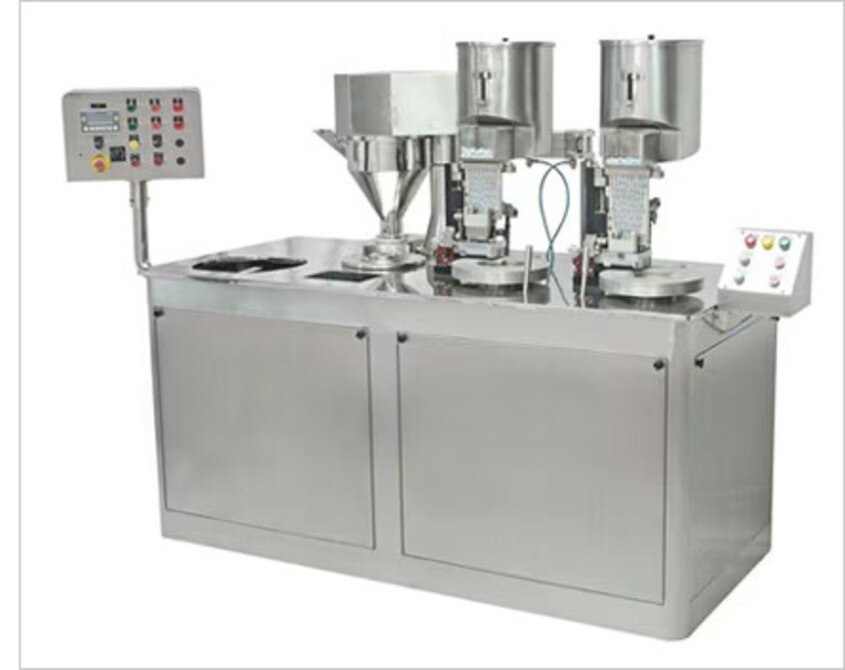
 | Capsule Filling Machines Semi Automatic Capsule Filling Machine SACF SACF I & SACF -II (Semi Automatic Capsule Filling Machines) are designed to fill hard gelatin capsules of all sizes with powders, pellets or granular... View product → |
 | Capsule Filling Machines SACF: Semi Automatic Capsule Filling Machine SACF I & SACF -II (Semi Automatic Capsule Filling Machines) are designed to fill hard gelatin capsules of all sizes with powders, pellets or granular... View product → |
Frequently asked questions
How do you identify where a capsule became empty?
Segregate the affected batch, record the station where each defect appeared, and compare capsule-body weight with filled-capsule weight.
Should you change vacuum settings first when capsules are empty?
No. Check shell separation, capsule loading and capsule seating before changing vacuum.
How can powder flow cause empty capsules?
Trace powder from the hopper to the dosing cavity and inspect interruptions, bridging, poor flow and incomplete cavity filling.
What evidence should you require before accepting a capsule filling machine?
Require product-specific evidence from fill testing, including capsule weights, dosing consistency, defect records and successful closing results.