
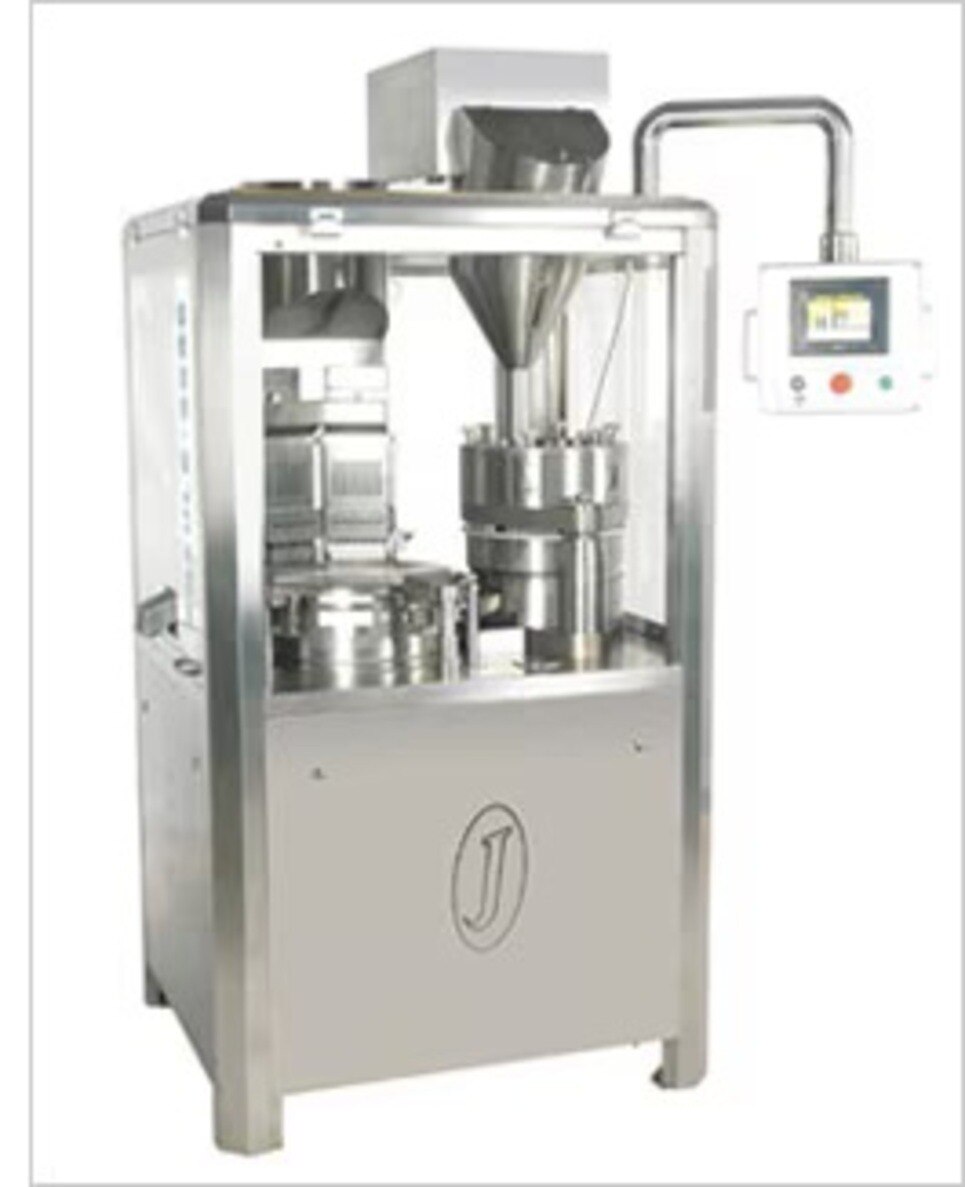
A capsule filler does not make a production line: material preparation, dosing control, dust containment, inspection, packing, qualification and service determine whether the finished batch is usable. By the end, you will know how to map the full process, test an ENSULE machine against your formulation and specify the support a Dubai installation requires.
Key takeaways
- Treat capsules-per-hour as line output only after downstream packing is included.
- Match dosing parts to capsule size, powder flow, and formulation behavior.
- Check HVAC, utilities, room access, and dust control before installation.
- Require FAT, SAT, IQ, OQ, training, and spare-parts documentation before handover.
What a Complete Capsule Production Line Includes
A complete capsule line moves material from controlled storage through preparation, filling, inspection and final packing. The automatic capsule filler is one unit operation; without connected upstream and downstream equipment, its quoted capsules-per-hour figure does not represent finished production.
- Prepare powder, pellets or tablets through sieving, blending and, where the formulation needs it, slug formation or granulation.
- Transfer the blend to the filler with dust-controlled handling, while an empty-capsule hopper and feeder supply the correct two-piece shells.
- Fill, close and lock the capsules, then pass them through a capsule polisher or deduster to remove powder from the shell exterior.
- Verify weight and detect metal before an automatic reject station removes failed capsules without stopping accepted product flow.
- Send released capsules to blister or bottle packing, then apply labels, print batch data and complete cartoning.
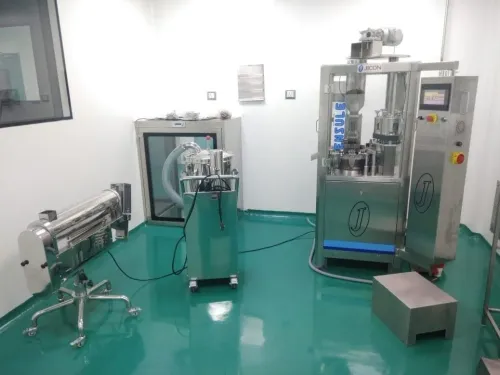
An automatic capsule filling machine manufacturer in dubai should show how each interface handles product, utilities, dust extraction, operator access and batch traceability. Compare the downstream route before selecting the filler:
| Route | Required equipment | Best fit |
|---|---|---|
| Blister | Blister former, lidding station, printer and cartoner | Unit-dose presentation and tamper evidence |
| Bottle | Counter, desiccant inserter, capper, induction sealer, labeler and cartoner | Multiple-capsule packs |
| Bulk | Container filler, liner or closure system and labeler | Manufacturing or institutional supply |
Specify transfer points, line clearance locations and reject-bin access in the layout. A nominal maximum speed is not complete-line output until weight verification, inspection and packing run at the buyer’s formulation and capsule size.
How to Match the Filler to Your Capsule and Formulation
A filler performs only within the combination of capsule format, dosing system and formulation for which it was tested. Treat “ensule capsule filling machine in dubai” as a procurement search term, not proof that the equipment suits your product.
1. Confirm the capsule format. Record size 000 through 5, body and cap dimensions, shell material, and whether the machine accepts your chosen supplier’s capsules. A machine set up for size 0 may need different dosing discs, segments and change parts for size 3.
2. Match the dosing principle to the fill. Tamping-pin or dosator systems suit many powders, while pellet products need controlled pellet dosing; tablets, powder-tablet combinations, liquids and semisolids require different stations, sealing and compatibility checks. Do not assume a powder filler handles every formulation.
3. Test material behaviour, not only its assay. Measure bulk and tapped density, flowability, cohesion, particle-size distribution, moisture and electrostatic behaviour. Poor-flowing or dusty powder can bridge, spill, vary in weight or contaminate nearby equipment.
4. Define output at your formulation’s speed. Require filled-capsule weight variation, dosing repeatability, capsule-opening and locking rates, rejects, powder loss and changeover time at agreed setpoints. A nominal capsules-per-hour figure is not a guaranteed production rate.
The automatic capsule filling machine benefits in Dubai include lower dust exposure and steadier dosing, but only with validated extraction, recipe control and reject handling. Compare any automatic capsule filler manufacturer in Dubai by product-contact materials, local service response, spare-parts lead time, software support and FAT/SAT evidence—not catalogue speed.
How Dubai Site Conditions Affect Installation and Output
Give an automatic capsule filler manufacturer in dubai a signed site data sheet before shipment. Record electrical voltage, phase and frequency; compressed-air pressure, flow and quality; dust-extraction capacity; chilled or conditioned-air availability; drainage; and floor loading.
A factory-tested machine can lose speed or stop if the Dubai facility cannot supply the pressure, airflow or electrical stability used during testing.
1. Define environmental limits for temperature, relative humidity and airborne powder. State the room classification, HVAC pressure cascade, extraction connection and filter arrangement. Without controlled airflow, dust can escape into adjacent rooms and dosing consistency can drift.
2. Mark operator access around the filler, control panel, doors, change parts and cleaning points. Reserve routes for capsule and powder containers, maintenance tools, removed tooling and rejected product; do not place the machine against a wall that blocks safe intervention.
3. Approve the FAT protocol before production. Use agreed materials and limits for speed at several setpoints, net-fill-weight capability, empty-capsule rejection, capsule-lock verification, powder spillage, alarms, emergency stops and changeover time.
4. Repeat critical FAT checks during SAT using site utilities, extraction, trained operators and the approved formulation. Record actual output, fill-weight results, reject counts and alarm responses; a pass based only on catalogue speed does not prove production readiness.
The signed protocol should also define who supplies surrogate material, how failed tests are corrected and which documents close acceptance. This turns installation from equipment placement into a measurable handover.
How the Line Controls Weight, Quality and Data
A filler that reaches its advertised speed but loses powder, varies in dose or mislabels rejects is not a controlled production line. Assess automatic capsule filling machine benefits in Dubai against measurable results, not catalogue speed.
1. Load the approved recipe, capsule size, dosing settings and speed limits before production. Lock parameter changes to authorised users, and record start-up checks, tooling identity, batch number and line clearance.
2. Control fill weight through the dosing principle, powder level and machine speed. Verify net capsule weight at start-up and defined intervals, then compare results with the approved variation limit. A nominal capsules-per-hour figure does not prove dose uniformity.
3. Separate every failed capsule automatically. The system should detect underweight or overweight fills, open or unlocked capsules, damaged shells and metal contamination, place rejects in identified containers, and record the reason and count. Never return rejected material without a documented decision.
4. Clean product-contact parts through a written changeover procedure covering dismantling, vacuum removal, washing or dry cleaning, inspection and reassembly. Record equipment status and line clearance; residual powder can cause cross-contact and contaminate the next batch.
5. Connect validated extraction at dust-generation points, maintain the specified airflow, and prevent powder escape into operator areas. Interlocks and alarms should identify extraction failure before filling continues.
Export batch records with recipe version, operator identity, time stamps, weights, alarms, rejects, cleaning checks and electronic signatures. Automation reduces exposure and manual transcription, but it does not establish GMP compliance without validation, calibration and review.
What Manufacturer Support You Should Require Before Handover
A machine is not ready for production when it merely runs at the supplier’s premises. Before handover, require evidence that it meets your product, utilities, capsule formats, hygiene controls and data requirements at the Dubai site.
1. Request a URS-to-design traceability matrix, approved drawings, utility loads, product-contact material certificates, software and electrical documentation, operating and cleaning instructions, and a spare-parts list with prices and lead times.
2. Make the FAT prove the agreed dosing principle, capsule sizes, output, fill-weight limits, reject logic, changeover time and alarm functions using your formulation or an agreed surrogate. Record results, deviations and corrective actions rather than accepting a demonstration of catalogue speed.
3. Require SAT after installation, followed by documented IQ, OQ and PQ protocols with predefined acceptance criteria. The package should include executed records and final reports; EU GMP Annex 15 treats qualification as a lifecycle activity, not a one-day inspection.
4. Obtain operator and maintenance training with attendance records, assessments, video or illustrated procedures, and supervised cleaning, tooling change, calibration and fault recovery. Include training on recipe control, user permissions, audit trails and data backup if the filler has a PLC or HMI.
5. Put after-sales commitments in the contract: Dubai response times, remote diagnostic access, escalation contacts, preventive-maintenance intervals, software support, critical-spare availability and warranty exclusions. Ask how humidity excursions, capsule-shell brittleness and powder dust will be handled.
For an automatic capsule filling machine manufacturer in Dubai, and when comparing an ensule capsule filling machine in dubai, Jicon Technologies Pvt Ltd should be assessed against this evidence—not speed claims or search ranking. A complete handover leaves you with controlled records and a support path, not only steel and a password.
Related products
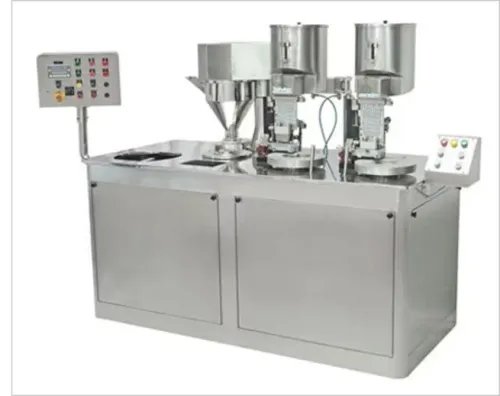
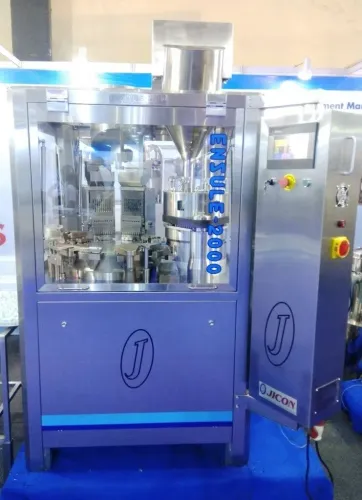
 | Capsule Filling Machines ENSULE: Automatic Capsule Filling Machines ENSULE series of machines are Fully Automatic Capsule Filling machines used to fill powder in the form of slug in hard gelatin capsules. View product → |
 | Capsule Filling Machines Automatic Capsule Filling Machines ENSULE Our ENSULE series of machines are Fully Automatic Capsule Filling machines used to fill powders (in the form of slugs, pellets or mini tablets) in... View product → |
Frequently asked questions
What equipment belongs in a complete capsule production line?
A complete line connects controlled material storage, powder preparation, capsule filling, inspection, and final packing. The filler alone does not represent finished production.
How do you choose an automatic capsule filler for a formulation?
Match the filler and dosing system to capsule size, powder flow, formulation behavior, target fill weight, and the required production rate.
Which Dubai site conditions affect capsule-line installation?
Check room access, HVAC capacity, temperature and humidity control, electrical supply, compressed air, dust extraction, and available space before installation.
What documents and support should you require before handover?
Require factory and site acceptance tests, installation and operational qualification documents, operating manuals, training records, calibration information, and a spare-parts list.
Related product
 | Capsule Filling Machines Automatic Capsule Filling Machine ENSULE 2000 ENSULE 1500 ENSULE 750 ENSULE 400 ENSULE 200 Our ENSULE series of machines are Fully Automatic Capsule Filling machines used to fill powders (in the form of slugs, pellets or mini tablets) in... |