
Seasonal demand is a peak-capacity problem, not an annual-average problem. You will be able to calculate the required filler rate, compare FT-60, FT-120 and ATF-1 without relying on headline speed, and decide whether buying, overtime, contract filling or a semi-automatic backup gives the lowest total cost.
Key takeaways
- Size the filler for peak good tubes per campaign, not annual average.
- Compare effective output after rejects, stops and changeovers—not nameplate speed.
- Request tube-format, qualification and support details before placing an export order.
Calculate the filler size from your peak campaign
A defensible automatic tube filler for seasonal demand is sized from the busiest campaign, not the annual average. Start with peak good tubes required during the campaign, then calculate:
Required nominal rate = peak good tubes ÷ (available production minutes × expected OEE)
Define the peak with a month, peak week, number of SKUs, tube formats and campaign length. If you need 180,000 saleable tubes in five 8-hour shifts, 2,400 scheduled minutes is not the available time until you remove breaks, planned maintenance, cleaning and format changeovers.
Build the calculation from these inputs:
- Peak good tubes required, including a documented safety allowance for forecast error
- Scheduled shift minutes during the peak week
- Minutes lost to product-path cleaning, hopper cleaning, nozzle changes, tube-size tooling, coding and line clearance
- Expected OEE, with its availability, performance and quality assumptions stated separately
- Planned reject rate and the first-off quantity rejected during each restart
If changeovers are already included in OEE, do not subtract them twice. Ask each supplier to show the resulting good tubes per shift, not only tubes per minute.
A high headline speed can still miss the campaign if cleaning takes 90 minutes between SKUs or sealing defects increase at maximum rate. Request a timed changeover record and a production trial using your product, tube material and fill weight; that evidence is more useful than a catalogue rating.
Calculate the same schedule for one slower filler and for extra shifts before choosing capacity.
Match FT-60, FT-120 and ATF-1 to the production profile
A 60-tube/minute nameplate does not mean 60 saleable tubes each minute. Match the model to the campaign’s effective requirement, then make the supplier prove that rate with your product.
| Model | Rated output to use for comparison | Best fit |
|---|---|---|
| FT-60 | 60 tubes/minute, or 3,600 tubes/hour before losses | Low volume, few SKUs, or a peak spread across several weeks |
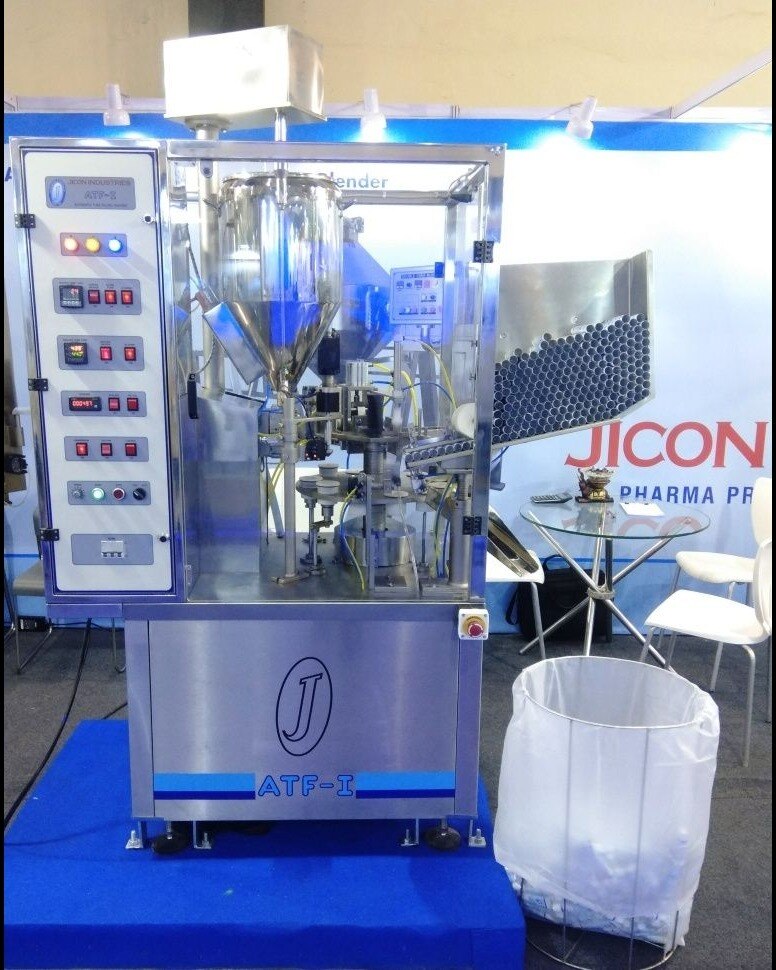
| ATF-1 | About 40–60 tubes/minute; confirm the exact configuration in writing | Low-to-medium volume where format flexibility and manageable changeovers matter |
| FT-120 | 120 tubes/minute, or 7,200 tubes/hour before losses | Medium volume or a sharply concentrated peak that leaves little recovery time |
Treat those figures as nameplate values, not commitments. Deduct cleaning, format changes, hopper refills, minor stoppages and rejects before comparing them with your peak requirement.
For sharply concentrated demand, choose the FT-120 only when the product, tube and sealing method have demonstrated a higher saleable rate. A slower FT-60 or ATF-1 can produce more good tubes if its changeover is repeatable and the FT-120 needs lengthy tooling or cleaning.
Ask for a factory acceptance test using your tube diameter, fill volume, viscosity, sealing method and production material. Put the minimum good-tube rate and acceptable reject percentage in the purchase terms before relying on an automatic tube filling machine export.
Compare effective output, changeovers and tube-format capability
A faster filler produces more saleable tubes only when its speed survives changeovers, cleaning, sealing and rejects. Compare good tubes per shift across your actual seasonal SKU schedule, not the quoted 60, 100 or 150 tubes per minute.
| Tube format | Sealing system | What to verify |
|---|---|---|
| Laminate | Heat, hot-air, impulse or ultrasonic sealing | Separate sealing head, temperature control, jaws and format parts |
| PVC or plastic | Heat, hot-air, impulse or ultrasonic sealing | Seal strength at the specified wall thickness and product temperature |
| Aluminium | Mechanical folding or crimping | Folding tooling, jaw setting and closure inspection |
A Lami PVC aluminium tube filler is not automatically universal. If one machine claims all three formats, ask to see the separate heads, jaws, folding tools and recipe controls; a nominal compatibility statement does not prove a validated seal.
Obtain a timed changeover protocol before comparing machines. Include product-path draining and cleaning, nozzle removal, hopper clearance, tube-size tooling, coding changes, recipe loading, line clearance and first-off approval. A high-speed filler that loses two hours between short runs can deliver fewer good tubes than a slower unit with repeatable conversion.
Product behaviour changes the result. High-viscosity creams can slow filling, foaming liquids increase rejects, and abrasive or sticky products extend cleaning. Check whether the path has dead legs or threaded recesses, whether nozzles remove without contamination, and whether cleaning requires full dismantling.
Request a factory acceptance test using your tube diameter, fill volume, product, sealing method and reject limit. Treat the demonstrated saleable rate—not the nameplate speed—as the capacity figure.
Choose between a new machine, extra shifts and contract filling
A dedicated automatic tube filler for seasonal demand is more economical when its extra good tubes cover its annual ownership cost without leaving the machine idle for most of the year. Compare total cost per good tube, not the quoted purchase price: include installation, tooling, validation, operators, cleaning, utilities, maintenance, spare parts and financing.
| Option | When it is economical | What can make it the wrong choice |
|---|---|---|
| Dedicated new filler | The peak recurs, overtime cannot meet dispatch dates, and the machine will run enough campaigns to spread fixed cost | Idle months, long commissioning or unproven product and tube compatibility |
| Extra shifts | The peak is short, operators and quality staff are available, and the existing filler has spare capacity | Fatigue, maintenance delays, premium wages and insufficient cleaning or changeover time |
| Second machine | Two products or formats must run simultaneously, and demand remains strong beyond one campaign | Capital tied up after the season |
| Leasing | You need capacity for a defined period and the lease includes service, tooling and return terms | Usage limits, weak technical support or expensive extensions |
| Contract filling | Volume is uncertain, the campaign is brief, or your site lacks trained staff and utilities | Freight, minimum batches, schedule dependence and loss of process control |
| Semi-automatic unit | SKUs are numerous but batches are small, with operators already available | Labour cost, inconsistent output and slower filling and sealing |
Choose the filler when its repeatable changeover, cleaning access and verified saleable rate beat overtime and outsourcing together. Retain semi-automatic equipment for small formats or contingency work; do not buy automation merely to cover a few peak weeks.
Set export, qualification and support requirements before ordering
A short campaign fails when the quoted speed exists only on a specification sheet. Before ordering, require documented evidence that the machine achieved the proposed peak rate with your tube material, product viscosity, fill volume, closure and coding format.
Ask the tube filling machine exporter in Thane to document four points:
1. The factory acceptance test (FAT) procedure, test samples, good-tube rate, reject rate and changeover time. Define who repeats performance checks during site acceptance testing (SAT), and who pays if the agreed result is missed.
2. The destination package: electrical voltage and frequency, compressed-air quality and consumption, manuals in the operators’ working language, recommended lubricants and consumables, spare-parts list, export packing method, installation scope and commissioning dates.
3. The seasonal support plan. Get named contacts, remote-support hours, technician availability, critical-spare replacement lead times, operator training dates and a ramp-up schedule that reaches saleable output before the peak week.
4. The qualification and control records. Agree responsibility for IQ, OQ and production trials, and check that product-contact steel, elastomers, hoses, seals and lubricants protect product quality under 21 CFR 211.94. Recipe controls must restrict validated settings and record changes when your quality system requires an audit trail.
Ask Jicon Technologies Pvt Ltd to put these commitments in the quotation and FAT protocol, not in a sales call. A tube filling machine exporter for seasonal demand in Thane remains a viable choice only when commissioning time, parts availability and campaign support are written into the purchase terms.
Related products
 | Tube Filling Machines Automatic Tube Filling Machine (FT-120, FT-60, ATF-1) ₹1 FILLTUBE Machines are designed to fill and seal plastic, laminated and aluminium tubes at high speeds. View product → |
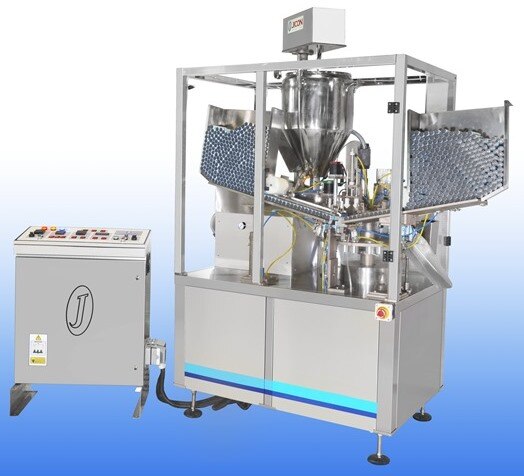 | Tube Filling Machines Automatic Tube Filling Machine ₹1 FILLTUBE Machines are designed to fill and seal plastic, laminated and aluminium tubes at high speeds. View product → |
Frequently asked questions
How do you calculate the right automatic tube filler size for seasonal demand?
Divide the required good tubes by available production minutes, then allow for rejects, planned stops, cleaning and changeovers. Use the busiest campaign as the sizing case.
How should you compare FT-60, FT-120 and ATF-1?
Compare each model’s verified effective output, tube materials and dimensions, filling range, sealing method, changeover time and available support against your peak campaign profile.
What is more practical: buying a filler, adding shifts or using contract filling?
Compare the machine’s total ownership cost with extra-shift labour, overtime, maintenance and contract-filling charges. Choose the option that meets peak volume without creating an underused asset.
What should you confirm before ordering an automatic tube filling machine for export?
Confirm electrical specifications, documentation, factory acceptance testing, installation responsibilities, operator training, spare parts, remote support, warranty terms and destination-country import requirements.
Related product
 | Tube Filling Machines Automatic Tube Filling Machine For Lami PVC and Aluminium Tubes FILLTUBE Machines are designed to fill and seal plastic, laminated and aluminium tubes at high speeds. |