
A semisolid manufacturing plant does more than mix ingredients and push the result into a tube. By following the route from weighing and phase preparation through mixing, cooling, deaeration, filling and inspection, you can see why ointments, creams and toothpaste need different equipment settings and controls.
Key takeaways
- Verify each ingredient’s name, grade, lot, date and seal before opening.
- Choose separate processing routes for ointments, creams and toothpaste.
- Control mixing, emulsification, cooling and vacuum to protect bulk quality.
- Inspect filled packs and document cleaning before the next batch.
1. Raw materials are weighed, checked and prepared before mixing
Production begins with material control, not mixing. In how ointment cream and toothpaste manufacturing plants work, operators verify the approved name, grade, lot number, expiry or retest date, container seal and status label before opening any ingredient.
1. Clear the weighing and charging area of previous labels, tools, residues and documents. Confirm the batch number, formula revision, clean equipment status and line clearance before dispensing.
2. Weigh each material at a calibrated station and record ingredient identity, lot number and actual weight. Check purified water or another specified process water for the required quality, then record its temperature before transfer.
3. Pass powders through the specified sieve, or pre-disperse them in a compatible liquid. This removes foreign particles and reduces dry pockets and lumps. Handle actives, preservatives, carbomers and gums according to their concentration and hydration requirements; do not treat them like bulk abrasives.
4. Separate the phases before charging. Melt waxes and compatible ointment bases in a controlled oil-phase vessel. Hydrate carbomers or gums in the correct aqueous or humectant phase. Keep oils, humectants and abrasives in suitable clean containers until needed.
5. Follow the formula’s addition order. Adding a binder before enough liquid is available creates fish-eyes; charging abrasives too quickly can overload the mixer and trap air. The equipment path may run from weighing stations and sieves to water and oil tanks, then a manufacturing vessel with an anchor agitator, powder-induction unit or high-shear mixer.
Record water temperature and each phase temperature before charging. These records explain later problems such as lumps, poor hydration or inconsistent viscosity.
2. Ointments, creams and toothpaste follow three different manufacturing routes
An anhydrous ointment, a water-containing cream and toothpaste are different systems, so changing the product changes the vessel sequence, addition order and mixing demand.
1. An ointment manufacturing process equipment train melts compatible waxes and bases by fusion. Operators then levigate insoluble powders into the softened base; an ointment mill or colloid mill can follow when smoother texture and narrower particle distribution are required.
2. For an oil-in-water or water-in-oil cream, heat the aqueous and oil phases separately, dissolving or dispersing ingredients in their correct phase. Combine them at the formula-defined temperature for initial emulsification, then homogenise and cool. The cream manufacturing plant process cannot copy one temperature or addition order across every formula.
3. Toothpaste starts with a liquid or humectant phase and hydrated binder; a glycerin premix can be used when the binder and formula require it. Add abrasive gradually, then add surfactant, sweetener and flavour late to limit foam and flavour loss.
Abrasive particle size affects grittiness, while humectant ratio, pH and binder hydration change yield stress, viscosity and fillability.
The toothpaste manufacturing plant working therefore needs controlled wetting and dispersion, not simple blending. A high-viscosity planetary or counter-rotating vacuum mixer suits toothpaste; an ointment line instead relies on fusion equipment, anchor agitation and optional mill-based finishing.
3. Mixing, emulsification, cooling and vacuum control create the final bulk
Inside the vessel, an anchor or scraper agitator keeps viscous material moving along the wall, preventing cold spots and scorching. A high-shear head or rotor-stator breaks agglomerates and emulsifies the phases; recirculation through an inline mixer or colloid mill changes dispersion, residence time and particle or droplet distribution.
Do not scale a batch by matching rpm alone: compare tip speed, power per volume, recirculation rate and total batch time.
Operators track:
- Product temperature and jacket cooling rate
- Vacuum level and hold time
- Scraper or anchor speed
- Homogenizer speed and torque
- Viscosity, torque trend and appearance
These readings expose separation, grittiness, bubbles and inconsistent viscosity before filling. The cream manufacturing plant process uses controlled jacket cooling after emulsification, then adds heat-sensitive actives, perfume and volatile ingredients at a defined late-stage temperature.
Toothpaste manufacturing plant working treats the batch as a dispersion and deaeration operation. After the abrasive load is wetted, vacuum mixing applies enough shear to disperse silica or calcium carbonate without excessive heat or foam.
A sealed vessel, condenser, return line and vacuum pump must prevent air re-entry; keep the return line submerged and control the vortex. Pulling vacuum before wetting is complete can create foam, while excess shear traps heat. Deaeration is therefore limited by vessel design as well as pump performance.
4. Bulk transfer becomes a measured, sealed and inspected pack
A batch at target consistency moves through sanitary, cleanable pipework by a positive-displacement pump, either to a holding vessel or directly to the filler. This transfer stage shows how ointment cream and toothpaste manufacturing plants work: controlled movement replaces open discharge.
Slow agitation or controlled recirculation keeps the bulk uniform without re-aeration, sedimentation, or uncontrolled temperature and viscosity drift.
Filling is a dosing operation. Piston or servo-piston systems meter each dose, while the fill profile and nozzle shutoff limit tailing, voids and trapped air. Match the filler to the product’s yield stress and filling temperature; a bulk that pumps smoothly at 40 °C can fill inconsistently after cooling toward room temperature.
Tube orientation, seal temperature or pressure, cap fit and tube material determine package integrity. Inspect every run against the approved specification:
- Seal appearance and seal integrity
- Coding and batch information
- Tube or jar cleanliness
- Dents, cracks, leaks and other pack damage
- Net content and fill-weight variation
During development and scale-up, connect these pack results to bulk appearance, pH where applicable, viscosity or rheology, assay, content uniformity, microbial quality, and particle- or droplet-size results. A filler change that preserves average weight but alters air content, viscosity or seal performance has not preserved the process.
5. Cleaning, changeover and plant selection determine whether the process stays reliable
A changeover from medicated ointment to cosmetic cream or toothpaste is a documented cleaning sequence, not a hot-water rinse. Residue controls must protect the next batch from active ingredients, fragrance, flavour, pigment and abrasive carryover.
- Record line clearance: remove labels, components, bulk and waste, then identify the previous and next products.
- Open every accessible product-contact surface; dismantle valves, pumps, nozzles and seals where the procedure requires it.
- Select detergent for the residue. Hydrophobic waxes need alkaline or surfactant-assisted cleaning; pigments need dispersing action; flavours and surfactants need effective wetting; abrasive solids need flushing and mechanical removal.
- Set the validated cleaning temperature, detergent concentration, contact time and mechanical action. Scrapers, spray devices, recirculation and manual brushing must reach every surface.
- Inspect the rinse for clarity, pH or conductivity where specified, then perform visual checks and collect swabs against validated residue limits for actives, detergent or microbiological contamination.
Dead legs, difficult-to-drain valves and long unjacketed lines trap product and create temperature or viscosity drift. Specify drainable pipework, short transfer paths and controllable jackets.
For an ointment cream toothpaste plant india project, map equipment to the legal classification before purchase: cosmetics follow the Cosmetics Rules, 2020, while drug products have separate manufacturing and GMP expectations. Jicon Technologies Pvt Ltd can be assessed on geometry, jacket control, vacuum integrity, pump and filler compatibility, cleaning access and changeover records.
Check tube barrier, seal integrity, active or preservative interaction, extractables and leachables, fragrance compatibility and permeation.
- Request operating ranges and torque or viscosity windows.
- Verify cleaning access, drainability and transfer paths.
- Request scale-up evidence covering tip speed, power per volume and residence time.
Related products
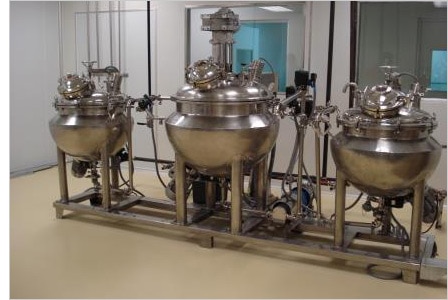 | Process Equipments Ointment Cream and Toothpaste Manufacturing Plant Automatic Ointment / Cream Manufacturing Plant is used to prepare medicated homogenised emulsion of Wax and Water to a particular formulation. View product → |
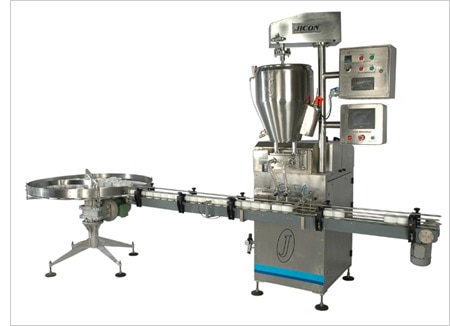 | Container Filling Machines Automatic Container Jar Filling Machine for Ointment and Others High speed automatic multi head container filling machine for filling cream, paste, ointment, wax polish, grease, jam, sauce etc. |
Frequently asked questions
What happens before mixing in an ointment, cream or toothpaste plant?
Operators verify each material’s approved name, grade, lot number, expiry or retest date, container seal and status label, then weigh and prepare it.
Do ointments, creams and toothpaste use the same manufacturing process?
No. Ointments, creams and toothpaste follow different routes based on their ingredients, phases and required consistency.
How do plants create the final bulk product?
The process combines controlled mixing with emulsification where required, followed by cooling and vacuum control before transfer to filling equipment.
How does bulk become a finished pack?
Filling equipment measures the bulk into containers, seals them and supports inspection of fill, closure and pack condition.
Why do cleaning and changeover affect plant reliability?
Documented cleaning and controlled changeovers reduce residue, mix-up and contamination risks between batches.
Related products
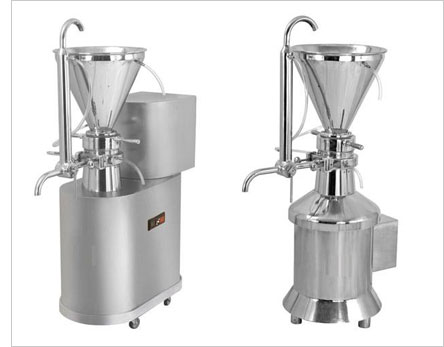 | Process Equipments Homogenizing, emulsifying, dispersing, mixing, extracting etc., catering to the needs of several industries; such as # Pharmaceutical Industry #... View product → |
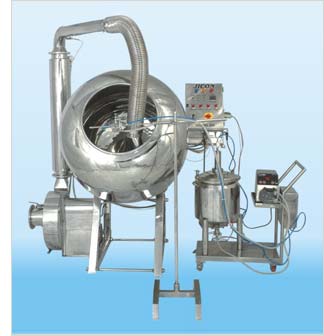 | Process Equipments Coating Pan Conventional coating pans are used to film coat or sugar coat tablets, pills, etc. |
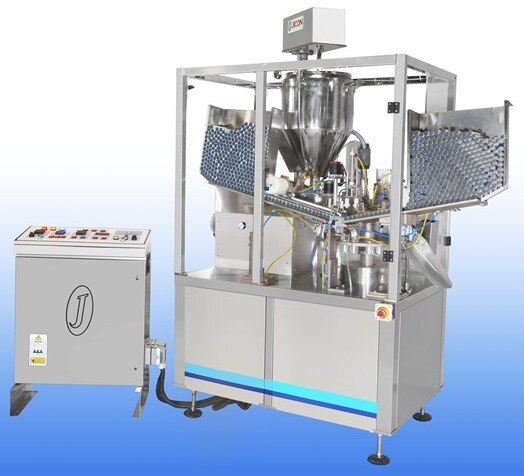 | Tube Filling Machines Automatic Tube Filling Machine ₹1 FILLTUBE Machines are designed to fill and seal plastic, laminated and aluminium tubes at high speeds. View product → |
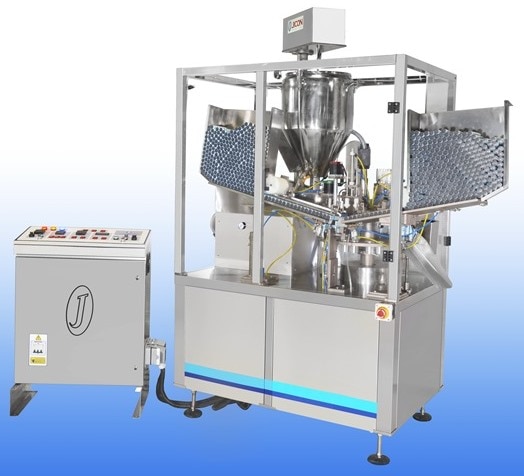 | Tube Filling Machines Automatic Tube Filling Machines (FT-120, FT-60, ATF-1) FILLTUBE Machines are designed to fill and seal plastic, laminated and aluminium tubes at high speeds. View product → |