
A fluid bed dryer is suitable only when the product can move through a controlled fluidisation window without excessive entrainment, agglomeration, overheating, or solvent risk. By the end, you will be able to define the process data, compare dryer configurations and utilities, and require the trials, validation records, and local support needed for a defensible purchase.
Key takeaways
- Confirm the powder forms a stable fluidised bed without excessive filter carryover.
- Size the bowl and spray system from wet load, bulk density and granulation method.
- Control drying by product temperature and a qualified moisture endpoint.
- Check containment, cleaning, solvent handling, utilities and documented qualification support.
Confirm that the product can be fluidised and dried safely
A fluid bed dryer for pharmaceutical production in Thane is suitable only when the wet material reaches stable fluidisation without excessive carryover. Filtered, heated air rises through a perforated distributor, suspends the wet bed, and removes moisture through convective drying.
Establish these values before selecting the dryer:
- Particle-size distribution, bulk density, initial and target moisture, solvent content, allowable product temperature, required drying time, agglomeration tendency, and observed fluidisation behaviour.
- Confirm whether the material is free-flowing, cohesive, heat-sensitive, hygroscopic, or prone to segregation during suspension.
| Material | Fluidisation behaviour | Main risk |
|---|---|---|
| Granules | Usually form a stable, permeable bed | Attrition or breakage |
| Powders | Range from free-flowing to cohesive | Channel formation and uneven drying |
| Pellets | Fluidise consistently when size and density are narrow | Surface damage or coating loss |
| Pharmaceutical intermediates | Behaviour depends on morphology, solvent, and residual moisture | Sticking, degradation, or solvent carryover |
Cohesive, very fine, low-density powders can form channels, become entrained in the exhaust, or fail to reach minimum fluidisation. Compare vacuum drying or agitated vacuum drying when heat sensitivity, solvent removal, or poor fluidisation makes hot-air drying unreliable.
Require the supplier to demonstrate a practical fluidisation window: enough air velocity to suspend the product, but not so much that unacceptable product carryover occurs.
Match batch capacity, bowl geometry, and spray configuration to the process
Specify capacity from the process, not a nominal kilogram rating. Record wet load, expected dry yield, bulk volume, minimum and maximum bowl fill levels, bed depth, drying rate, required cycle time, and air volume and static pressure at rated load.
Scale-up is not achieved by multiplying blower capacity: distributor pressure drop, superficial air velocity, solids hold-up, bed expansion, and filter loading change with scale.
| Spray configuration | Best fit | Main use |
|---|---|---|
| Top-spray | Granules | Granulation or coating |
| Bottom-spray | Pellets or particles | Controlled coating |
| Tangential-spray | Fluidised powders | Coating or layering |
Pharmaceutical fluid bed dryer selection requires product-specific trials to establish the bowl size, distributor design, spray rate, and filter area. Require data at minimum and maximum fill levels, including drying curves, bed behaviour, product recovery, and filter differential pressure; a unit that reaches its stated kilograms only with excessive entrainment is incorrectly sized.
Compare the supplier’s proposed air volume and static pressure with the rated-load values, not the installed motor power.
Set the control strategy around product temperature and a qualified endpoint
A controlled cycle is proven by product temperature and qualified endpoint moisture, not by inlet-air temperature alone. Trend inlet and outlet-air temperatures, airflow, relative humidity or inlet-air dew point, product temperature, bed differential pressure, filter differential pressure, and every filter-cleaning event.
A fluid bed dryer for pharma plants is controlled when these trends remain within validated limits while moisture falls uniformly.
For heat-sensitive APIs, excipients, probiotics, enzymes, and cosmetic actives, hot inlet air can still damage product. Evaporative cooling holds wet material below inlet temperature early; as evaporation slows near endpoint, product temperature can rise rapidly.
| Method | Strength | Limitation |
|---|---|---|
| Loss on drying | Fast routine measure of mass lost under specified conditions | Can include solvents or other volatiles, not water alone |
| Karl Fischer | Specific water determination when the method is suitable | Requires method suitability and careful sampling |
Use exhaust humidity, product temperature, or a validated time-and-temperature profile to support endpoint prediction, never replace the qualified moisture method. Require drying curves and moisture-uniformity data from documented sampling locations across the bowl load, plus bed-temperature data. Include alarm limits and review whether filter shaking changes airflow or endpoint behaviour.
Specify containment, cleaning, solvent safety, and qualification requirements
A pharmaceutical dryer needs documented 316L stainless-steel product-contact materials, crevice-free welds, specified surface finish, and gaskets compatible with the formulation and cleaning agents.
Design cleaning access for the distributor, expansion chamber, filter housing, discharge valve, sight glasses, and instrument nozzles; 21 CFR 211.65 covers product-contact surfaces, while 21 CFR 211.67 requires written cleaning, maintenance, and pre-use inspection.
| Filter option | Compare | Check before approval |
|---|---|---|
| Polyester or PTFE media | Fine-powder retention, filtration area, pressure drop | Shaking or pulse cleaning, recovery yield, differential-pressure alarm |
| Sintered metal | Robust cleaning and high-temperature service | Product adhesion, pressure drop, and cleanability |
| Disposable bags | Fast changeover and containment | Closed bag change, dust release, gasket seal, and disposal route |
For a pharma powder drying machine india specification, require sealed powder recovery and safe bag change. With ethanol, isopropanol, acetone, or combustible dust, define vapour control, solvent recovery or exhaust treatment, inerting, ignition-source control, bonding and grounding, and explosion protection. Assess Kst, Pmax, minimum ignition energy, and minimum ignition temperature.
Require FAT, SAT, calibrated instruments, alarm and interlock tests, airflow and temperature mapping, cleaning verification, and performance qualification under EU GMP Annex 15 principles. Include documented acceptance criteria and representative product or justified surrogate.
Check Thane site utilities, humidity conditions, and service capability
Thane’s warm, humid coastal air can change the dryer specification: state the design ambient condition and inlet-air relative humidity or dew point. Hygroscopic powders targeting low residual moisture may require dehumidified air through drying, cooling, and discharge; otherwise they can reabsorb moisture after the endpoint.
Require the supplier to provide rated-load figures, not just installed motor power:
- Airflow, static pressure, heater duty, exhaust volume, cooling requirement, electrical load, compressed-air consumption, and noise.
- HVAC, electrical, compressed-air, and dust-extraction capacity needed without disturbing pressure balance or adjacent production areas.
- Blower and heater spares, proprietary filter availability, gasket supply, sensor and load-cell calibration, PLC backup, service response time, and requalification support after software, filter, or control-system changes.
A fluid bed dryer manufacturer in Thane should support these figures with utility connection points and operating limits. Ask Jicon Technologies Pvt Ltd to provide the same evidence so you can compare service risk, not headline capacity.
Check whether the plant can handle peak exhaust and cooling loads during simultaneous production. A low purchase price becomes expensive when a proprietary filter, control fault, or calibration issue stops a batch for days.
Related products
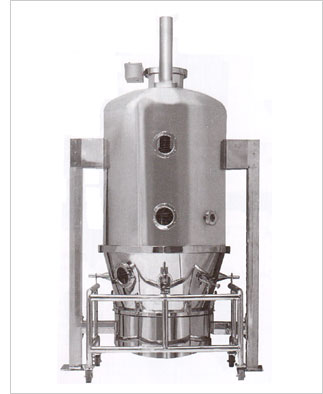 | Process Equipments FBD (FLUID BED DRYER) Salient Features: # Better productivity and lesser drying time. # Less handing, more hygienic. View product → |
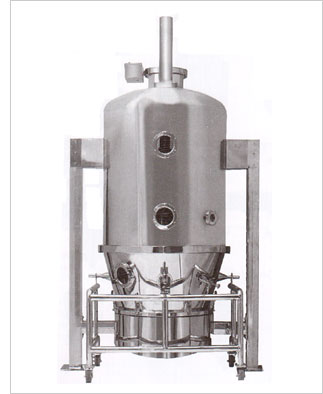 | Process Equipments FBD (FLUID BED DRYER) FBD (FLUID BED DRYER) Salient Features: # Better productivity and lesser drying time. # Less handing, more hygienic. |
Use documented product data to make the final comparison
Use the same representative product, or a justified surrogate with matching particle size, bulk density and moisture, for every shortlisted machine. A supplier’s advertised drying time is not evidence: reject it unless data covers the full bowl load and defined sampling locations.
1. Require a comparison matrix covering fluidisation behaviour, drying curve, endpoint moisture, product-temperature profile, cycle time, moisture uniformity, yield, fine-powder recovery, filter differential pressure, energy and utility consumption.
2. Define endpoint moisture with a qualified method such as loss on drying or Karl Fischer titration. Correlate it with inlet and exhaust temperatures, airflow or fan frequency, and product temperature.
3. Require a control philosophy that records batch number, recipe version, inlet and exhaust temperatures, airflow or fan frequency, differential pressure, filter-cleaning events, alarms and endpoint results under appropriate audit-trail controls.
4. Set FAT and SAT acceptance criteria, then complete representative performance qualification and continued process verification. Approve the purchase only after agreeing spare-parts availability and service response times.
| Criterion | Evidence to compare | Decision rule |
|---|---|---|
| Drying performance | Curves, endpoint and temperature data | Meet moisture and temperature limits |
| Uniformity and recovery | Bowl-location samples, yield and fines data | Reject unexplained variation or loss |
| Utilities and filtration | Energy, airflow, pressure and filter records | Confirm site capacity at rated load |
| Lifecycle support | FAT, SAT, PQ, CPV and service plan | Proceed only with documented commitments |
Frequently asked questions
How do you confirm a pharmaceutical product can be dried in a fluid bed dryer?
Test whether the wet material reaches stable fluidisation across the planned air velocity range without channeling, excessive fines carryover, agglomeration or filter blinding.
How should you size a fluid bed dryer for a pharma plant?
Compare wet and dry batch mass, bulk density, bed depth, bowl working volume, air volume and the required fill range. Match the spray nozzle arrangement to the granulation process.
How do you control the endpoint in fluid bed drying?
Set limits for inlet air, outlet air and product temperature, then qualify the endpoint using representative moisture or loss-on-drying results rather than outlet temperature alone.
What site checks matter when installing a fluid bed dryer in Thane?
Verify electrical supply, compressed air, exhaust capacity, chilled or cooling water, HVAC humidity control, drainage, solvent-safe equipment needs and local service response.