
The right choice depends less on the model name than on your product dimensions, saleable output, format mix, forming material and destination-site conditions. By the end, you can test an ALBLIS-II quotation against production demands, compare it with rotary and other ALBLIS models, and identify the specifications an exporter must document before you buy.
Key takeaways
- Match output, cavity count and changeover time to your actual production schedule.
- Confirm product dimensions, Alu-Alu material compatibility and pack integrity requirements.
- Request documented machine options, validation support and performance evidence before ordering.
- Compare the complete export quotation, including installation, spares, training and shipping terms.
Does your production profile fit the ALBLIS-II format?
Your production profile fits an intermittent flat plate machine when its batch size, shifts per day, required saleable packs per minute, product dimensions, cavity count and acceptable changeover time match the machine’s proven performance.
An ALBLIS-II from an alblis ii blister packing machine exporter for export buyers must be judged by saleable output, not its model name.
Ask the exporter to state these figures in the quotation:
- Exact rated output, indexing length, maximum forming area, maximum web width and maximum blister depth
- Supported tablet or capsule length, width, height, diameter and orientation
- Forming method, sealing area, cutting format and installed power
- Product-specific output at your target cavity count and pack length
Practical output equals indexed cycles per minute multiplied by pockets per cycle, less feeding interruptions, rejects, cleaning and format changes. Do not calculate capacity from stroke rate alone.
Request a run with your product and record saleable blisters per hour. Include deep pockets, large capsules, fragile tablets and tight dimensional tolerances; each can slow indexing, increase rejects or require feeding adjustments. Compare that result with annual demand to identify whether you need one shift, two shifts or three.
Treat a quotation that says only “high output” as incomplete. Confirm the forming, sealing and cutting details in writing, then time a changeover between two representative formats. If the measured rate fails your target after cleaning, rejects and changeover losses, the intermittent flat plate format is not the right fit.
What must you confirm about Alu-Alu packs and the product?
Confirm that the quoted forming station matches your chosen web before assuming the ALBLIS-II can run every blister material. An automatic flat plate blister machine export listing does not prove compatibility with cold-form aluminium.
1. Identify the forming method in writing. For cold-form aluminium, request supported foil grades, foil temper, laminate construction, maximum web width, forming depth, pocket radius and tooling clearances. PVC, PVC/PVdC and PET require different heating, forming and sealing arrangements.
If you need PVC-Alu thermoforming, obtain confirmation for this exact ALBLIS-II configuration, not the wider ALBLIS range.
2. Specify the seal system and its limits. Record the lidding-foil coating, seal-temperature range, pressure, dwell time and web-cleanliness limits. Alu-Alu blocks light, moisture and oxygen effectively, but it uses more material; deep pockets can increase scrap, cracking risk and finished-pack dimensions.
3. Define the product before tooling starts. Give the tablet or capsule length, width, height, diameter, orientation, fill count and minimum clearance. Submit the blister layout, artwork, registration marks, batch-code position, expiry-date format, perforation or tear-notch requirements and carton dimensions.
4. Make acceptance depend on measured seals, not appearance. Require a factory trial across the operating window, with peel or burst results, empty-pocket checks and product-damage records. Include the actual product and lidding foil; a visually neat seal can still leak or fail during transport.
Which ALBLIS-II options affect reliability and validation?
Separate the tooling set from the automation package: buying a reliable ALBLIS-II machine does not guarantee a reliable format change. For every format, request:
- Forming plate, sealing plate and cutting plate
- Feeding change parts and guide rails
- Registration equipment
- Spare punches and dies
Specify the feeder by product. A tablet counter and orienter may not handle capsules, softgels, powders, vials, cosmetics or irregular food pieces. Run the actual product at minimum and maximum fill quantities, then record orientation control, empty-pocket rate and product damage.
Compare alblis ii machine options against these validation and integration needs:
| Option | What to verify | Failure exposed |
|---|---|---|
| Servo-driven indexing | Repeatability at target speed | Unstable pocket position |
| Photoelectric registration | Printed-foil mark tracking | Artwork misalignment |
| Foil-splice detection | Splice alarm and rejection | Unsealed or misregistered packs |
| No-product/no-seal and missing-product rejection | Interlock and reject confirmation | Incomplete blisters reaching packing |
| Seal-integrity monitoring | Detection method and recorded limits | Leaking packs |
| Vision inspection | Pocket, seal, code and defect coverage | False accepts or rejects |
| Coding, perforation and tear-notching | Readability and position | Unusable packs |
| Discharge conveying | Transfer without jams | Product damage |
Clarify whether cartoning, serialization, case packing and line communication are included or separate equipment. Ask which settings are recipe-controlled, whether validated parameters are retained, and whether a timed changeover between two representative formats can be demonstrated.
Factory acceptance must cover saleable output, feeding accuracy, rejection logic, code readability and seal performance. A touchscreen does not establish electronic-record compliance; assess audit trails and batch records against 21 CFR Part 11 when regulated production relies on them.
When is flat plate a better choice than rotary or another ALBLIS model?
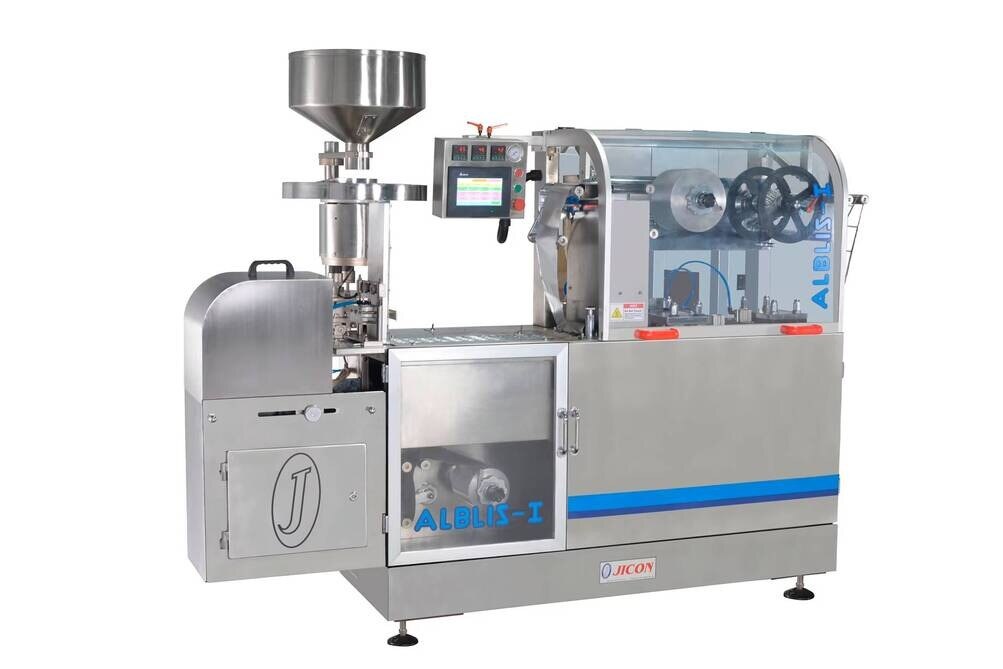
Choose flat plate construction when moderate production volumes, frequent format changes or complex tooling matter more than maximum sustained speed. Its intermittent indexing gives forming, sealing and cutting stations a controlled cycle. The trade-off is visible: feeding interruptions, rejected packs and long changeovers reduce saleable output.
A rotary machine is more attractive when one or two formats run continuously at high volume and higher tooling and changeover costs are acceptable.
| Option | Compare | Best fit |
|---|---|---|
| ALBLIS-I | Smaller envelope, lower demand and development work | Smaller or development-oriented requirements |
| ALBLIS-II | Indexed capacity and format range | Validated products needing flexible, moderate-volume production |
| ALBLIS-350 | Wider format or greater output potential | Confirmed need for larger web width or capacity |
| Rotary | Higher sustained output, less flexible changeovers | Long, continuous runs with few formats |
Treat those boundaries as technical questions, not “pilot” or “commercial” labels. Ask a flat plate blister packing machine exporter for each model’s maximum forming area, web width, forming depth, cavity layout, rated output and tooling cost, using current technical data.
Compare quoted saleable blisters per hour, not headline strokes per minute. Request a timed changeover between two representative formats with tooling removal, settings, cleaning and restart included; record which settings are recipe-controlled and whether validated parameters are retained.
ALBLIS-II is defensible only when its format envelope and indexed capacity meet annual demand without excessive shifts or unacceptable changeover losses. Confirm product dimensions, cavity count and required web width before choosing it.
What should an export quotation cover beyond the machine price?
A destination-ready specification is the starting point for comparing export offers. Obtain exact figures from the manufacturer for voltage, phase, frequency, installed power, compressed-air pressure and air quality, room footprint, operator access, extraction, noise, and permitted temperature, humidity and dust conditions. The ALBLIS-II name supplies none of these figures.
Request the following in writing:
- Freight dimensions, shipping weight and customs classification.
- Installation scope, commissioning, validation support, operator training and remote-response terms.
- Recommended spares, consumable wear parts, lubrication instructions and future format-set pricing.
- Software backups, calibration data, electrical drawings, pneumatic diagrams and operating and maintenance manuals.
- Responsibility for local electrical adaptation, unloading, foundation work and later format sets.
| Quote item | Confirm before comparing | Cost if excluded |
|---|---|---|
| Tooling | Forming, sealing and cutting plates; feeding change parts; guide rails; registration equipment; spare punches or dies | A low machine price can become expensive after each format is added |
| Acceptance | Product-specific output, seal performance, rejection checks and timed changeover | Commissioning disputes and unproven saleable capacity |
| Service | Installation, validation, training, remote support and response time | Local contractors and delayed fault recovery |
For EU delivery, identify whether conformity follows Machinery Directive 2006/42/EC or Machinery Regulation 2023/1230, which applies from 20 January 2027. When reviewing a quotation from Jicon Technologies Pvt Ltd, apply this same checklist to the exact ALBLIS-II configuration, acceptance tests and service inclusions.
That is how you compare total ownership cost for a commercial flat plate blister machine rather than the lowest base-machine price.
Related products
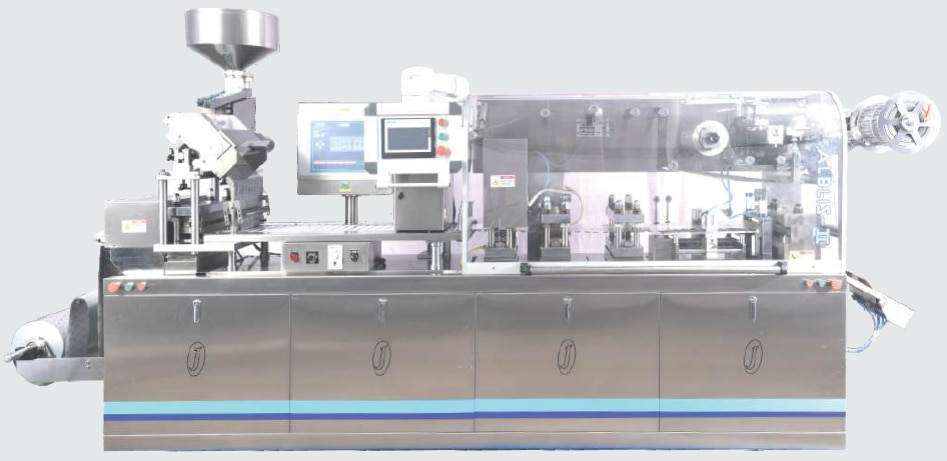 | Blister Packing Machines Automatic Flat Plate Blister Packing Machine ALBLIS-II ₹1 Automatic Flat Plate Blister Packing Machine (Ideal for Commercial High Output batches): ALBLIS is a versatile ‘Flat Plate’ intermittent motion... View product → |
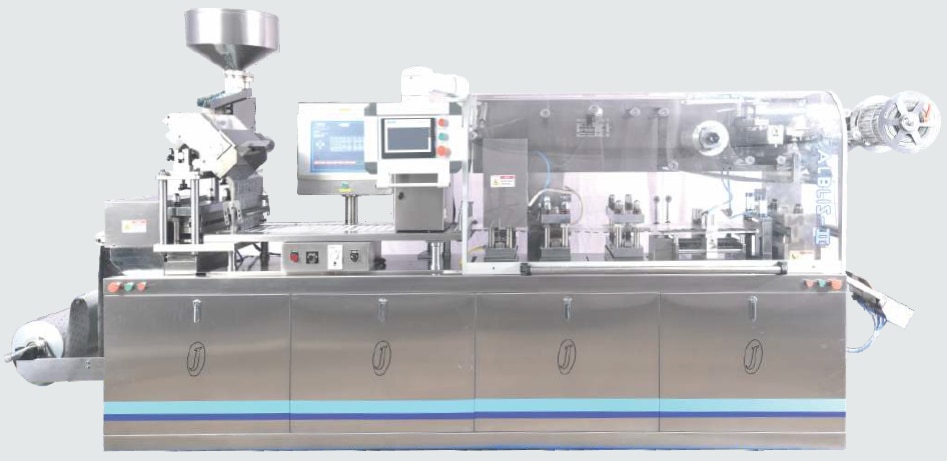 | Blister Packing Machines ALBLIS-II: Automatic Flat Plate Blister Packing Machine ₹1 Automatic Flat Plate Blister Packing Machine (Ideal for Commercial High Output batches): ALBLIS is a versatile ‘Flat Plate’ intermittent motion... View product → |
Frequently asked questions
How do you know whether your production profile fits ALBLIS-II?
Compare your batch size, shifts per day, required saleable packs per minute, product dimensions, cavity count and acceptable changeover time with the machine’s proven performance.
What must export buyers confirm for Alu-Alu blister packs?
Confirm the product’s dimensions, shape, feeding method, cavity layout, foil specifications, sealing requirements and pack integrity tests before approving the machine.
Which ALBLIS-II options affect reliability and validation?
Review options for product feeding, format changes, rejection, machine monitoring, coding, vision inspection, documentation and validation support because each affects repeatability and records.
When is a flat plate machine better than a rotary blister machine?
Choose flat plate when intermittent production, format flexibility, controlled batches or product handling priorities outweigh the higher continuous output of a rotary machine.
What should an export quotation include beyond the machine price?
Ask for tooling, format parts, utilities, commissioning, operator training, validation documents, spare parts, packaging, freight, insurance, delivery terms, taxes and after-sales support.