
The purchase makes sense when your production mix rewards flexible format changes more than maximum continuous speed. By comparing batch volume, SKU count, tooling, feeding, material requirements, validation and service support, you can decide whether the machine fits your operation or whether a rotary, servo-driven or different flat-plate line is the better investment.
Key takeaways
- Choose flat-plate technology for flexible low- to medium-volume production.
- Compare ALBLIS-I, ALBLIS-II and 350 by format, feeding and actual output.
- Confirm material compatibility from forming web through sealing and finished-pack inspection.
- Ask for tooling, qualification, service and changeover details before buying.
When a flat-plate machine earns its place on your line
A flat-plate machine earns its place when you run low- to medium-volume pharmaceutical, cosmetic or food batches, change formats frequently and value flexibility more than maximum speed.
If you are asking “is an alblis flat plate blister machine for worth buying”, start with your production profile: batch size, annual volume, SKU count, format changes, required good blisters per hour and available operators.
| Production situation | Flat-plate fit | Better alternative |
|---|---|---|
| Many SKUs and short or medium batches | Strong fit; tooling and changeovers matter | Rotary equipment only if demand justifies it |
| One or two formats running continuously | Weaker fit; intermittent motion limits sustained output | Rotary or continuous-motion servo line |
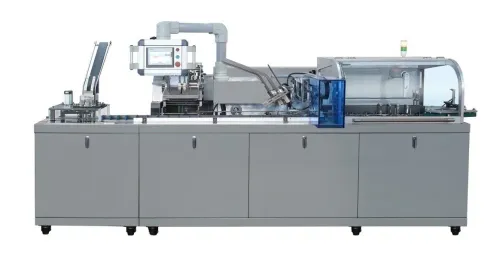
| Automatic cartoning is essential | Confirm an integrated downstream system | Automatic blister-cartoning line |
| Few operators available | Risky if feeding, inspection or packing stays manual | More automated line |
Do not calculate capacity from strokes per minute alone. Each cycle includes dwell time for forming, feeding and sealing, plus indexing stroke, cavity count, feeder reliability, cleaning, web splices, rejects, stoppages and changeovers. Divide actual saleable output by the shift time to obtain good blisters per hour.
Compare the annual labour, tooling, downtime and changeover costs with the purchase price. Buy when flexibility offsets those costs and product-filled trials prove the required output; choose another machine when continuous high volume, unattended operation or integrated cartoning matters more.
ALBLIS-I, ALBLIS-II and 350: what to compare before accepting a quote
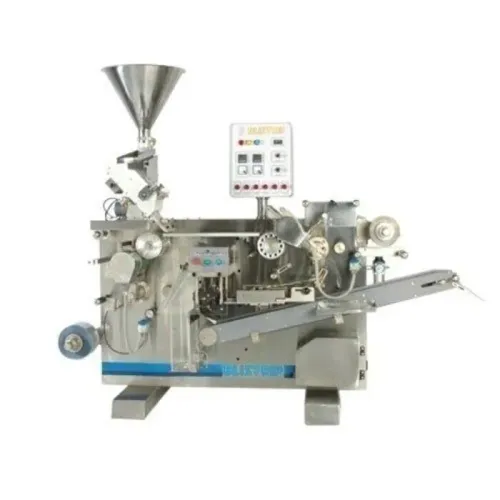
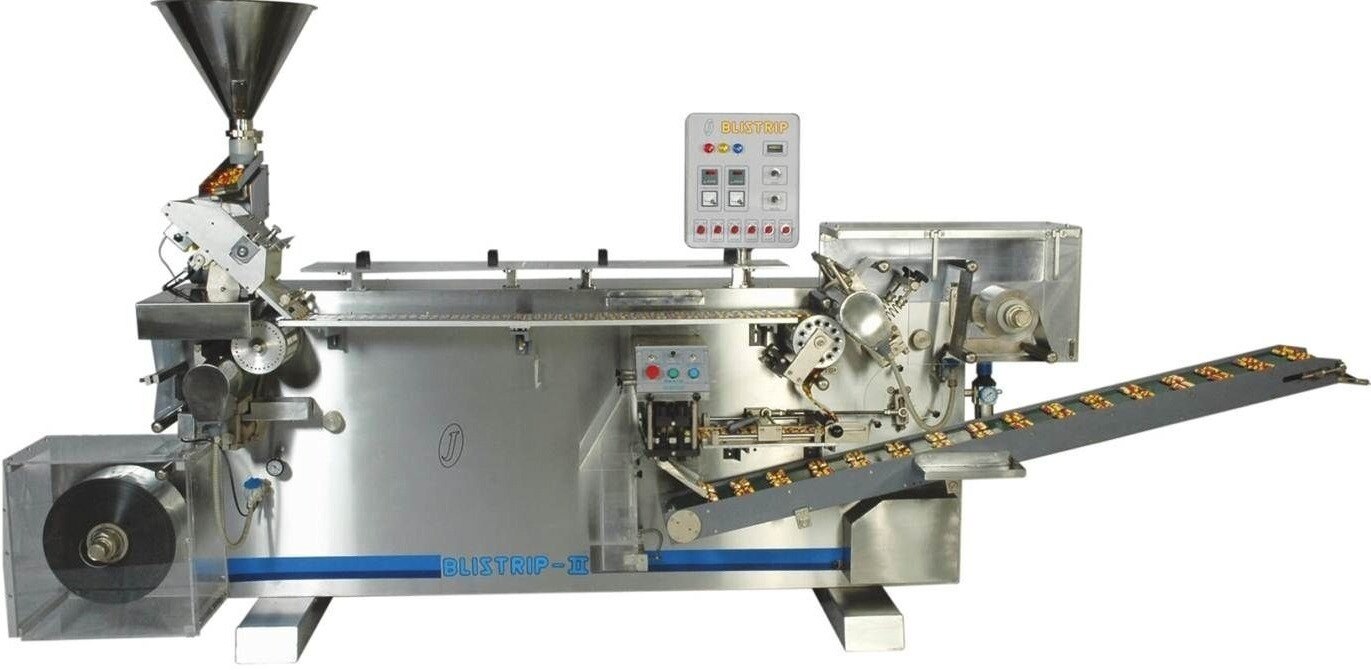
ALBLIS-I suits development, pilot batches and small-batch work; ALBLIS-II is the stronger candidate for sustained commercial production. Treat those as purchasing roles, not specifications. An Alblis flat plate blister machine comparison requires written, format-specific values.
“350” does not prove capacity. The Alblis 350 blister machine name could refer to web width, forming length, forming width, tooling size or another dimension. Require the original datasheet to define it, including trim margins, because a wider web can still produce fewer saleable blisters.
Ask the supplier to state:
- Maximum web width, usable forming area, maximum forming depth and indexing pitch
- Sealing area, cavity count per stroke and rated good output on your blister format
- Installed power, compressed-air demand, footprint, weight and complete changeover time
| Option | Short- and long-run fit | Speed, waste, tooling and operating trade-offs |
|---|---|---|
| Flat plate, ALBLIS-I | Development, pilot and short runs | Lower speed; usually lower tooling, floor-space and maintenance burden, with faster changes |
| Flat plate, ALBLIS-II | Repeated commercial production | More output, but verify feeder reliability, waste and good blisters per hour |
| Rotary or continuous-motion servo | Long, high-volume runs | Higher speed and lower unit cost; higher tooling, floor-space and maintenance demands |
| Other automatic flat plate blister machine options | Flexible intermediate volumes | Compare dwell, indexing, cavity count, changeover time, feeding, inspection and cartoning scope |
Compare annual changeover hours, tooling cost and labour—not strokes per minute alone.
Material choice and the complete path from web to finished blister
A blister line must do more than make pockets and press on foil. Confirm the complete path: unwinding, web guiding, forming, product feeding, sealing, batch and expiry coding, perforation, punching, scrap removal and inspection.
The quotation must mark each stage as built in, optional or separate equipment; a coder, vision system, discharge conveyor or cartoner may not be included.
| Web choice | Protection and process | Main risks to check |
|---|---|---|
| Cold-formed aluminium for Alu-Alu | Highest barrier against moisture, oxygen and light; suits sensitive products | Higher material cost, foil cracking, limited pocket shape and depth, and poor fit for tablets or capsules that need generous forming space |
| PVC, PVC/PVDC or similar for PVC-Alu | Lower cost; thermoforming creates useful pocket shapes and depths | Heating, cooling, seal temperature and product sensitivity require a defined recipe |
A PVC trial does not qualify PP, PET, high-barrier laminates or cold-form aluminium. Obtain material-specific settings for heater zones, plug assist, cooling and dwell.
Run product-filled trials, not only empty cavities. Dust, proud tablets, wrinkles, platen pressure, lacquer, dwell and the base-web/lidding-foil pairing can destroy seal integrity. Confirm missing-product detection, reject segregation and coding legibility, then test seals with a suitable method such as ASTM F88/F88M, ASTM F1929 or ASTM F2096.
Feeding, tooling and inspection determine whether rated output is real
Rated output is real only when the feeder maintains correctly positioned, undamaged products in every pocket. Run trials with tablets, capsules, softgels and irregular products from your actual production lot, not empty cycles.
- Challenge feeding with normal dust, static, friability, dimensional variation, multiple sizes and a low hopper level. Record misfeeds, chipped products, orientation failures, stoppages and good blisters per hour.
- Obtain written reject logic: does missing-product detection stop the machine or send the blister to a segregated reject bin? Confirm that a failed camera or reject actuator creates a controlled fault rather than allowing unchecked product through.
- Specify inspection coverage for empty pockets, chipped products, wrong colour or shape, foil defects, poor seals and web-registration errors. Confirm which defects vision detects and which require a separate seal or leak test.
- Before ordering, provide approved product drawings and samples, obtain the cavity-layout drawing, run product-filled trials, measure first-off approval time and agree good-output and reject-rate limits.
Tooling cost and lead time depend on more than the machine name. The quotation must list forming and sealing plates, cavity layout, blister length and width, maximum depth, trim margins, spare sets, changeover tools and recipe recall, with each cost and delivery time stated. Ask how cleaning and format changes affect first-off approval.
Make acceptance tests construction-specific. Use ASTM F88/F88M for seal strength, ASTM F1929 for dye penetration where suitable, or ASTM F2096 for gross leaks; define the sample size, pass limit and response to failure before purchase.
Service, qualification and the final buy-or-walk-away test
A purchase survives scrutiny only when service evidence, qualification records and good-output data sit beside the quotation. A strokes-per-minute figure cannot predict downtime, rejects or release delays.
1. Audit the support package before ordering. Name the local installation personnel, response-time commitments, stocked critical spares, remote-support method and calibration assistance. Request electrical drawings, PLC and HMI backup files, software version control and references running the same model, material combination and product type.
For Jicon Technologies Pvt Ltd, being an ALBLIS machine manufacturer in Thane matters only if these records and people are available.
2. Put data integrity into the specification. Require recipe access control, audit trails, alarm history, routine data backup and protection against unauthorised changes. Record critical process parameters, user permissions and restore testing rather than accepting “PLC controlled” as evidence.
3. Define hygienic construction in examinable terms: weld finish, elastomer grade, cleanability, lubrication points, replacement procedure and every part that can retain powder or shed particles. A stainless-steel grade alone does not answer those questions.
4. Build qualification around EU GMP Annex 15 where applicable, with documented IQ, OQ and PQ responsibilities. Require packaging and labelling procedures that prevent mix-ups and contamination under 21 CFR Part 211.130 when relevant.
5. Buy only after a product-filled acceptance run measures good blisters per hour after rejects, stoppages, web splices, cleaning and changeovers. Walk away if changeovers remain uncontrolled, service coverage is vague or the supplier cannot show repeatable output for your format and product.
Related products
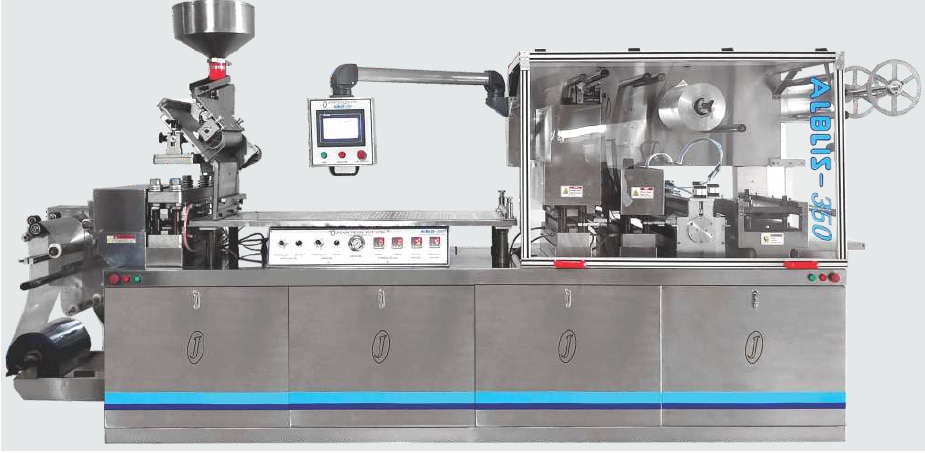 | Blister Packing Machines Automatic Flat Plate Blister Packing Machine ALBLIS-350 ALBLIS-350 is a versatile ‘Flat Plate’ intermittent motion automatic blister packing machine that can produce Alu-Alu blister packs by cold forming... View product → |
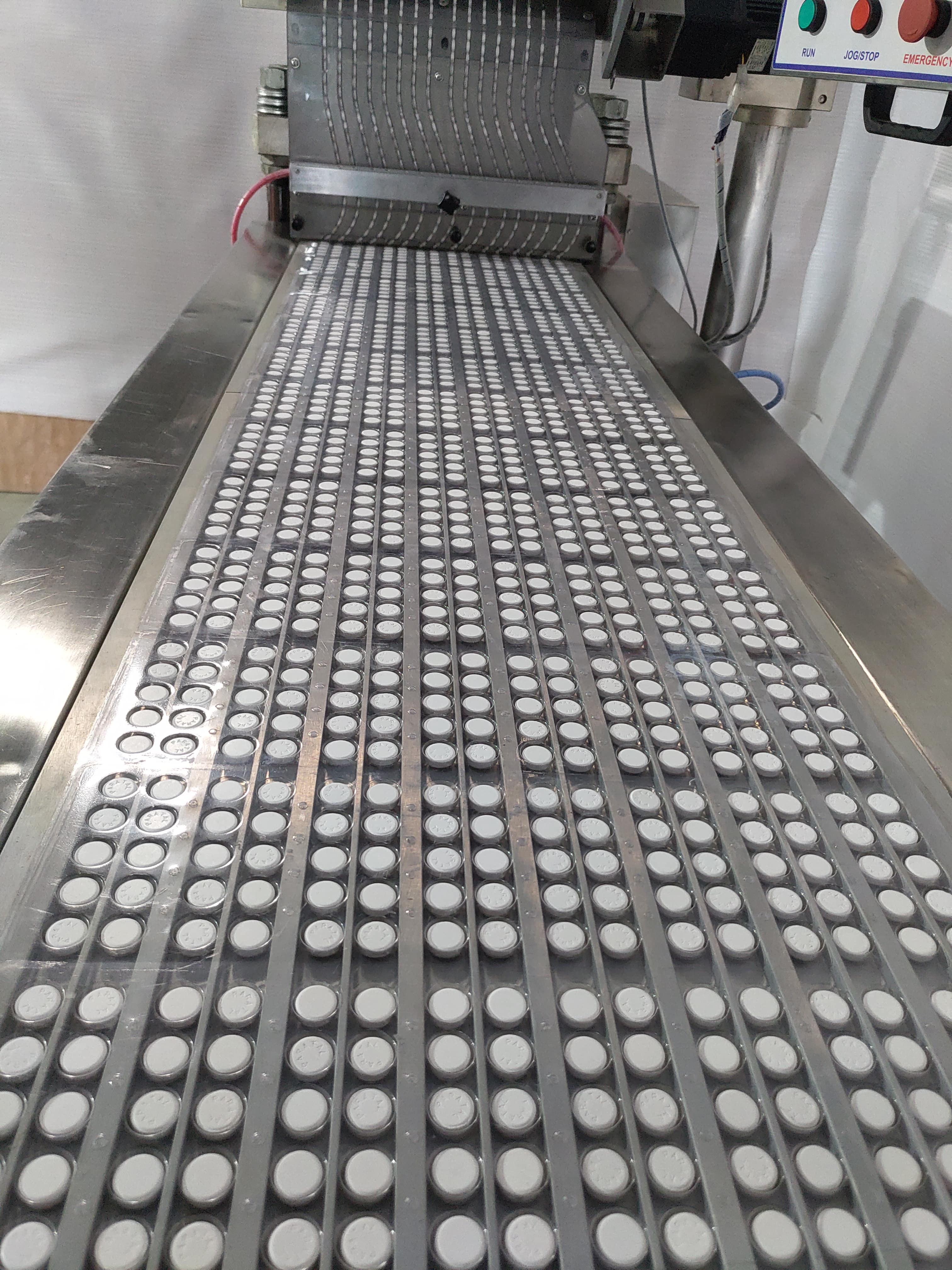 | Blister Packing Machines ALBLIS: Automatic Flat Plate Blister Packing Machine ALBLIS is a versatile ‘Flat Plate’ intermittent motion automatic blister packing machine that can produce Alu-Alu blister packs by cold forming... View product → |
Frequently asked questions
When is a flat-plate blister machine worth buying?
It earns its place when you run low- to medium-volume batches, change formats frequently and value flexibility over maximum speed.
What should you compare between ALBLIS-I, ALBLIS-II and 350?
Compare the quoted format range, rated and usable output, feeding method, tooling scope, inspection provisions and changeover requirements.
Which materials and process stages must the machine handle?
Check compatibility with your forming web and lidding material, then review the complete path from web forming and product loading to sealing, coding, cutting and finished-pack inspection.
What should you verify before accepting an Alblis machine quote?
Request details on tooling, feeder performance, inspection, factory acceptance testing, installation qualification, operational qualification, training, spare parts and response times.
Related products
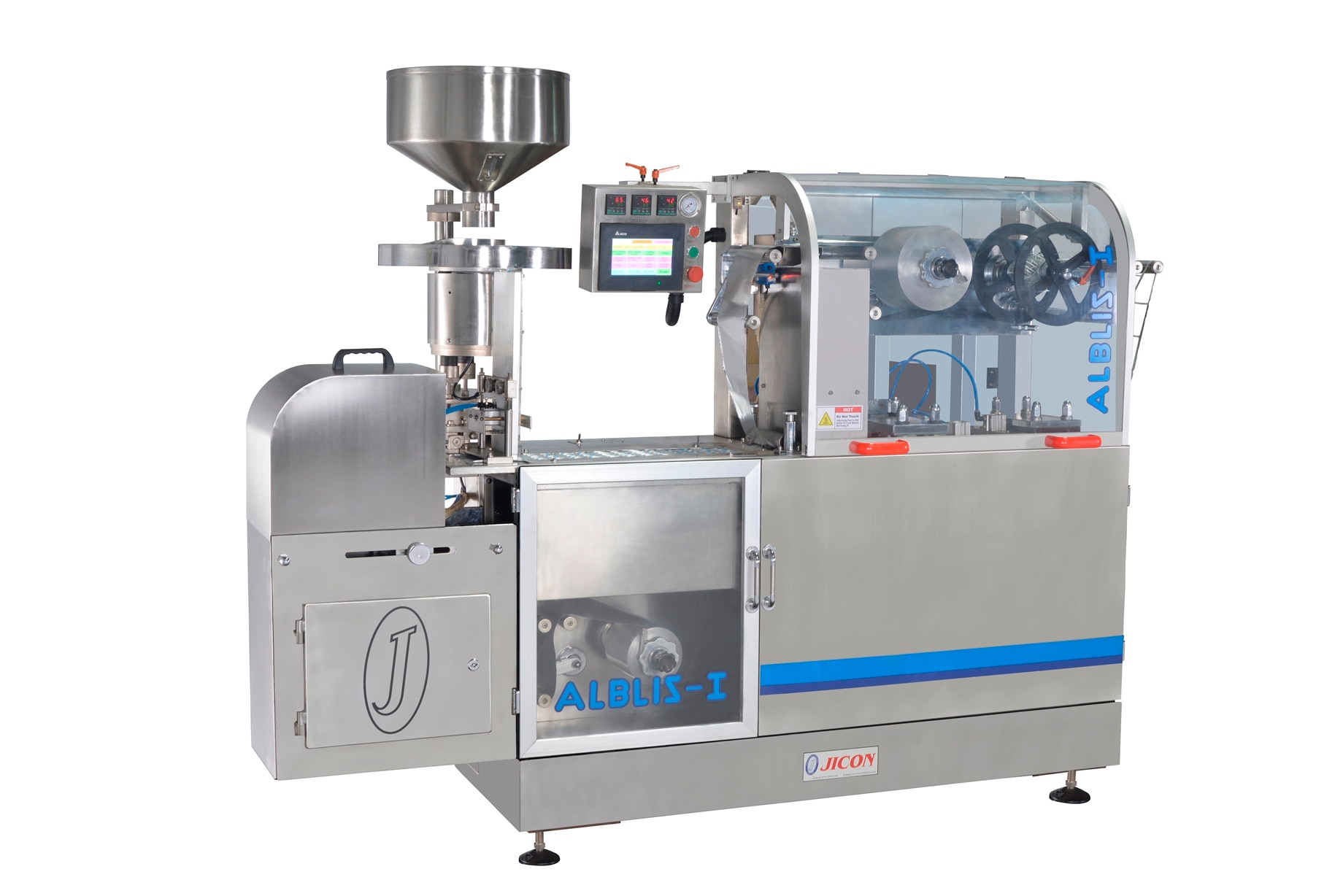 | Blister Packing Machines ALBLIS-I: Automatic Flat Plate Blister Packing Machine Flat Plate Blister Packing Machine Ideal for R&D, pilot plants and small batch production: ALBLIS is a versatile ‘Flat Plate’ intermittent motion... View product → |
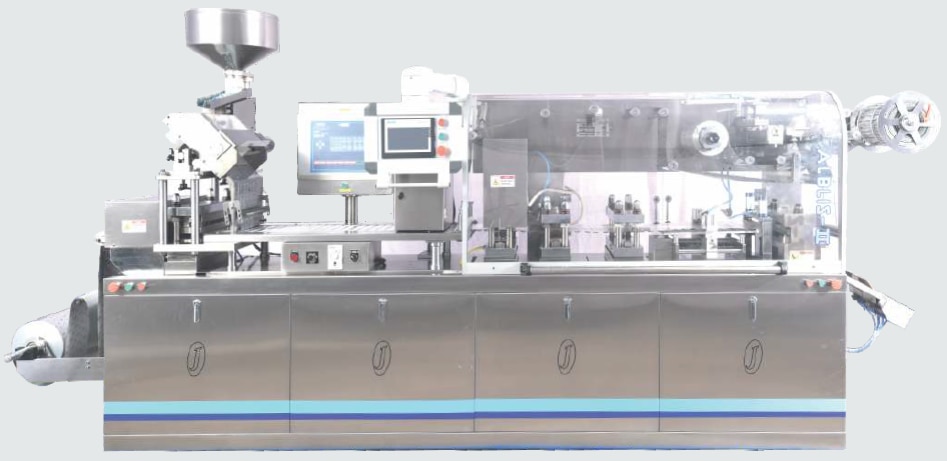 | Blister Packing Machines Automatic Flat Plate Blister Packing Machine ALBLIS-II ₹1 Automatic Flat Plate Blister Packing Machine (Ideal for Commercial High Output batches): ALBLIS is a versatile ‘Flat Plate’ intermittent motion... View product → |
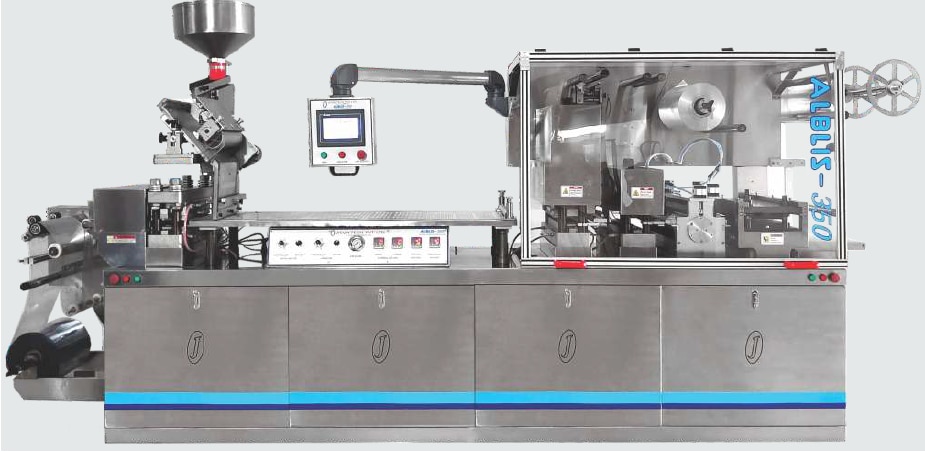 | Blister Packing Machines ALBLIS-350: Automatic Flat Plate Blister Packing Machine ALBLIS-350 is a versatile ‘Flat Plate’ intermittent motion automatic blister packing machine that can produce Alu-Alu blister packs by cold forming... View product → |
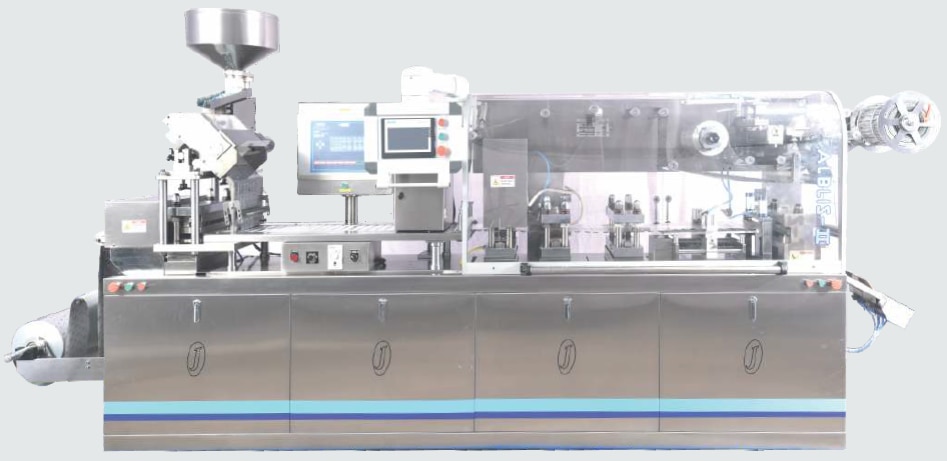 | Blister Packing Machines ALBLIS-II: Automatic Flat Plate Blister Packing Machine Automatic Flat Plate Blister Packing Machine (Ideal for Commercial High Output batches): ALBLIS is a versatile ‘Flat Plate’ intermittent motion... View product → |