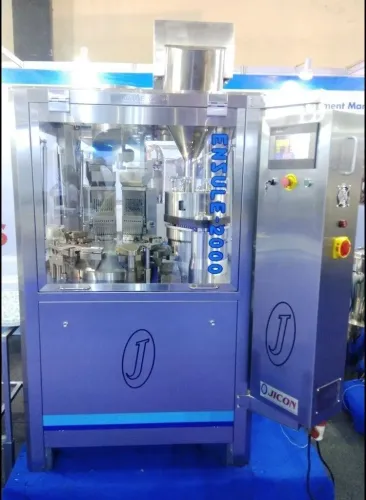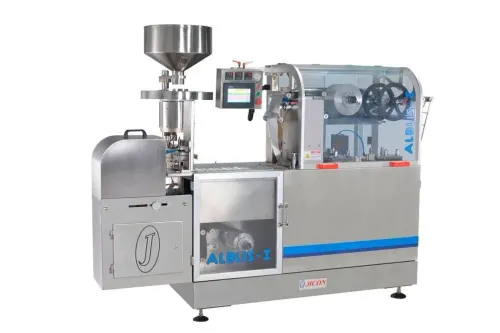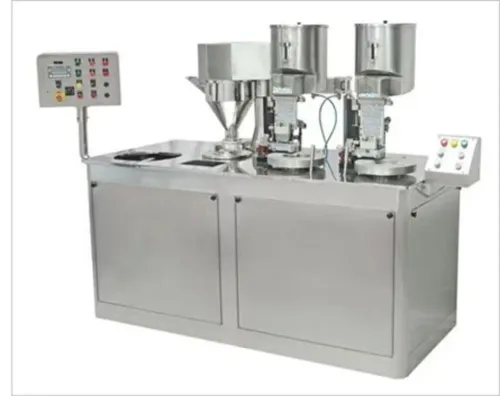

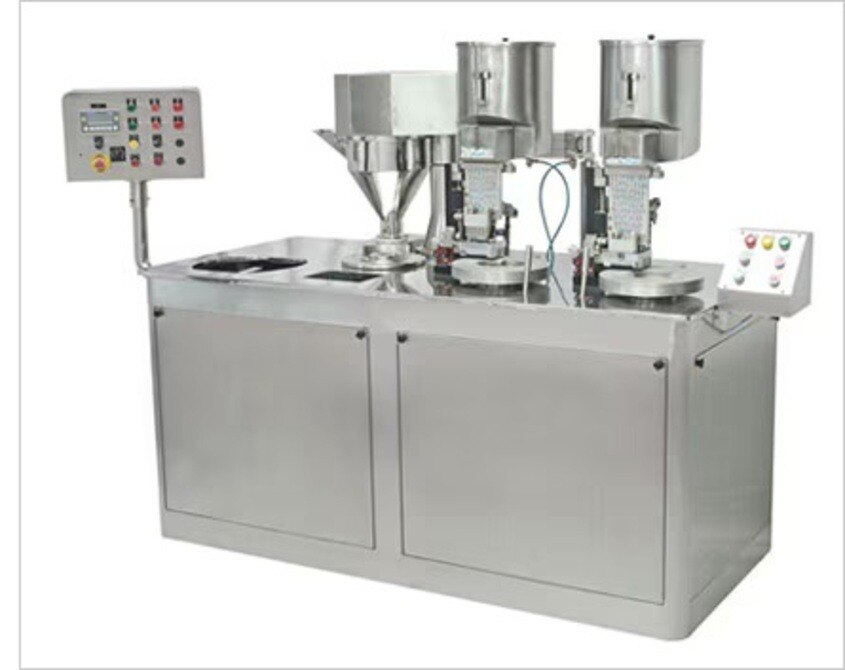
A quotation marked only “SACF” leaves critical questions unanswered: capacity, dosing method, tooling, utilities, operator workload and acceptance criteria. By the end, you can turn that label into a comparable purchase specification and identify what the manufacturer must supply beyond the machine frame.
Key takeaways
- Define every powered and manual operation in the SACF quotation.
- Request product trials using your powder, capsule size and target fill weight.
- Specify utilities, cleaning access and qualification documents before comparing prices.
- Include installation, training, spares and response times in the service package.
What must a SACF specification sheet state?
A quotation must expand SACF as “semi-automatic capsule filling machine” and state which operations are powered and which remain manual. SACF is not a controlled classification, so the label alone cannot support comparison.
| Parameter | What the sheet must state | Required basis |
|---|---|---|
| Output | Capsules per hour, capsule size, formulation, dosing method, operator count and assumed reject rate | Demonstrated output, not only maximum cycles |
| Dosing | Dosing range or fill-volume range; dosing positions and arrangement | Buyer’s product or justified surrogate |
| Fill weight | Variation, target weight, sample size, sampling frequency and reject limit | Defined test conditions |
| Utilities | Voltage, frequency, installed power, compressed-air pressure and consumption, vacuum, dust extraction and connection sizes | Site supply and containment design |
| Machine | Overall dimensions, net weight and usable footprint | Installed layout, including access |
| Materials | Every supported capsule size, shell material, product-contact grade such as 316L stainless steel, surface finish and elastomer compatibility | Material certificates and cleaning requirements |
A headline hourly rating is incomplete without its capsule size, formulation, dosing method, operator count and reject assumptions. Ask for a run using your product, or a documented surrogate with matching bulk density and flow behaviour, plus a fill-weight report showing capsule-to-capsule variation.
Also demand the exact connection sizes and any size-specific tooling; otherwise a machine that fits your floor may not fit your process.
How do SACF I and SACF-II differ in operation and supply?
SACF I and SACF-II labels do not reveal the machine’s capabilities. Compare the powered stations, manual tasks and included format set instead.
| Configuration | Confirm from the manufacturer |
|---|---|
| SACF I | Station layout, dosing positions, cycle basis, dosing arrangement, operator count, rated capacity and demonstrated capacity |
| SACF-II | The same figures, with a step-by-step statement of what is powered and what remains manual |
Require the supplier to mark each stage: loading and orienting empty capsules, separating cap from body, dosing powder, pellets or granules, closing the shells, and unloading and collecting filled capsules. Do not accept “semi-automatic” as the answer. The operator count and exact hand movements determine real output, damaged-shell rates and fill-weight consistency.
Ask for a capsule-size matrix naming every supported size, shell material and complete change-part set:
- Capsule orientation or tooling plates
- Cap-and-body separation components
- Dosing disc or chamber
- Tamping or dosing components
- Closing plates
- Seals and adjustment gauges
Confirm whether one complete format set is included or priced separately. Ask whether changing size requires tools, calibration, a second operator or a documented setup check.
A credible comparison for sacf semi automatic capsule filler specifications in thane or semi automatic capsule filling machine details must separate maximum mechanical cycles from manufacturer-certified output on your product. Obtain rated and demonstrated capsules-per-hour figures for each configuration, tied to capsule size, formulation, dosing method, operator count and reject assumptions.
What dosing method and product trial determine fill performance?
“Accuracy” is not a universal percentage. It means the average fill weight and the capsule-to-capsule variation achieved with a named formulation under recorded test conditions, so a credible semi automatic capsule filling machine details sheet must show both.
1. Require the supplier to name the dosing principle: dosator, tamping-pin assembly, auger or volumetric dosing. Ask how the operator sets dose through disc position, powder-bed height, tamping-pin penetration, auger speed or another identified control.
2. Match the method to the product. Free-flowing powders, cohesive powders, pellets and granules behave differently as bulk density, particle-size distribution, flowability, moisture sensitivity, electrostatic behaviour, aeration, segregation, lubrication and dust generation change. Granulation, conditioning or a suitable lubricant may be needed before trial; excessive lubrication can also alter flow and dissolution.
3. Confirm whether the system handles mixed fills, multiple materials, mini-tablets or liquid-filled hard capsules. A machine called a capsule filler does not automatically support these formats, and unsuitable powder may bridge, segregate or produce erratic doses.
4. Insist on a trial using the target fill weight and your product, or a justified surrogate. Record the sample size, sampling frequency, allowable variation and reject criteria, then report the mean dose separately from capsule-to-capsule variation. Ask for results across start-up and steady running, because a good average can conceal unacceptable individual rejects.
The supplier should also state how the trial controls aeration, dust and powder replenishment. Without those conditions, an advertised accuracy figure cannot predict production performance.
What utilities, cleaning features and qualification documents come with the machine?
Before installation, obtain a utility and safety schedule, not a brochure: electrical load and voltage/frequency, compressed-air pressure and consumption, vacuum requirement, extraction points, dust classification, connection sizes, environmental limits, guards and interlocks. Pharmaceutical wording does not establish combustible-dust suitability. Require a statement on product recovery and containment.
Make cleaning and changeover supply deliverables. Specify removable product-contact parts, tool-free or tool-assisted disassembly, access to powder traps and dead spaces, cleaning instructions, inspection points and replacement parts. Poor access around dosing and capsule-separation areas leaves residue that can cause carryover.
Request this qualification and operating package:
- Equipment drawings, operating manuals and parts lists
- Electrical and pneumatic schematics
- Calibration information where applicable
- 316L stainless-steel material certificates for product-contact parts
- Preventive-maintenance schedules and recommended replacement parts
- Cleaning procedures with inspection points
- Factory-test records and agreed acceptance criteria
Separate FAT from SAT. FAT at the manufacturer’s site can check speed ranges, dosing adjustment, capsule separation, closing, rejects, interlocks and document completeness. SAT at your site checks utilities, installation, guarding and product performance.
Use these records within a GMP equipment-qualification plan. EU GMP Annex 15 expects qualification and acceptance testing to be planned and documented; delivery of a machine or a persuasive brochure is not qualification evidence. Ensure the supplier records deviations, corrective actions and approval before release for routine production.
What should a Thane buyer include in the quotation and service package?
A Thane quotation is complete only when it covers the machine’s supplied operation, acceptance and support—not just its frame and motor. Require the selected SACF I or SACF-II configuration, exact capsule sizes, complete size-specific tooling, 316L product-contact certificates, utility connections, electrical conformity and dust-control provisions.
- Confirm the supply: orientation plates, separation parts, dosing disc or chamber, tamping components, closing plates, seals and adjustment gauges; state whether each format set is included or separately priced.
- Define FAT and SAT protocols. FAT should check dosing adjustment, separation, closing, rejects, interlocks and documents; SAT should check the Thane site’s utilities, guarding, installation and product performance.
- Include installation, calibration or service support, preventive-maintenance instructions, manuals, schematics and a recommended spare-parts list covering seals, springs, sensors and contact parts.
- Make operator training contractual: capsule orientation and separation, dosing adjustment, damaged-shell handling, safe jam clearing, cleaning and changeover.
The quotation must state installation response time, breakdown response time, spare-parts availability and whether the exact configuration is available for the intended Thane site. A search for capsule filling machine manufacturer sacf for specifications in thane, or capsule filling machine manufacturer sacf, is therefore a service question, not a performance claim.
Evaluate Jicon Technologies Pvt Ltd on that complete technical and support package, rather than on the SACF label alone.
Related products
 | Capsule Filling Machines Semi Automatic Capsule Filling Machine SACF ₹1 SACF I & SACF -II (Semi Automatic Capsule Filling Machines) are designed to fill hard gelatin capsules of all sizes with powders, pellets or granular... View product → |
 | Capsule Filling Machines SACF: Semi Automatic Capsule Filling Machine ₹1 SACF I & SACF -II (Semi Automatic Capsule Filling Machines) are designed to fill hard gelatin capsules of all sizes with powders, pellets or granular... View product → |
Frequently asked questions
What must a SACF specification sheet state?
It must expand SACF as semi-automatic capsule filling machine and identify capsule sizes, output basis, dosing method, fill-weight controls, powered operations and manual steps.
How do SACF I and SACF-II differ in operation and supply?
Compare the two models by checking which operations are powered, how capsules and powder are loaded, the indexing sequence, output basis and what tooling or accessories each quotation includes.
What dosing method and product trial determine fill performance?
Match the dosing method to the product’s flow and density, then run a trial with your powder, capsule shell, target fill weight and sampling procedure.
What utilities, cleaning features and qualification documents come with the machine?
Confirm electrical supply, compressed-air needs, contact-part materials, changeover access, cleaning instructions, manuals, drawings, test records and installation or qualification support.
What should a Thane buyer include in the quotation and service package?
Request the complete machine configuration, tooling, taxes and delivery terms, installation, operator training, spare parts, warranty coverage, preventive maintenance and service response times.