
A restart after a power failure, utility interruption or maintenance stop can affect product quality long after the equipment switches back on. You will learn how to classify the event, protect affected materials, verify the plant and utilities, run a controlled trial, and release production with documented evidence.
Key takeaways
- Place raw materials, bulk ointment and packaging on hold before restarting.
- Classify the failure before choosing a recovery or batch-disposition procedure.
- Check heat, mixing, vacuum, seals, utilities and product-contact surfaces.
- Release product only after testing, packaging inspection and documented investigation.
Classify the downtime before touching the batch
A power interruption lasting 20 minutes is not equivalent to a failed homogeniser or an HVAC shutdown. Start ointment manufacturing plant recovery by placing exposed raw materials, bulk ointment, partially filled containers and packaging components on hold; do not resume from the last operating screen.
1. Record the stop time, affected rooms, equipment, batches and utilities. Identify whether the event involved power, compressed air, HVAC, purified water, software, mechanical failure or contamination.
2. Reconstruct the exposure window. Check temperature, humidity, environmental monitoring, cleaning status, utility alarms and the last documented process step. Compare exposed material with its validated hold time; if that time is unknown or exceeded, send it for quality evaluation or disposal rather than guessing.
3. Classify the event as routine, maintenance-related, deviation-triggering or a potential loss of validated state. A sterile ointment process requires additional review of sterilisation or depyrogenation status, aseptic conditions, personnel and material flows, and container-closure integrity.
4. Keep maintenance isolated under lockout/tagout until hazards and stored energy are controlled. Protect product-contact parts from metal fragments, lubricant, debris and unapproved gaskets or seals.
5. Require documented equipment release, line clearance, cleaning, inspection, calibration and utility checks before a controlled empty or trial run. A successful trial does not release pre-shutdown bulk; QA must disposition every affected batch.
Use approved recovery records for ointment manufacturing for plant maintenance after downtime: P&IDs, alarm and interlock descriptions, validated ranges, cleaning instructions, spare-parts lists and post-maintenance checks. Missing records warrant deviation review before restarting.
Follow a controlled restart sequence from isolation to trial run
Do not energize the ointment line from its last known operating state. Put raw materials, exposed bulk, opened containers, packaging components and in-process batches on hold while you reconstruct the outage and assign responsibility for release.
1. Complete lockout/tagout before maintenance enters the equipment. Isolate electrical, steam, compressed air, vacuum, hydraulic and other stored energy sources, then verify zero energy. Record completed ointment plant maintenance, remove tools and temporary barriers, and obtain the maintenance supervisor’s release.
2. Inspect and clean before restoring service. Check guards, shaft seals, scraper blades, homogenizer heads, hoses, valves, vacuum vessels, filters, gaskets, lubrication points and temporary repairs. Protect product-contact surfaces from metal fragments, excess lubricant and unapproved seal materials; document line clearance and cleaning.
3. Restore utilities and verify instruments. Confirm power, purified water, compressed air, steam, vacuum, HVAC temperature and humidity, alarm functions, interlocks and calibration status against approved operating ranges. A successful switch-on is not an equipment release.
4. Run the equipment empty under controlled conditions. Check rotation, heating and cooling response, mixing, vacuum hold, transfer flow, noise, vibration and leak-free operation. Stop if an alarm, abnormal temperature or unstable vacuum appears.
5. Release equipment only after maintenance and quality checks are complete. Conduct a controlled trial with approved material, then reconcile quantities and record results.
6. Keep affected product on hold until the quality unit completes the deviation review and disposition. Sterile ointments also require review of sterilization or depyrogenation status, aseptic conditions and container-closure integrity.
Verify heat, mixing, vacuum and product-contact equipment
A restart is not safe because the motor turns on. Confirm that heat, mixing and vacuum systems can reproduce the validated process window, then document the result before adding material. Many ointment cream plant problems begin with reheating, extended residence or uncontrolled cooling, which can change viscosity, emulsion structure, droplet size and preservative distribution.
| Area | Verify before trial | Stop if |
|---|---|---|
| Heating and cooling | Calibrated temperature probes, jacket response, product temperature and heating/cooling rates match the approved batch record | The product overheated, cooled too quickly or remained outside its permitted hold time |
| Mixing and homogenising | Agitator speed, torque, scraper blades, shaft seals and homogeniser head operate without abnormal noise, vibration or leakage | Blades are damaged, torque is unstable or the homogeniser cannot reach its qualified speed |
| Vacuum | Vessel, lid, valves, hoses, seals, gauge and vacuum pump hold the specified vacuum without air ingress or excessive foaming | Vacuum decays, foam enters the line or the gauge reading is unreliable |
| Product-contact parts | Cleaning status, filters, gaskets, transfer hoses, lubrication points and temporary repairs are recorded and acceptable | Residue, damaged elastomers, loose parts or an unapproved repair is found |
Run a water or approved placebo trial to confirm transfer, mixing, vacuum break and discharge before processing ointment. Compare the actual profile with validated limits rather than relying on final appearance.
For sterile ointment, also verify sterilisation or depyrogenation status, aseptic-area conditions and any loss of validated state during the shutdown. Recalibrate or requalify equipment when parts, controls, utilities, recipes or cleaning methods changed.
Investigate product and packaging before quality release
Do not release pre-shutdown bulk because an empty equipment trial passed. During ointment manufacturing plant recovery, place exposed raw materials, bulk ointment, in-process batches and packaging components on hold until QA reconstructs the outage window and reviews temperature, humidity, utilities, cleaning status and contamination risks.
- Identify each material by batch, vessel, location and exposure time. Compare the recorded conditions with the approved bulk hold time, storage temperature and humidity limits. A power interruption or maintenance shutdown does not extend a validated hold time; material outside those limits needs a documented quality-unit decision, not automatic rework.
- Review the deviation, maintenance record, cleaning status, calibration results and trial-run findings. Confirm that equipment release is separate from product release, because a clean, functional homogeniser does not prove the bulk remained suitable.
- Test or inspect affected bulk and in-process material against the approved specifications, including appearance, viscosity, assay, microbial limits and fill-weight impact where applicable. Dispose of or rework material only under an approved instruction.
- Before filling, complete line clearance; verify the tube, jar or sachet, artwork version, coding and serialization functions, fill-weight controls, and reconciliation of issued, used, rejected and returned components.
- For sterile ointments, document sterilization or depyrogenation status, aseptic-area environmental results, personnel and material flows, container-closure integrity and any loss of validated state. Nonsterile restart checks do not authorize sterile production.
- Record the decision for every batch and component: release, rework, reject or continue investigation. Link the rationale to the deviation and the ointment cream plant problems that caused the hold.
Use recovery records to prevent the next prolonged stop
A recovery packet turns the next outage into a controlled restart instead of a memory test. Record the downtime start and end, affected equipment, utility failures, environmental conditions, batch numbers, temporary repairs and every disposition decision.
Require these controlled records from the ointment manufacturing plant manufacturer:
- Equipment P&IDs, electrical drawings and instrument lists, with revision dates.
- Alarm and interlock descriptions, including the condition that trips each protection.
- Validated heating, mixing, vacuum, homogenisation and cooling ranges, plus bulk hold limits.
- Cleaning instructions, lubrication specifications and post-maintenance inspection points.
- Spare-parts lists, approved substitutes, change history and recommended post-maintenance checks.
Jicon Technologies Pvt Ltd can support a recovery file by identifying machine-specific checks for seals, scraper blades, homogeniser heads, hoses, valves, filters, gaskets and vacuum vessels. Ask for a signed checklist that separates equipment release, cleaning release, calibration verification, empty trial approval and product disposition.
Your ointment plant maintenance record must show who inspected each item, what they found and which instrument or part was replaced. Attach calibration certificates and cleaning records; written procedures without completed evidence cannot prove readiness.
Have the quality unit review any change from the approved configuration, including a temporary bypass, altered control setting or substitute gasket. That review determines whether the event needs a deviation, risk assessment, requalification or validation update before the next prolonged stop.
Related products
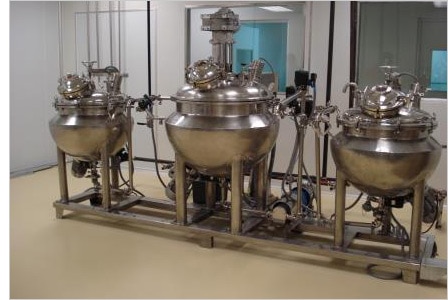 | Process Equipments Ointment Cream and Toothpaste Manufacturing Plant Automatic Ointment / Cream Manufacturing Plant is used to prepare medicated homogenised emulsion of Wax and Water to a particular formulation. View product → |
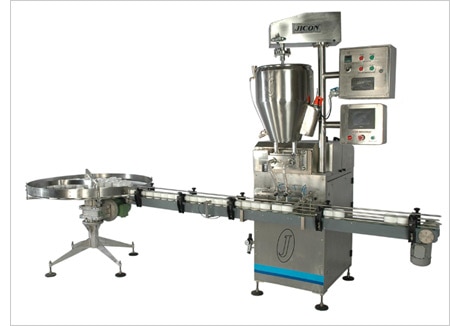 | Container Filling Machines Automatic Container Jar Filling Machine for Ointment and Others High speed automatic multi head container filling machine for filling cream, paste, ointment, wax polish, grease, jam, sauce etc. |
Frequently asked questions
What should you do first after ointment plant downtime?
Place exposed raw materials, bulk ointment, partially filled containers and packaging components on hold. Classify the interruption before touching the batch.
What equipment must you verify before restarting an ointment plant?
Verify electrical supply, HVAC conditions, heating and cooling, agitator and homogeniser operation, vacuum performance, seals, valves, transfer lines and product-contact surfaces.
How should you restart an ointment manufacturing plant after a shutdown?
Restore utilities under isolation controls, inspect equipment, confirm cleaning and line clearance, run an empty or water trial when appropriate, then introduce product under observation.
When can recovered ointment be released?
Release it only after quality review covers product testing, hold-time or temperature exposure, bulk homogeneity, container-closure integrity, fill weight, coding and the documented deviation investigation.
Related products
 | Container Filling Machines Semi Automatic Container Filling Machine A simple and sturdy semi-automatic container filling machine for filling cream, paste, ointment, wax polish, grease, jam, sauce etc. View product → |
 | Container Filling Machines Automatic Container Filling Machine High speed automatic multi head container filling machine for filling cream, paste, ointment, wax polish, grease, jam, sauce etc. View product → |