
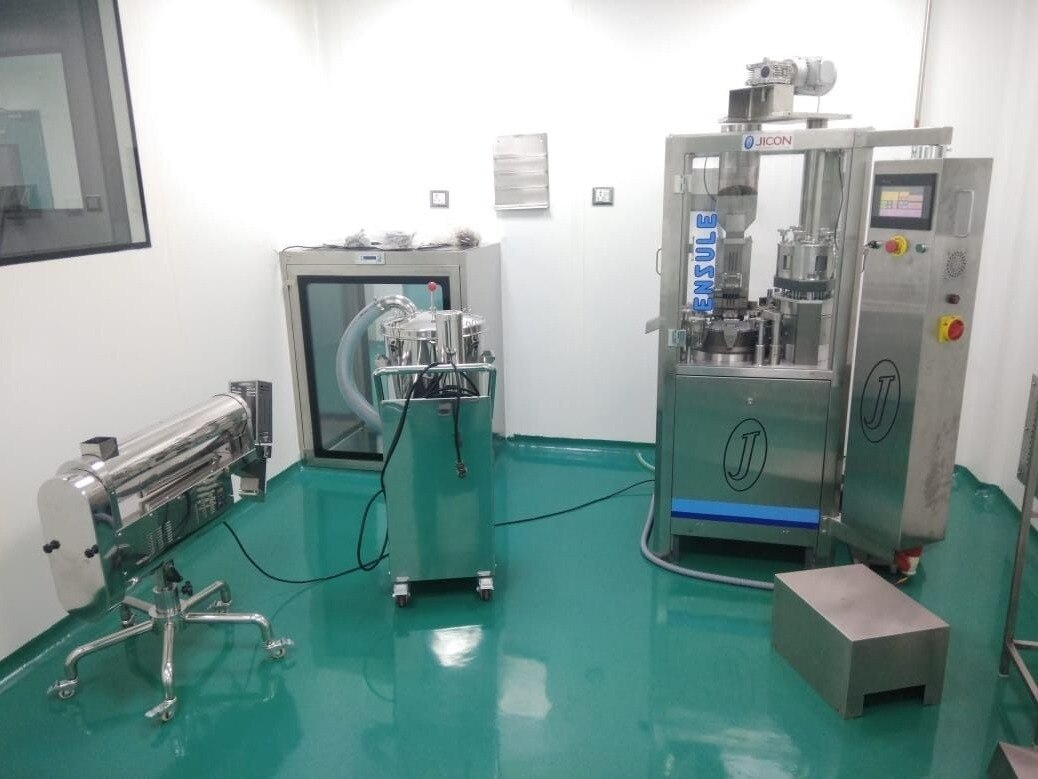
Choosing a capsule filler requires more than comparing advertised cycles per hour. You need to understand where the operator remains involved, how the formulation affects dose consistency, and when semi-automatic equipment gives a better production result than manual, laboratory-scale, or fully automatic alternatives.
Key takeaways
- Confirm whether the SACF machine includes dosing, separation, closing, dedusting and collection.
- Calculate output from cycles per hour, capsules per cycle and usable operating time.
- Test powder flow, fill-weight variation and capsule compatibility before purchase.
- Compare labour, changeover time and quality controls against manual and automatic filling.
How an SACF Capsule Filling Cycle Works
An SACF capsule filling machine converts operator-loaded empty hard capsules and powder into closed doses through a controlled sequence. SACF is commonly used for a semi-automatic capsule filler, not a universal equipment classification, so confirm whether the quoted machine includes dosing, capsule separation, closing, dedusting and collection.
- The operator loads empty capsules into the hopper or capsule tray, then replenishes capsules as the supply falls.
- The machine separates each cap from its body using vacuum, mechanical fingers or another separation mechanism. Poor shell moisture, brittleness or incorrect change parts can cause splits, telescoping and unseparated capsules.
- Capsule bodies move beneath the dosing station, where powder enters by a dosator, tamping pins or another metering system. The operator monitors powder level and removes visible clumps or foreign material.
- The machine returns caps to the filled bodies and applies closing pressure. It then discharges closed capsules for collection, inspection or downstream dedusting.
- The operator removes rejects, including empty, underfilled, damaged or unclosed capsules, and records stoppages and powder replenishment.
The phrase semi automatic capsule filling machine pharma usually describes this division of labour: the machine handles positioning and repeatable dosing, while people handle loading, replenishment, inspection and rejection. Output therefore depends on capsule loading frequency, powder flow, cleaning stops and operator speed—not just the stated machine cycle rate.
Open handling also demands dust extraction and containment for potent or sensitizing powders.
Why Formulation and Capsule Quality Control the Result
A SACF capsule filling machine gives consistent results only when the powder and capsule are compatible with its dosing method. Confirm the machine’s usable capsule sizes, dosing range, tooling, and powder-handling arrangement; “SACF” is not a globally standard equipment classification, so powder dosing, separation, closing, dedusting, and collection may not all be included.
The formulation must have controlled particle size, bulk density, moisture, flowability, cohesion, and electrostatic behaviour. A sticky or poorly flowing blend bridges in the hopper; a segregating blend produces dose variation even when the machine cycles correctly. Record the target fill weight and verify it across the full batch, not only at setup.
- Match capsule size and shell material, such as hard gelatin or HPMC, to the change parts and closing mechanism.
- Check capsule length, diameter, wall condition, moisture, brittleness, and cap-body fit; warped shells or weak locks create empty, split, or leaking capsules.
- Test the blend after transfer and hopper residence time, because vibration and replenishment can alter segregation and flow.
- Define acceptance limits for fill-weight variation, appearance, closure integrity, damaged capsules, and empty capsules.
| Property | Machine match to verify | Failure if mismatched |
|---|---|---|
| Powder flow and density | Dosing method, hopper, tooling, and fill range | Bridging, underfill, or variable weight |
| Particle size and cohesion | Feed path and compression or tamping settings | Rat-holing, sticking, or poor dose uniformity |
| Capsule size and shell | Change parts, guides, and closing station | Cracks, incomplete locking, or rejects |
| Moisture and electrostatics | Contact materials and cleaning controls | Adhesion, brittle shells, and difficult discharge |
These checks belong in the qualification and validation file for the capsule production equipment, not only in the operator’s setup notes.
How to Estimate Real Production Output
A nameplate speed is not your usable output. Calculate from completed cycles, operator loading time, powder replenishment, stoppages and rejected capsules.
1. Record the actual cycle rate during a representative run. Multiply completed cycles per hour by capsules filled per cycle, then multiply by scheduled operating hours. Use observed cycles, not the supplier’s maximum, because loading empty capsules, removing filled capsules and clearing interruptions reduce runtime.
2. Convert dose weight into powder demand. For example, 250 mg per capsule at 10,000 accepted capsules requires 2.5 kg of powder before accounting for process loss. Divide usable hopper capacity by powder demand per hour to predict refill frequency; a cohesive or poorly flowing powder can require more frequent intervention and produce slower cycles.
3. Apply the reject rate to gross output. Usable capsules equal gross capsules × (1 − reject percentage). Include capsules rejected for fill-weight variation, cracked shells, incomplete separation, poor closure and visible powder on the outside.
4. Add labour and changeover time to the calculation. A semi automatic capsule filling machine pharma operation can show a strong hourly rate during filling but deliver fewer capsules per shift when operators repeatedly load, inspect, clean and change products.
Keep this trial record with your capsule production equipment comparison: dose weight, powder consumption, refill interval, observed cycles, stoppage minutes, operator count and rejects. That is the output figure worth costing.
When SACF Is a Better Choice Than Manual or Automatic Filling
Choose a SACF capsule filling machine for development, clinical, orphan, and low-volume products where formats change more often than production runs. It reduces repetitive dosing and closing work without the capital cost of a high-speed automatic line, but the operator still loads capsules and powder, monitors dosing, removes rejects, and manages stoppages.
Base the decision on qualified output and labour hours, not advertised cycles per hour.
| Option | Labour and repeatability | Changeover and capital fit |
|---|---|---|
| Manual filling | Highest handling time and operator variation | Lowest investment; suitable for very small batches and early trials |
| SACF filling | Lower handling effort with repeatable machine-controlled dosing, but operator-dependent loading and inspection remain | Faster changeovers and lower capital exposure for multiple products and modest volumes |
| Automatic filling | Lowest direct labour per capsule and strongest sustained repeatability after validation | Higher investment, longer format changeovers, and best fit for stable, high-volume products |
A semi automatic capsule filling machine pharma user should choose SACF when demand is too large for practical hand filling but too variable to justify a dedicated automatic line. It is also useful when frequent product or capsule-size changes would leave an automatic machine underused.
Confirm what SACF includes before comparing quotations: powder dosing, capsule separation, closing, dedusting, and collection may be separate stations. Ask a capsule filling machine manufacturer to demonstrate changeover time, reject handling, cleaning, and qualified output using your formulation. A successful pilot does not prove automatic-line performance; dosing systems and powder-feed dynamics can differ.
What to Verify Before Buying Pharmaceutical Capsule Production Equipment
A low purchase price is irrelevant if the supplier cannot prove what the machine includes. Ask the capsule filling machine manufacturer to define whether SACF covers powder dosing, capsule separation, closing, dedusting and collection, or whether each function requires a separate station.
| Requirement | Evidence to request | Failure avoided |
|---|---|---|
| Technical fit | Capsule-size range, dosing range, speed limits, change-part list and adjustment procedure | Unstable fill weights after a format change |
| GMP readiness | Material certificates, hygienic-design drawings, equipment qualification protocol and validation-support plan | Treating a machine purchase as proof of GMP compliance |
| Cleaning and containment | Disassembly diagram, cleaning agents and steps, residue limits, dust-extraction requirements and containment options | Cross-contamination or operator exposure |
| In-process control | Methods for fill weight, weight variation, capsule lock, appearance, damaged capsules and empty capsules | Releasing a batch with poor uniformity or closure |
| Controls and records | Alarm list, recipe permissions, audit-trail details, backup method and recorded-setting controls | Lost or altered production data |
| Service | Riyadh response time, commissioning, operator training, spare-parts stock and fault-recovery procedure | Extended downtime while waiting for remote assistance |
Confirm that the supplier’s documents support your own qualification and process validation. EU GMP Annex 15 covers equipment qualification and process validation; electronic counters, recipes and alarms also need controls when they affect quality decisions.
Request a complete document index, approved drawings, calibration instructions, cleaning records, spare-parts numbers and software revision history before signing. For a capsule filling machine manufacturer for pharmaceutical production in Riyadh, Jicon Technologies Pvt Ltd should be assessed against those response-time and documentation criteria, not the machine price alone.
Related products
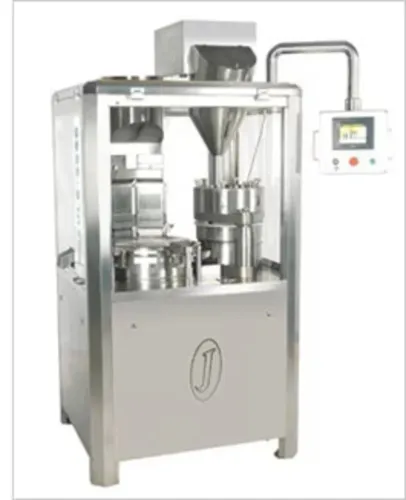
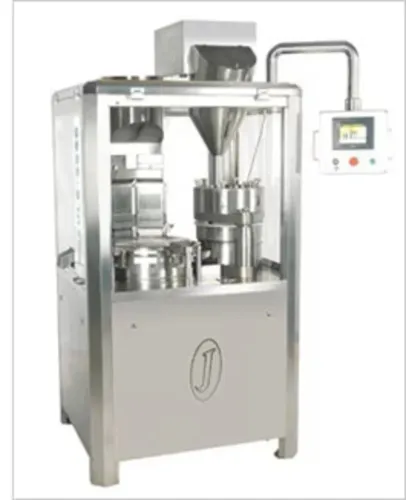
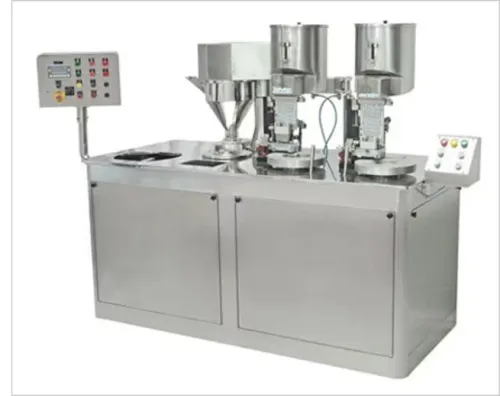
 | Capsule Filling Machines Semi Automatic Capsule Filling Machine SACF SACF I & SACF -II (Semi Automatic Capsule Filling Machines) are designed to fill hard gelatin capsules of all sizes with powders, pellets or granular... View product → |
 | Capsule Filling Machines SACF: Semi Automatic Capsule Filling Machine SACF I & SACF -II (Semi Automatic Capsule Filling Machines) are designed to fill hard gelatin capsules of all sizes with powders, pellets or granular... View product → |
Frequently asked questions
What does SACF mean in capsule filling equipment?
SACF commonly refers to a semi-automatic capsule filler, but it is not a universal equipment classification. Confirm the machine’s included functions, such as dosing, capsule separation, closing, dedusting and collection.
How do you estimate the real output of an SACF capsule filling machine?
Multiply capsules per cycle by cycles per hour, then reduce the result for loading, powder refilling, cleaning, adjustments, stoppages and rejected capsules. Use usable operating time rather than the nameplate rate.
Why do formulation and capsule quality affect filling results?
Powder flow, bulk density, particle size, moisture and electrostatic behaviour affect dose consistency and machine stoppages. Capsule size, shell condition and moisture content also affect separation, closing and rejection rates.
When is a semi-automatic capsule filling machine better than manual or automatic filling?
It suits production that needs more consistency and output than manual filling but does not justify the capital cost, validation work or changeover demands of a fully automatic line. Compare labour, batch size, product range and required output.
What should you verify before buying pharmaceutical capsule production equipment?
Request the rated output, capsule-size range, dosing method, fill-weight accuracy data, contact-part materials, changeover procedure, cleaning instructions, electrical specifications, documentation and an application test using your powder.