
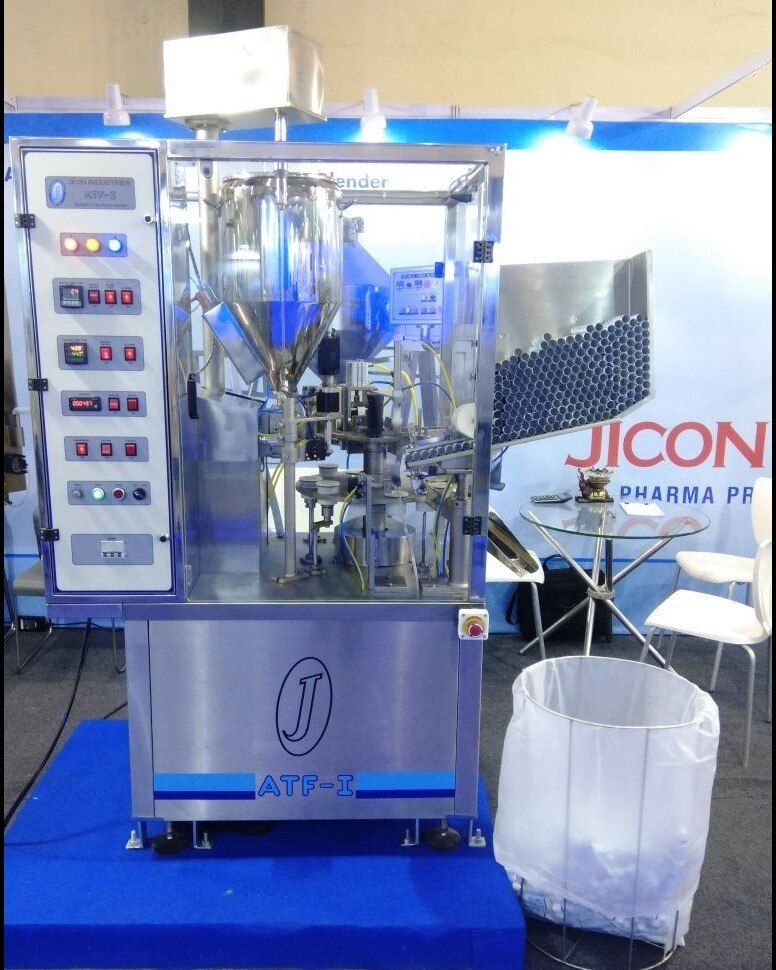
Growing pharmaceutical businesses outgrow hand filling through labour dependence, inconsistent fill weights, slow changeovers and stoppages at the filling stage. You will be able to map your production need to the right machine format, demand evidence during qualification and compare the full cost of local and export supply before committing.
Key takeaways
- Match the pump and filling range to your product’s viscosity and dose.
- Confirm tube diameter, length, material and sealing method before ordering.
- Request GMP qualification documents, FAT records and service commitments.
- Choose automation when labour, variation or line stoppages limit output.
How an Automatic Tube Filling Line Removes the Growth Bottleneck
An automatic tube filling line removes the growth bottleneck by connecting feeding, filling, sealing and verification instead of making operators repeat each task. The sequence reduces labour dependence, fill-weight variation, manual handling and stoppages between production stages.
- Load empty tubes into the hopper; a feeder transfers them to the machine.
- Detect each tube and reject missing, damaged or incorrectly positioned tubes before filling.
- Orient tubes so the shoulder, nozzle and seal area face the correct direction.
- Dose the product through the selected filling nozzle. Product viscosity, temperature, entrained air and fill volume affect accuracy.
- Apply batch, expiry or other required coding, then verify code presence and legibility.
- Seal the tube by heat sealing or crimping, trim excess material where the format requires it, and inspect the finished closure.
- Segregate tubes that fail fill, code, seal or visual checks; never mix rejects with accepted product.
- Discharge accepted tubes into trays, cartons or the next packaging operation with batch records linked to the run.
Automatic operation does not remove operators. People still replenish tubes and product, clean equipment, perform line clearance, install change parts, remove rejects and manage controlled interventions.
Manual filling suits small, irregular batches where the lowest purchase price matters most. Semi-automatic equipment fits moderate output with some operator handling. Choose automatic equipment when staffing, repeatability, sustained output and batch traceability outweigh capital cost.
Ask for tubes per minute at your fill volume, reject-rate limit, availability, changeover time and actual production conditions—not brochure speed alone. The practical pharma tube packaging machine benefits are repeatable dosing, predictable labour demand and fewer bottlenecks.
How to Match the Filler to Your Tube, Product and Utilities
Before requesting a quotation, define the tube, formulation, fill range and site utilities in writing. An automatic tube filling machine exporter for growing pharma businesses in Thane cannot confirm suitability from product name alone.
1. Record the tube diameter, length, material, shoulder shape, cap type, seal format, nozzle size, fill-volume range and permitted fill-weight tolerance.
2. Request a machine schedule stating the number of filling heads, nominal and sustained tubes-per-minute output, dosing principle, accuracy at each fill range, recipe controls, change parts, compressed-air pressure and consumption, voltage, frequency, vacuum or exhaust needs, footprint, access clearances and cleanroom conditions.
3. Ask which utilities are included. Confirm air filtration and drying, chiller capacity, exhaust connections, room temperature, humidity and cleanroom classification; missing equipment can turn an acceptable quotation into an expensive installation.
4. Require trials with the actual formulation, production tube, target fill range and operating temperature. Water alone will not reveal paste drag, gel shear, particle settling, hot-fill behaviour, entrained air or foam.
Piston and servo-piston dosing suit many creams and pastes, but abrasive products can wear seals and shear-sensitive gels can change under repeated mechanical action. Peristaltic dosing keeps the product inside tubing, while time-pressure dosing responds strongly to viscosity, temperature, air content and settling.
For sterile or highly hygienic products, request documented aseptic design, sterilisation strategy and environmental controls. A tube filler is not automatically an aseptic filling machine. Compare any automatic tube filler in Thane by validated operating range and sustained acceptance rate, not brochure speed.
How Sealing and GMP Qualification Protect Product Quality
Finished-tube acceptance starts with the closure, not the machine’s rated speed. Plastic and laminate tubes use heat sealing; aluminium tubes use a folded crimp, so assess the process differently.
| Seal type | Critical controls | Typical failure |
|---|---|---|
| Plastic or laminate heat seal | Temperature, pressure, dwell time, cooling and a clean seal area | Leaks, weak opening, distorted seal or lost tamper evidence |
| Aluminium crimp | Crimp geometry, pressure, alignment and coding position | Channel leaks, sharp edges, loose closure or unreadable batch and expiry code |
Run acceptance tests at normal settings and deliberate boundary conditions, including low and high fill volume, seal temperature and line speed. Inspect appearance, test leaks, check opening performance, verify batch and expiry-code legibility, and record reject rates. Contamination trapped in the seal can defeat an otherwise correct cycle.
Treat the tube, cap and seal as one container-closure system. A new tube supplier requires documented compatibility, moisture and oxygen-protection review, extractables or leachables assessment, and closure-integrity testing.
Before purchase, request:
- Product-contact material certificates, surface-finish data, drainability and cleanability instructions
- Calibration records, risk assessment, software and data documentation
- Change-part lists, cleaning-validation support, line-clearance procedures and batch traceability features
Define critical quality attributes and process parameters, run product trials, complete factory acceptance testing (FAT), install the machine, perform site acceptance testing (SAT), then complete IQ/OQ or equivalent site records and train operators. This evidence matters more than a supplier’s location.
What to Verify When Choosing an Exporter from Thane or India
Choosing an automatic tube filling machine exporter for growing pharma businesses in Thane can simplify factory acceptance visits, commissioning and service travel. Treat that as a project-management advantage, not evidence of GMP suitability or technical superiority.
Compare the supplier on documents and support, not location alone:
| Area | Request | Why it matters |
|---|---|---|
| Machine | Signed specification for tube range, fill accuracy, output, change parts and utilities | Exposes fit and installation gaps |
| Qualification | FAT and SAT protocols, IQ/OQ support, calibration records and risk assessment | Defines acceptance and GMP evidence |
| Documentation | Manuals, software records, product-contact certificates and cleaning instructions | Supports operation, traceability and validation |
| Service | Preventive-maintenance schedule, spare-parts list, remote diagnostics and guaranteed response time | Limits production downtime |
| Export | Incoterms, HS code, export packing, electrical standard, customs and origin documents | Prevents border and connection delays |
| Warranty | Installation responsibility, exclusions and destination-country machine-safety duties | Prevents disputed costs |
The contract must name who supplies compressed-air filtration and drying, chillers, exhaust equipment and validation support. Confirm air pressure and quality, voltage and frequency, room conditions, cleanroom classification and vacuum requirements against the site-utility schedule.
The phrase tube filling machine exporter India describes a sales channel, not an approval. Check the destination country’s import, electrical, documentation and pharmaceutical expectations; CE marking where relevant does not replace process validation. Jicon Technologies Pvt Ltd belongs in the same evidence-based comparison: assess its specification, trials and service commitments rather than its Thane address.
Related products
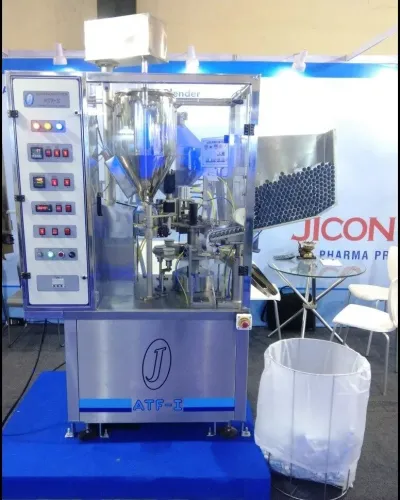
 | Tube Filling Machines Automatic Tube Filling Machine (FT-120, FT-60, ATF-1) ₹1 FILLTUBE Machines are designed to fill and seal plastic, laminated and aluminium tubes at high speeds. View product → |
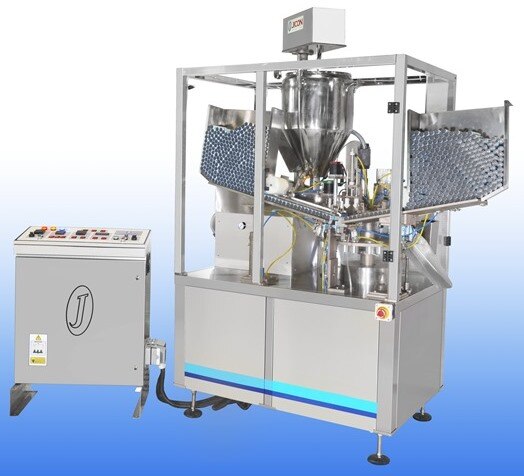 | Tube Filling Machines Automatic Tube Filling Machine ₹1 FILLTUBE Machines are designed to fill and seal plastic, laminated and aluminium tubes at high speeds. View product → |
When Automation Pays—and When It Is the Wrong Investment
Do not divide the machine’s purchase price by its brochure speed. Calculate required output from batch size, batches per shift, fill volume, planned availability, reject allowance and changeover frequency. A 12,000-tube-per-hour rating means little if cleaning, coding faults, misfeeds and format changes reduce sustained acceptance.
| Compare | Include in the ownership calculation | Warning sign |
|---|---|---|
| Capital | Machine, tooling, change parts and validation work | Multiple formats require costly parts and setup verification |
| Running cost | Operators, compressed air, electricity, cleaning, maintenance and rejected tubes | Air supply or floor space needs new infrastructure |
| Business impact | Downtime, working capital, repeat orders and bottleneck delays | Demand is unstable or batches are very small |
Automation pays when manual staffing, fill-weight variation, repeat orders and lost bottleneck time exceed that ownership cost. The practical pharma tube packaging machine benefits are repeatable dosing, traceability and predictable labour demand—not speed alone.
Reject the investment when formulation changes are frequent, compressed air is unavailable, or the product needs controlled sterile filling or unusual particle handling that the proposed dosing system cannot validate. A conventional tube filler is not automatically an aseptic machine.
Score each supplier on validated operating range, sustained acceptance rate, changeover repeatability, total cost, documentation, local service and spare-parts availability. Require trials with the actual formulation and production tube, then record output, rejects, fill weights, cleaning time and recovery after changeover before signing.
Frequently asked questions
How does an automatic tube filling line remove a growth bottleneck?
It links tube feeding, product filling, sealing and verification, reducing repeated operator tasks, manual handling, fill variation and stoppages between stages.
How do you match a tube filler to your product and utilities?
Check the product’s viscosity, dose range and sensitivity, then confirm tube dimensions, sealing format, compressed air, electrical supply and cleaning requirements.
What GMP documents should you request from a tube filling machine exporter?
Request equipment specifications, material certificates, calibration records, FAT and SAT protocols, operating and cleaning procedures, and IQ, OQ and PQ documentation.
When does an automatic tube filler become the wrong investment?
Automation is a poor fit when volumes are low, tube formats change frequently, the product is still being formulated or the site cannot support validation and maintenance.
Related product
 | Tube Filling Machines Automatic Tube Filling Machine For Lami PVC and Aluminium Tubes FILLTUBE Machines are designed to fill and seal plastic, laminated and aluminium tubes at high speeds. |